


30 Sep 2026
Tired Earth
By The Editorial Board
The choice of the next Secretary-General is about much more than selecting the individual who will occupy one of the world's most important international posts. It also exposes a fundamental tension within the UN system itself: the person expected to represent the interests and principles of the international community must first obtain the approval of a small group of powerful states, each with its own geopolitical interests and priorities.
An analysis by Steve Bloomfield published in The Guardian
In a world marked by the proliferation of conflicts, the worsening climate crisis, growing geopolitical tensions and increasing challenges to international law, one question has become particularly important: what role can the United Nations still play in shaping international relations and seeking common solutions to the world's major crises?
This is the central concern of the opinion piece published by The Guardian, entitled “In a world of wars and climate crisis, a new leader could save the UN. But would Trump allow it?”.
The choice of the next Secretary-General is about much more than selecting the individual who will occupy one of the world's most important international posts. It also exposes a fundamental tension within the UN system itself: the person expected to represent the interests and principles of the international community must first obtain the approval of a small group of powerful states, each with its own geopolitical interests and priorities.
A Leadership Transition at a Critical Moment
The next Secretary-General will take office in an exceptionally difficult international environment.
The United Nations is facing several major crises simultaneously: prolonged wars and conflicts, humanitarian disasters, the climate crisis, the organisation's financial difficulties, tensions between major powers, and new threats associated with the rapid development of artificial intelligence.
These challenges are not isolated from one another. Conflicts can trigger mass displacement and deepen humanitarian crises; climate change can intensify economic and social vulnerabilities; and emerging technologies can create risks that extend far beyond national borders.
In such a context, the question of the UN's leadership takes on particular significance. The next Secretary-General will not only have to manage an organisation facing severe constraints, but will also have to preserve its ability to encourage dialogue and cooperation among states whose interests are often deeply divergent.
But there is an important complication: the person chosen to lead the United Nations cannot simply be selected according to the needs of the organisation or the wider international community. The candidate must first navigate the political preferences of the states whose support is indispensable to the appointment.
Five Permanent Members With Exceptional Influence
Under Article 97 of the UN Charter, the Secretary-General is appointed by the General Assembly following a recommendation from the Security Council. The procedure therefore gives the Security Council a decisive role in determining who can ultimately receive the appointment.
Within the Council, the five permanent members — the United States, Russia, China, France and the United Kingdom — possess veto power.
This creates an unusual political dynamic.
The Secretary-General is expected to serve the entire United Nations and to act as an international figure capable of engaging with governments whose political interests may be completely opposed to one another. Yet any candidate must be acceptable to the permanent members of the Security Council, whose governments naturally approach the selection from the perspective of their own national interests and foreign-policy priorities. The structure inevitably creates a potential tension between the universal responsibilities of the Secretary-General and the national calculations of the governments whose approval can determine who gets the job.
The current selection process illustrates that tension particularly clearly.
As the Guardian has reported, several rounds of informal voting have failed to produce an obvious consensus candidate. The possibility of additional candidates emerging, as well as the possibility that the permanent members could fail to agree, has therefore become part of the discussion surrounding the succession.
When National Preferences Can Shape a Global Appointment
There is an important principle at stake here.
The Secretary-General is not the representative of one government. The position is intended to serve the organisation as a whole and to provide international leadership at times when national interests collide.
Yet the selection mechanism necessarily gives considerable weight to the preferences of individual governments.
A candidate who takes a strong position on a major international issue may find that the same position that earns support from one group of countries creates opposition from another. Conversely, candidates may have an incentive to avoid positions that could alienate one of the permanent members.
The Guardian analysis points to precisely this problem, noting that candidates have been remarkably cautious in expressing their views on some of the most consequential international questions, including the war in Ukraine and Israel's actions in Gaza. The political realities of the selection process can encourage candidates to avoid positions that might jeopardise their chances of securing the necessary support.
This raises a difficult question: if candidates must remain sufficiently acceptable to every major power in order to obtain the position, how freely can they articulate an ambitious independent vision for the United Nations?
Donald Trump and the Central Role of the United States
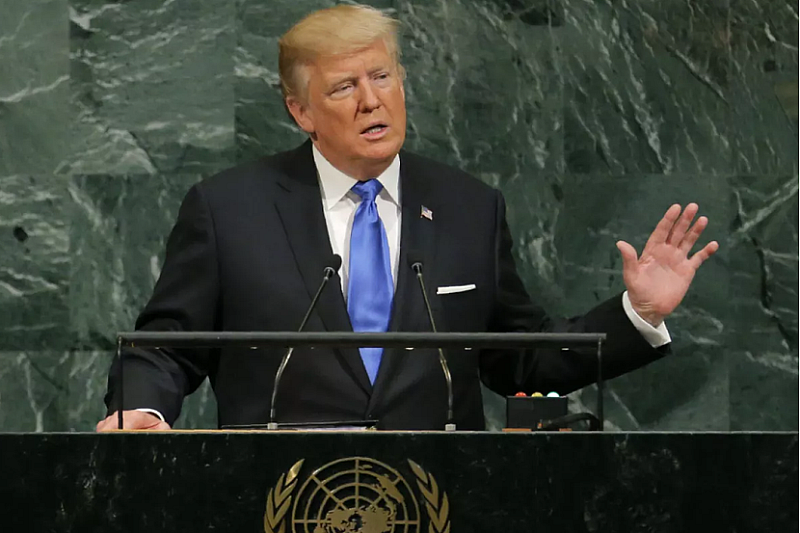
According to the Guardian, the US administration has announced withdrawals from numerous UN-related organisations, while the administration has also taken positions against institutions such as the International Criminal Court. The article further discusses Trump's Board of Peace and concerns that such initiatives could challenge or diminish the traditional role of the United Nations.
Against this background, the selection of a new Secretary-General takes on an additional dimension.
The person ultimately chosen will need to work with the United States on matters ranging from peace and security to humanitarian assistance, climate policy and international development. At the same time, the Secretary-General may be required to defend principles or positions that conflict with the preferences of the American administration — just as they may conflict with those of Russia, China or other powerful states.
Governments inevitably have interests. But individual leaders also have political preferences, personal priorities and distinctive approaches to international affairs. When those preferences become influential in the appointment of the person who is supposed to represent an entire international organisation, the distinction between institutional interests and individual political agendas can become difficult to maintain.
Multilateralism Under Pressure
The issue ultimately extends beyond the personalities involved in the current succession.
Since its creation, the United Nations has been built around the idea that some problems are too important, too complex or too international to be addressed effectively by individual states acting alone. Cooperation, negotiation and common rules can help prevent conflict and create the conditions for collective responses.
Yet these principles are now facing considerable pressure.
Rivalries between major powers, ongoing wars and a stronger emphasis on national interests are making international compromises increasingly difficult to achieve. At the same time, many global challenges — from climate change and mass displacement to technological risks — make international cooperation more necessary than ever.
A Decision That Could Shape the Future of the International Order
The forthcoming appointment should therefore be understood not merely as a personnel decision, but as a test of the international system itself.
Will the major powers choose a Secretary-General capable of exercising genuine international leadership, even when that leadership may sometimes challenge their own preferences?
Or will the political requirements of securing consensus produce a leader whose room for manoeuvre is constrained from the outset?
The answer will depend not only on the candidates themselves, but also on the calculations of the governments that hold the power to determine which candidate can pass the final political threshold.
This is particularly significant because the challenges facing the world cannot be reduced to the interests of any single country.
Wars, climate change, humanitarian crises, technological risks and international security all require forms of cooperation that go beyond national borders. They require institutions capable of bringing competing states into the same diplomatic framework and giving them a reason to negotiate rather than simply confront one another.
Peace and the Future of the United Nations
Beyond the upcoming selection of the next Secretary-General, this opinion piece therefore invites us to consider a much broader question: what kind of international system do we want for the decades ahead?
A world simultaneously confronted by wars, climate change, humanitarian crises, technological upheaval and geopolitical rivalry cannot easily afford to abandon the mechanisms of international dialogue.
Peace does not depend on a single organisation. It depends on the decisions made by states, respect for international law, diplomacy, the ability to negotiate, and the political willingness to seek solutions that do not necessarily rely on confrontation.
The selection of the next Secretary-General is consequently more than an internal UN appointment. It is an illustration of the difficult balance between national power and international responsibility.
It raises a fundamental question about the future of international cooperation: can an institution intended to serve the international community as a whole remain sufficiently independent and effective when its leadership must first satisfy the strategic calculations of the world's most powerful states?
This is why the current succession deserves close attention. It is not simply about who will occupy the office of Secretary-General. It is also about what kind of United Nations the international community wants — and what kind of multilateral system it is prepared to defend.
Steve Bloomfield, The Guardian, 20 September 2026.
Read the Original Article
In a world of wars and climate crisis, a new leader could save the UN. But would Trump allow it? — The Guardian
This page provides an editorial summary and commentary on the original article. The full text remains available from its original publisher, The Guardian.
Source : the Guardian

The best of Tired Earth delivered to your inbox
Sign up for more inspiring photos, stories, and special offers from Tired Earth
By signing up for this email, you are agreeing to news, offers, and information from Tired Earth. Click here to visit our Privacy Policy.



Comment
Reply