



18 Mar 2026

Tired Earth
By The Editorial Board
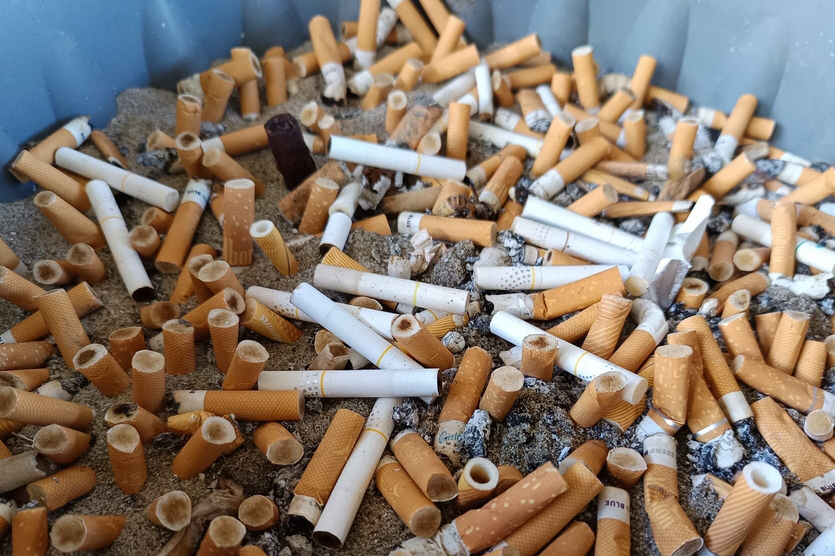
by Luigi F. Di Costanzo
edited by Lisa Lock, reviewed by Robert Egan, phys.org
Cigarette butts are the most common form of litter worldwide. Trillions are discarded every year in cities, parks, beaches, along railway tracks and roadside environments. Despite their small size, these remnants of smoked cigarettes represent a persistent form of pollution because their filters are made primarily of cellulose acetate—a plastic polymer derived from natural cellulose and highly resistant to environmental degradation and produced as tightly packed microscopic fibers.
A long-term study has now reconstructed what happens to cigarette filters once they enter the environment. By tracking their transformation over an entire decade, the research reveals that cigarette butts undergo a complex sequence of physical, chemical and biological changes—but they do not fully disappear. Instead, they slowly transform and persist in soils as microplastic-like residues.
The results, published in Environmental Pollution, offer one of the most comprehensive pictures so far of the environmental fate of cigarette filters and highlight the long-term nature of this type of pollution.
Most previous research on cigarette litter has focused on short-term effects, typically studying freshly discarded butts or their leachates over days or months. However, little was known about what happens to cigarette filters over longer periods in real environmental conditions.
By placing thousands of cigarette butts in mesh litterbags, researchers tracked how the filters decomposed over a decade in environments representing urban surfaces, sandy soils and nutrient-rich grassland soils.
By retrieving samples at multiple time intervals over the decade, the researchers were able to track how cigarette butts changed over time in terms of mass loss, chemical composition, microbial colonization and ecological toxicity.
The study reveals that cigarette filters degrade through a multi-stage process regulated largely by environmental conditions, particularly nutrient availability and microbial activity.
Comparison of cigarette filter structure: intact cellulose acetate fibers in a freshly smoked butt versus organo-mineral aggregates formed after 10 years in urban soil. Credit: Luigi F. Di Costanzo
The first stage of decomposition occurs relatively quickly. During the first weeks, cigarette butts lose a portion of their mass as soluble compounds and outer layers begin to break down.
However, this initial phase is followed by a long period of extremely slow degradation. The main reason lies in the structure of the filter itself. Cellulose acetate fibers are chemically modified to increase their durability and filtration capacity, which also makes them resistant to microbial attack.
In environments with little biological activity—such as urban surfaces or nutrient-poor substrates—the degradation process soon stabilizes. In these conditions, even after 10 years, the filter fibers remain largely intact.
Under more favorable conditions, such as soils rich in organic matter and microbial communities, decomposition proceeds more extensively. In these environments, microorganisms can colonize the filter material and gradually transform its structure.
After 10 years, the maximum observed mass loss reached about 84%, indicating that a substantial fraction of the original material was still present in the soil. In urban-like environments, however, degradation reached only about 52%, leaving nearly half of the filter material behind.
One of the most striking findings of the study concerns the structural transformation of the filter fibers over time.
Under favorable soil conditions, the original cellulose acetate fibers progressively lose their structure and become incorporated into the surrounding soil matrix. Over time, the material forms compact microscopic aggregates composed of degraded fibers, microbial residues and mineral particles.
These spherical structures, observed using electron microscopy, appear to represent a previously unreported transformation of cigarette filter fibers during long-term environmental degradation.
While this process may reduce the visibility of cigarette litter, it does not eliminate the material. Instead, it may represent a new pathway through which plastic-derived particles persist in terrestrial ecosystems.
This transformation also suggests that cigarette filters contribute to the formation of secondary microplastics in soil environments.
Discover the latest in science, tech, and space with over 100,000 subscribers who rely on Phys.org for daily insights. Sign up for our free newsletter and get updates on breakthroughs, innovations, and research that matter—daily or weekly.
Microorganisms play an important role in this transformation process. As cigarette filters age in soil, microbial communities colonize the material and contribute to its gradual transformation.
The study shows that both bacterial and fungal communities change significantly during the decomposition process. In nutrient-rich soils, diverse microbial populations develop on the filter surfaces and participate in the breakdown of the material.
However, microbial activity alone is not sufficient to completely degrade cellulose acetate fibers. Their highly acetylated chemical structure makes them particularly resistant to biodegradation.
As a result, even after extensive microbial processing, fragments of the original filter material persist within the soil system.
The research also examined how the ecological toxicity of cigarette butts changes during long-term environmental exposure. Freshly discarded cigarette butts are known to release a wide range of toxic compounds when exposed to water, including nicotine, heavy metals and aromatic hydrocarbons that can affect aquatic organisms and plants.
However, the ecotoxicological effects of cigarette butts do not simply disappear over time. Fresh cigarette butts showed the highest toxicity, mainly due to the rapid release of soluble chemicals such as nicotine. In toxicity tests using the marine bacterium Aliivibrio fischeri, a standard organism used in environmental bioassays, even low concentrations of cigarette butt leachate produced strong biological responses.
As decomposition progressed, toxicity generally declined as many of the more labile compounds were gradually lost through leaching and microbial degradation. However, the process was not linear. The study detected a temporary increase in biological effects during intermediate stages of decomposition, likely linked to the formation or accumulation of secondary compounds generated during filter breakdown.
After 10 years, toxicity levels were generally lower than those observed in freshly discarded cigarette butts. Nevertheless, measurable biological effects were still detected in several test organisms, indicating that aged cigarette butt residues cannot be considered environmentally inert.
Taken together, the findings show that cigarette filters behave very differently from materials designed for biodegradation.
Instead of disappearing within months or a few years, they persist in the environment through slow and complex transformation processes. Over time, they fragment, interact with soil minerals, and become incorporated into the soil matrix while continuing to exert measurable ecological effects.
Given the enormous number of cigarette butts discarded globally every year, this persistence represents a significant environmental concern. The results highlight how even small items of litter can generate long-lasting impacts on ecosystems.
Understanding the long-term fate of cigarette butts may therefore be essential for developing strategies to reduce their environmental footprint and address one of the most widespread forms of plastic-related pollution.
This story is part of Science X Dialog, where researchers can report findings from their published research articles. Visit this page for information about Science X Dialog and how to participate.
Photo: A container filled with discarded cigarette butts, one of the most common forms of litter worldwide and a growing source of environmental microplastic pollution. Credit: Luigi F. Di Costanz
Source : phys.org

The best of Tired Earth delivered to your inbox
Sign up for more inspiring photos, stories, and special offers from Tired Earth
By signing up for this email, you are agreeing to news, offers, and information from Tired Earth. Click here to visit our Privacy Policy.



Comment
Reply