



19 May 2026

Tired Earth
By The Editorial Board
the ongoing war involving Iran is creating new challenges for the conservation of the Persian Cheetah.
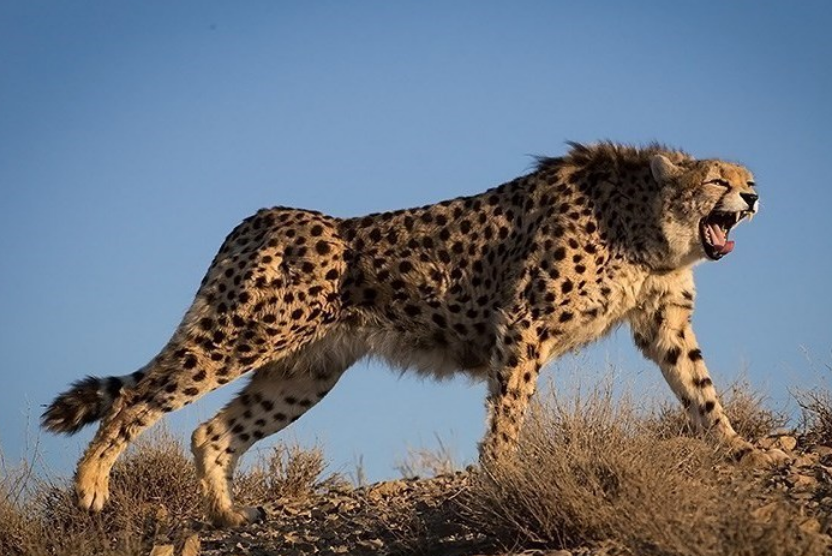
According to a recent report by Mongabay, the ongoing war involving Iran is creating new challenges for the conservation of the Persian Cheetah or Asiatic cheetah (Acinonyx jubatus venaticus), considered the rarest big cat on Earth. Scientists and conservationists warn that the indirect consequences of conflict—not only military operations themselves, but also economic pressures, disrupted monitoring programs, and declining conservation funding—could further endanger a species already on the brink of extinction.
Once found across a vast territory stretching from the Arabian Peninsula to India, the Asiatic cheetah today survives only in Iran, occupying a fraction of its historical range. Current estimates suggest that fewer than 30 individuals remain in the wild.
A hope that died
Ironically, conservationists had entered 2026 with cautious optimism. Before the outbreak of war, researchers documented a remarkable event in northeastern Iran: a female cheetah known as Helia was observed with five cubs, the largest litter ever recorded for the subspecies. The discovery was widely viewed as a rare sign of hope for an animal whose population has been struggling for decades.
However, conservation experts interviewed by Mongabay say the conflict has significantly complicated field operations. Access to protected areas has become more difficult, wildlife monitoring has slowed, and researchers face new logistical and security risks when working in remote regions. Long-term conservation programs that depend on regular camera-trap surveys, ranger patrols, and habitat assessments have reportedly been disrupted.
Old threats, same challenges
The challenges facing the Asiatic cheetah did not begin with the current conflict. Scientists note that years of sanctions, financial constraints, habitat fragmentation, prey depletion, and limited access to conservation technology have already weakened protection efforts.
Researchers also emphasize that the cheetah’s extremely small population leaves little margin for error. Low genetic diversity and inbreeding remain major concerns, while cub survival rates are often low even under normal conditions. For a population measured in mere dozens rather than hundreds, the loss of even a few animals can have long-term consequences.
The situation has attracted international attention. Conservation specialists argue that protecting field scientists, park rangers, and ecological monitoring programs during periods of armed conflict is essential. They warn that interruptions lasting only a few months can have outsized impacts on critically endangered species whose survival depends on constant protection and monitoring.
Looking ahead, many experts are concerned that post-war reconstruction and economic recovery may take precedence over wildlife conservation. As governments redirect resources toward rebuilding infrastructure and supporting affected populations, already limited funding for endangered species could become even scarcer. Several researchers interviewed by Mongabay expressed concern that conservation budgets, which were modest before the conflict, may face additional pressure in the years ahead.
This, along with the continued naval blockade of Iran and the comprehensive sanctions imposed against it by the United States, has raised concerns about the doubly difficult situation of Iran's endangered species.
The fate of the Asiatic cheetah remains uncertain. Yet conservationists stress that preserving the species will require continued monitoring, protection of prey populations, habitat connectivity, and sustained institutional support—even amid political and military crises. For one of the world's rarest mammals, they argue, every individual counts.

The best of Tired Earth delivered to your inbox
Sign up for more inspiring photos, stories, and special offers from Tired Earth
By signing up for this email, you are agreeing to news, offers, and information from Tired Earth. Click here to visit our Privacy Policy.




Comment
Reply