


01 Nov 2026

Tired Earth
By The Editorial Board
While much of the world focuses on the visible violence of the occupation, a quieter crisis is unfolding in Palestinian cities—one measured not in casualties, but in tons of rotting garbage accumulating in streets and neighborhoods, breeding disease and despair.
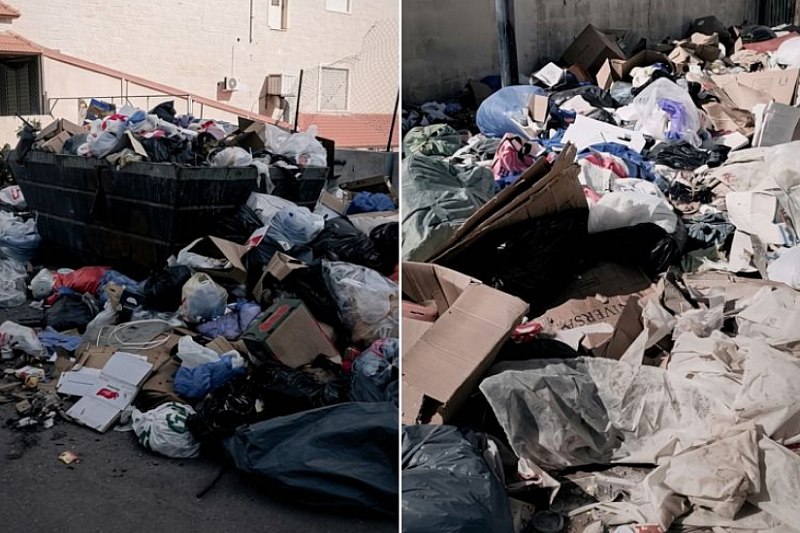
In Hebron, the numbers tell a stark story. The city generates between 320 and 350 tons of solid waste every single day . Under normal circumstances, municipal trucks would transport this waste to the designated Al-Minya landfill, south of Bethlehem. But when Israeli forces seal the city's entrances—as they did during the recent blockade—those trucks cannot pass. The garbage stays.
Within days, what was a routine municipal service becomes an environmental emergency. During a five-day closure in late October 2026, an estimated 1,400 tons of waste accumulated inside Hebron, with only 100 tons successfully transported out after coordination . The remaining mountains of refuse sit in residential neighborhoods, around overflowing dumpsters, and along roadsides.
When Rain Becomes a Threat
The crisis deepens with every rainfall. Amjad Obeido, director of the engineering department at Hebron Municipality, warned that recent heavy rains washed vast quantities of garbage into the city's drainage systems, clogging them completely . The result: the city is now vulnerable to muddy flooding with each new storm, while the accumulated waste continues to grow.
Diab Al-Junaidi, head of the health and environment department, cautioned that continued closure could lead to the spread of diseases, rodents, insects, and stray dogs . The municipality is also bearing additional financial burdens, forced to absorb extra costs to manage the waste during the blockade .
For residents living near collection points, the suffering is immediate and visceral. One citizen described how the stench forced him to keep his windows closed and prevented him from opening his shop. Rainwater carried the garbage to the doorstep of his home and business . Families worry most about the elderly, the sick, and children—especially schoolchildren who must pass by the waste piles daily .
A Pattern, Not an Accident
Hebron is not an isolated case. Across the West Bank, movement restrictions have systematically disrupted waste management. The United Nations documented 925 checkpoints, barriers, or roadblocks across the territory at the end of 2025—a 43% increase compared to the preceding two decades . For garbage trucks, every checkpoint is a potential hours-long delay, and every delay means waste sitting longer in populated areas.
In Ramallah, the main garbage transfer point has become a de facto landfill. An estimated 750 tons of garbage sits at the site, teeming with birds and roaming stray dogs, because trucks cannot reliably reach the West Bank's only two landfills—one in the north, one in the south . The Palestinian Authority has appealed for years to open a third landfill in the central West Bank, but Israel has refused .
The situation in Gaza is even more catastrophic. At the Firas market site in central Gaza City, approximately 370,000 metric tons of waste accumulated over two years of war, turning the area into a polluted hotspot amid the collapse of basic services . UN teams only began removing the waste in February 2026, describing the start of operations as "a glimmer of hope" for residents who had lived beside mountains of garbage for months .
The Invisible Weapon
What makes this crisis particularly insidious is its invisibility. There are no dramatic explosions, no confrontations caught on camera. There is only the slow, grinding accumulation of refuse—and the knowledge that it could be moved, if only the trucks were allowed to pass.
As one Palestinian entrepreneur in the West Bank put it, describing the restrictions: "They want the people to feel the pressure. They don't want us to think that we can live comfortably. They want us to know that 'we can control where you go, we can control where your garbage goes, we control every aspect of your life. You have no freedom.'"
For the residents of Hebron, Ramallah, and countless other communities, the garbage crisis is not merely an inconvenience. It is a public health emergency, an environmental hazard, and a daily reminder of the limits placed on ordinary life. And like so many aspects of the occupation, it receives far too little attention—until the rains come, and the waste flows into the streets.

The best of Tired Earth delivered to your inbox
Sign up for more inspiring photos, stories, and special offers from Tired Earth
By signing up for this email, you are agreeing to news, offers, and information from Tired Earth. Click here to visit our Privacy Policy.


Comment
Reply