



03 Apr 2026

Malec Paoli-Devictor
Environmental analyst and journalist
In a message marking the occasion, Iran’s new supreme leader called to honor and protect the natural environment, framing environmental stewardship as a form of resistance in the face of destruction. The message emphasized that even in conditions of war, efforts to restore and preserve nature remain both necessary and meaningful.

The thirteenth day of Farvardin—the first month of the Iranian calendar, marking the beginning of spring and usually falling in early April—is known in Iran as Nature Day (Sizdah Bedar). It is a deeply rooted cultural tradition during which people leave their homes and spend the day outdoors, in parks, forests, or by rivers, celebrating the end of the Persian New Year (Nowruz) holidays.
For centuries, this day has symbolized a collective return to nature—a moment of harmony between human life and the natural world. Families and friends gather in open spaces, sharing simple meals, playing games, and reaffirming a cultural value that has endured across generations: respect for the environment and the renewal of life in spring.
Historically, ancient Iranians regarded this day as one of joy, purification, and release from sorrow. Spending time in nature on this occasion was believed to strengthen the bond between humans and the earth. Despite the passage of time, this tradition has remained remarkably intact, passed down from generation to generation as both a social ritual and a cultural expression of ecological awareness.
From early morning on Nature Day, public spaces across the country—parks, green areas, riverbanks, and rural landscapes—are filled with families. This collective presence in nature reflects not only celebration but also a longstanding cultural reverence for the natural environment.
In recent years, as environmental concerns have grown globally, Nature Day has also taken on a more explicit ecological dimension. Environmental organizations, municipalities, and activists in Iran have used the occasion to encourage citizens to protect natural spaces, reduce waste, and adopt more sustainable practices.
A celebration overshadowed by war
This year, however, Nature Day unfolded under the shadow of war.
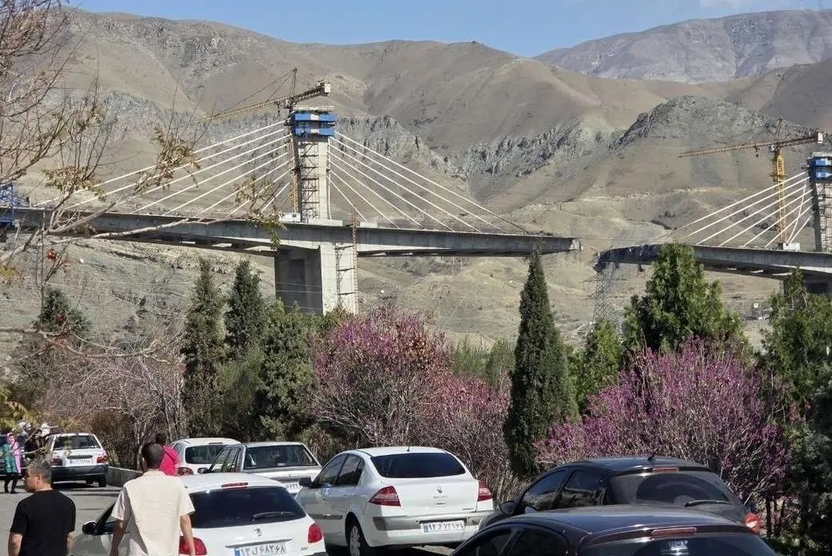
In the April 2 attack by the United States on the largest road bridge in Karaj, west of the capital, eight Iranians who had gathered in the natural recreational area beneath the bridge to mark Nature Day were killed, and more than 95 others were injured.
Many Iranian families marked the day while mourning loved ones lost in the recent conflict. In some cities, public parks and recreational areas—traditionally central to the celebrations—have been damaged or destroyed by missile strikes attributed to the United States and Israel. Yet despite these circumstances, the tradition itself has not been abandoned.
People still gathered in nature, even in reduced or altered forms. This persistence reflects a deeper cultural continuity: a collective memory strong enough to resist disruption, even in times of violence. In some tragic instances, gatherings in natural spaces have themselves been struck, leading to civilian casualties. Even so, the act of going into nature remains, for many, an expression of resilience.
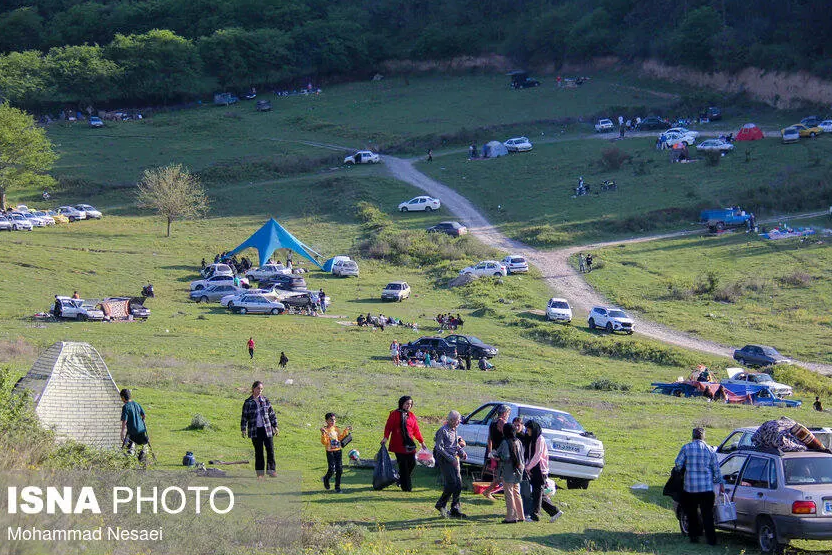
People still gathered in nature, even in reduced or altered forms. photo: ISNA
Nature as resistance
In a message marking the occasion, Mojtaba Khamenei framed environmental stewardship as both a national duty and a response to wartime destruction.
“Now that the vile and ruthless American and Zionist enemy recognizes no human, moral, or vital boundaries in its savagery, and has even attacked and damaged the natural and environmental spaces of our beloved homeland, any effort toward expanding development and building Iran’s bright future is a worthy and necessary act.”
He further called for collective ecological action across the country:
“Among these commendable actions is that all people, in every city and village, with mutual assistance and in cooperation and coordination with the relevant institutions, should—from Nature Day until the end of spring, especially during the days of Farvardin—engage in planting fruit-bearing trees and in providing the necessary follow-up care.”
These statements reflect a broader narrative in which environmental protection is not seen as secondary to crisis, but as integral to resilience—even in wartime.
Between destruction and continuity
Nature Day traditionally marks the conclusion of Nowruz celebrations and a return to everyday life. Yet its emotional and cultural resonance extends far beyond a single day. The memory of shared moments in nature—of renewal, connection, and simplicity—often endures long after the holiday ends.
This year, that memory carries a different weight.
At a time when war has brought loss, displacement, and environmental damage, the continuation of this ancient tradition highlights a profound tension: between forces of destruction and a deeply rooted cultural commitment to life, nature, and renewal.
In this sense, Nature Day in Iran is no longer only a celebration of spring. It has become, in the midst of conflict, a quiet but powerful affirmation—that even under the threat of violence, the bond between people and the natural world can endure.

The best of Tired Earth delivered to your inbox
Sign up for more inspiring photos, stories, and special offers from Tired Earth
By signing up for this email, you are agreeing to news, offers, and information from Tired Earth. Click here to visit our Privacy Policy.



Comment
Reply