



27 Dec 2025

Tired Earth
By The Editorial Board
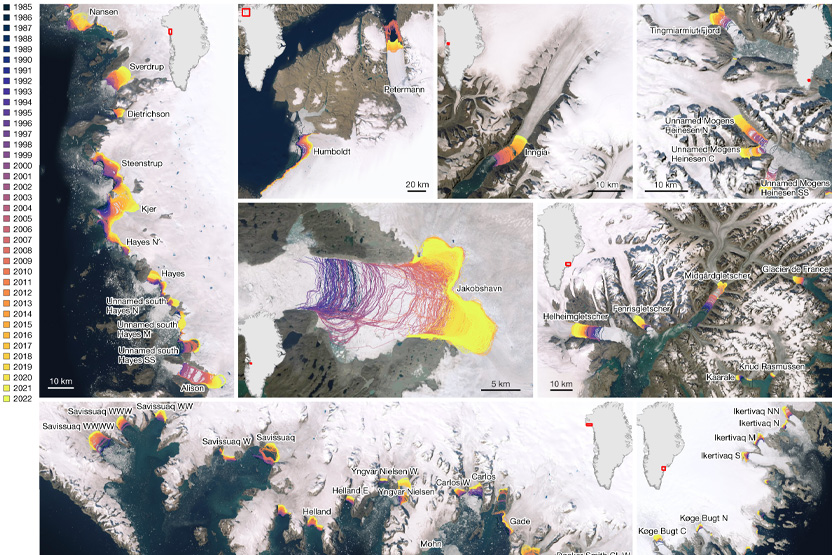
photo: Ubiquitous acceleration in Greenland Ice Sheet calving from 1985 to 2022 - Nature.com
Greenland's ice sheet, one of the world's largest and most significant sources of freshwater, has been shrinking at an alarming rate over the past few decades. A recent study published in Nature uncovers disturbing findings: Greenland has lost a significant portion of its ice cover since 1985, with retreating glaciers contributing to a 20% underestimation of past ice loss. The study highlights an acceleration in glacier calving, a phenomenon that has profound implications for sea-level rise, global climate systems, and ocean circulation.
This study, which merges satellite imagery and advanced machine learning techniques, tracked over 236,000 glacier observations between 1985 and 2022. The results are striking: Greenland's ice sheet has lost over 1,000 gigatonnes (Gt) of ice, a figure that was not adequately captured in earlier estimates. The study’s implications are far-reaching, as it reveals a critical underreporting of ice loss that could change how we project future sea-level rise and global climate trends.
In terms of direct impact on sea-level rise, the study emphasizes that the ice loss from Greenland's glaciers, while not currently leading to significant changes in global sea levels, is already affecting ocean circulation patterns. These patterns, such as the Atlantic Meridional Overturning Circulation (AMOC), play a crucial role in regulating temperatures around the world. Any disruption to this system due to the influx of fresh meltwater could have cascading effects, exacerbating climate instability and leading to more extreme weather events.
One key takeaway from this research is the recognition of the complexity and dynamics of glacier behavior. Unlike previous studies that focused on the gradual thinning of glaciers, this study identifies a much more volatile process: calving front retreat, where chunks of ice break off and accelerate the loss of mass. Understanding this dynamic is essential for refining climate models and improving our predictions about future ice-sheet behavior.
A global impact?
The study also reveals some concerning trends on a seasonal scale, where Greenland’s glaciers lose about 63 gigatonnes of ice every year between the months of May and October. This seasonal fluctuation, driven by the island's temperature swings of up to 35°C between summer and winter, underscores the vulnerability of Greenland’s ice sheet to short-term temperature changes. The accelerated melting and calving could be an indicator of how more extreme climate conditions might affect glaciers around the world.
While the findings are unsettling, they offer a critical opportunity to reassess how we calculate the future impacts of climate change. The study warns that if global warming continues unabated, the ice loss from Greenland could contribute to a substantial rise in global sea levels, threatening millions of people living in coastal areas. The potential loss of freshwater resources, vital to many communities globally, adds another layer of urgency to the need for climate action.
One of the more troubling consequences of this ice loss is its contribution to the weakening of global ocean currents, which regulate heat distribution across the planet. These currents help maintain stable temperatures in regions such as Europe. If they are disrupted, we may face more extreme seasons, harsher winters, and unpredictable weather patterns that could severely disrupt ecosystems and human livelihoods.
Looking ahead, the research calls for more robust international climate agreements and greater commitment to reducing greenhouse gas emissions. The fate of Greenland's ice sheet is not just an environmental issue—it is an issue that will impact food security, water availability, and the overall stability of the planet's ecosystems. The study reinforces the urgent need for global cooperation in addressing the climate crisis, especially as the window for preventing catastrophic changes to the world’s ice sheets is rapidly closing.
In conclusion, the accelerating ice loss in Greenland is not just a scientific curiosity—it is a stark reminder of the far-reaching effects of human-driven climate change. The new study provides us with a clearer, more detailed picture of the glacier retreat, but it also raises more questions about how the world will adapt to the rising sea levels and changing climate patterns that lie ahead. The time for action is now, and the clock is ticking.

The best of Tired Earth delivered to your inbox
Sign up for more inspiring photos, stories, and special offers from Tired Earth
By signing up for this email, you are agreeing to news, offers, and information from Tired Earth. Click here to visit our Privacy Policy.


Comment
Reply