



03 Mar 2026

Selva Ozelli
International Tax Expert and environmentalist
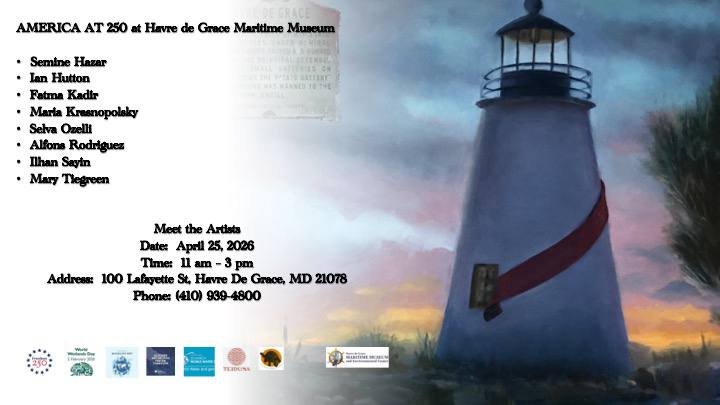
Hosted by the Havre de Grace Maritime Museum from January 31 – July 5th, 2026, the America at 250, is a collective exhibition at Havre de Grace Maritime Museum, connecting USA’s maritime heritage, environmental consciousness, and artistic interpretation of flags and landmarked lighthouses in a powerful celebration of 250 years of American history.
Sofia Fonseca, the founder of Teiduma1 explained “The exhibition brings together the work of Alfons Rodríguez alongside an international group of artists and colleagues: Semine Hazar, Ian Hutton, Fatma Kadir, Maria Krasnopolsky, Selva Ozelli, Ilhan Sayin, and Mary Tiegree.
The exhibition offers a reflective and visually compelling dialogue on USA’s history, identity, landscape, and shared futures at this significant milestone.
Alfons Rodríguez's contribution, including works from The Melting Age series, situates environmental awareness within broader historical and cultural narratives—reminding us that national anniversaries are also moments to reflect on responsibility, resilience, and continuity.”
The America at 250 exhibition along with the Flag CCL series of Selva Ozelli have been endorsed by Freedom 250 which is a national initiative launched by President Donald Trump to lead the celebration of the 250th anniversary of American independence on July 4, 2026. It is a public-private partnership aimed at honoring U.S. history, preserving historic sites, fostering patriotism, and highlighting innovation. A meet the artists event will be hosted by the museum on April 25th.
America at 250
Celebrating World Wildlife Day at the Havre de Grace Maritime Museum
Two flags from the America at 250 exhibition are featured as United Nations World Wildlife Day events. Celebrated on March 3, 2026, the day has a theme of "Medicinal and Aromatic Plants: Conserving Health, Heritage and Livelihoods" highlighting threats from habitat loss and overharvesting of plants.
Flowers of Wonderland Flag
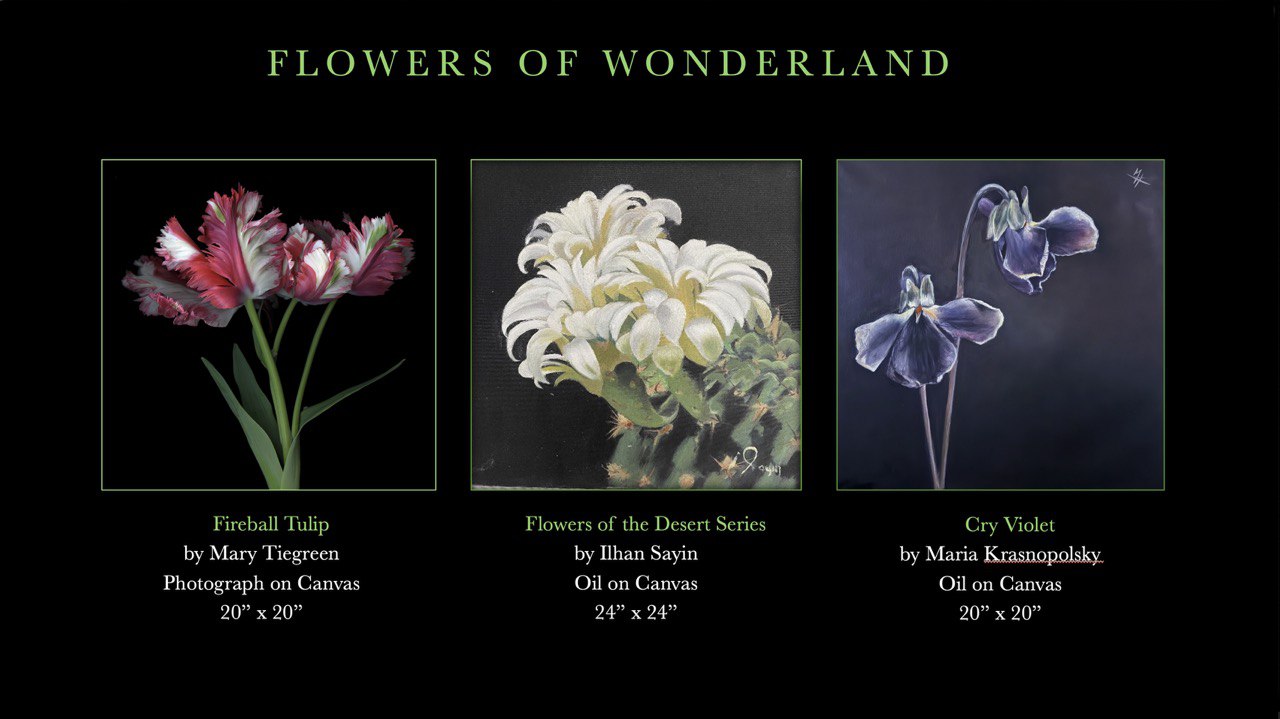 The Flowers of Wonderland Flag features the work of oil artists Maria Kranspolsky (Eulogy of Flora Series), Ihan Sayin (Flowers of the Desert and Flowers of Hope Series) and photographer and AI artist Mary Tiegreen (Wonderland Series) to draw attention to the vital role of flowers in human well-being, traditional knowledge, and sustainable economies. As flowers are vital for human well-being by reducing stress and improving mental health. They support traditional knowledge through indigenous ceremonies and cultural rituals and drive sustainable economies via the booming eco-friendly floral industry, pollination-dependent agriculture, and environmental services like pollution control and pollinator habitat.
The Cry violet (Viola cryana) painted by Maria Krasnapolsky, also known as the Cry pansy, is an extinct species of flower that was never native to the USA. It was endemic exclusively to a single locality on limestone outcrops in the Cry region of the Yonne department in France. The species was first reported in 1860 and described in 1878. It vanished from its only known wild habitat by 1930 and was declared completely extinct by the 1950s. Its extinction is primarily attributed to over-harvesting by collectors who picked the flowers faster than they could reproduce. As violets (Viola odorata and related species) are nutrient-dense, edible plants rich in vitamins A and C, used for their anti-inflammatory, antioxidant, and mucilaginous properties to soothe respiratory issues, skin conditions (eczema, acne), and lymphatic congestion.
Desert flowers as captured in oil artist Ilhan Sayin’s Flowers of the Desert series2 bloom primarily in America’s Southwest deserts, including the Mojave, Sonoran, and Colorado deserts, with peak seasons usually occurring from late February through April. Top locations for viewing the flowers include Death Valley National Park, Anza-Borrego Desert State Park, Joshua Tree National Park (California), Saguaro National Park (Arizona), and Picacho Peak State Park.
Desert flowers possess potent medicinal properties, traditionally used by indigenous cultures to treat ailments, reduce inflammation, and soothe skin. Key examples include Desert Lavender for insomnia and anxiety, Creosote for skin issues, and Prickly Pear for blood sugar regulation.
Native flowers of Maryland, as captured in Ilhan Sayin’s Flowers of Hope series3 purify air, improve soil health, and reduce stormwater runoff, decreasing the burden on municipal water systems. They are suitable for home gardens and supporting local pollinators, include the official state flower, the Black-Eyed Susan (Rudbeckia hirta), along with Purple Coneflower, Bee Balm, Cardinal Flower, and Virginia Bluebells.
These flowers are traditionally used to fight colds, flu, and infections, often acting similarly to Echinacea.
Mary Tiegreen’s Wonderland series4 of over 2,000 photographs artistically document plants, flowers, butterflies and feathers of her garden in Palisades, NY. Her photo of Fireball Tulip is a fringed tulip with pure white petals and intense cherry-red flames and reaches approximately 18 inches in height. Tulips (genus Tulipa) are traditionally used on skin health and traditional remedies. They contain compounds like auxin (promoting collagen and regeneration) and flavonoids (anti-inflammatory), making them useful for treating skin irritations, burns, and acting as a moisturizer. Tulip bulbs are also used traditionally to treat coughs and as a diuretic.
Hydrangea & Rose Flag CCL by Selva Ozelli
Selva Ozelli who is a native New Yorker painted a huge 13 ft x 13 ft 169 piece Hydrangea & Rose Flag for the Havre de Grace Maritime Museum (only partially on display- 77 pieces from this flag) based on her Flowers & Butterflies series5 for this museum to celebrate the 250th anniversary of our nation.
Hydrangeas are popular in Maryland gardens, especially blue hydrangeas (specifically Hydrangea macrophylla), while smooth hydrangeas (Hydrangea arborescens)—are native to the state's Piedmont and mountain regions. Hydrangea root (Hydrangea arborescens) is rich in anti-inflammatory and antioxidant compounds. It is used as an herbal remedy to support urinary tract health.
The rose is both the official national floral emblem of the United States (adopted 1986) and the New York state flower (adopted 1955). It was chosen by NY for its diversity in color and variety representing the diverse, vibrant culture of New York. It flourishes across the state, symbolizing both love and elegance and enduring spirit due to its ability to thrive in various conditions. Rose (petals, hips, roots) is rich in Vitamin C and nutrients and possesses potent anti-inflammatory, antioxidant, and astringent properties used to treat digestive issues (diarrhea, stomach trouble), soothe anxiety, and heal skin conditions.
World Wildlife Day Events of Selva Ozelli
1. https://www.trvst.world/climate-change/interview-sofia-fonseca
2. https://tiredearth.com/interviews/tired-earth-an-interview-with-ilhan-sayin-environmental-artist
3. https://www.trvst.world/climate-change/interview-ilhan-sayin/
4. https://irishtechnews.ie/mary-tiegreen-at-london-climate-action-week/
5. https://www.trvst.world/climate-change/lcaw-nature-positive/

The best of Tired Earth delivered to your inbox
Sign up for more inspiring photos, stories, and special offers from Tired Earth
By signing up for this email, you are agreeing to news, offers, and information from Tired Earth. Click here to visit our Privacy Policy.



Comment
Reply