



08 Mar 2026

Tired Earth
By The Editorial Board
By attacking a civilian water facility on Qeshm Island, Washington crosses a red line with unpredictable consequences for the entire Gulf region
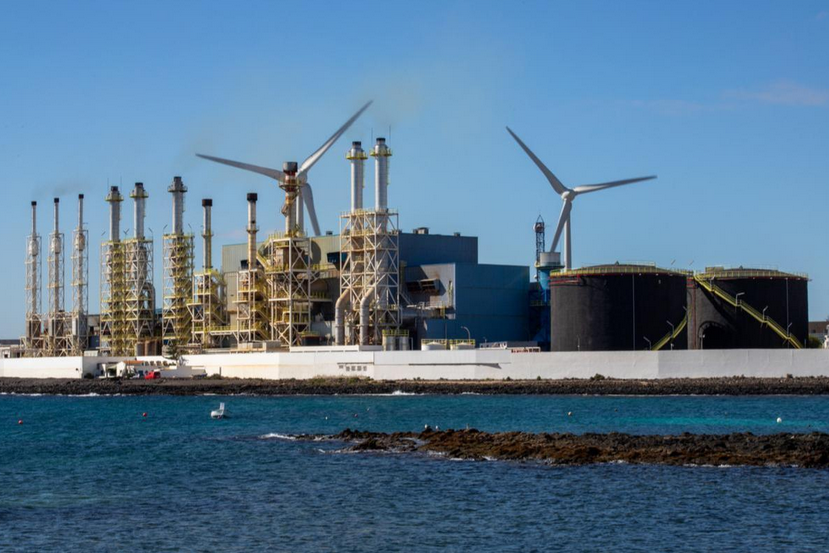
In a significant escalation of the ongoing conflict, Iran has accused the United States of striking a civilian desalination facility on Qeshm Island, an attack that has disrupted fresh water supplies to approximately 30 villages along Iran's southern coast.
Iranian Foreign Minister Seyed Abbas Araghchi took to social media platform X on Saturday to condemn what he described as a "blatant and desperate crime," warning that targeting his country's infrastructure would carry "grave consequences." The carefully worded statement concluded with a pointed observation: "The U.S. set this precedent, not Iran."
That final sentence resonated far beyond the immediate incident. Across the narrow waters of the Persian Gulf, the region's Arab states operate more than 400 desalination plants that produce roughly 40 percent of the world's desalinated water. For several Gulf countries, these facilities represent not merely an important resource but the sole viable source of drinking water.
Kuwait depends on desalination for approximately 90 percent of its freshwater needs. In Oman the figure stands at 86 percent, Saudi Arabia at 70 percent, and the United Arab Emirates at 42 percent. These facilities, concentrated along coastlines and highly visible from the air, would present extraordinarily vulnerable targets in any conflict where water infrastructure has been legitimized as a military objective.
Within hours of Araghchi's statement, Iranian state media reported that the Islamic Revolutionary Guard Corps had launched retaliatory strikes against the US naval base in Bahrain's Juffair, demonstrating the speed with which the conflict is escalating and the centrality that water infrastructure has suddenly assumed in the confrontation.
The targeting of a desalination plant marks a troubling departure from the norms that have governed previous conflicts in the region. While oil facilities, military bases, and shipping lanes have long been considered legitimate targets, civilian water infrastructure has generally remained outside the bounds of direct attack, in part because of the catastrophic humanitarian consequences that would follow its destruction and in part because Gulf states understood that any normalization of such attacks would threaten them far more than Iran.
That understanding may now have been overturned. Araghchi's statement, with its emphasis on the United States having "set this precedent," appeared designed to signal that if American forces could strike Iranian water infrastructure, Tehran now considered itself entitled to respond in kind against the region's far more extensive and vulnerable desalination network.
The implications are stark. A single successful strike against a major desalination facility in any Gulf state could deprive millions of people of access to drinking water for weeks or months. Unlike oil infrastructure, which can be replaced or supplemented from other sources, desalination plants represent a concentrated and irreplaceable node in the region's water supply chain. Their destruction would not merely inconvenience populations but would create immediate humanitarian emergencies.
Environmental consequences would compound the human toll. Desalination plants operate through a delicate balance of intake and discharge systems; their destruction would release concentrated brine and chemical treatment agents directly into already stressed marine ecosystems. The Persian Gulf's shallow, semi-enclosed waters, with limited circulation and high baseline salinity, would retain these contaminants for extended periods, affecting fisheries and coastal habitats across national boundaries.
The international community has yet to respond to this escalation, but the implications extend well beyond the immediate conflict. If water infrastructure has now been established as a legitimate military target, every coastal nation that depends on desalination must reconsider its assumptions about vulnerability and deterrence. The precedent that Araghchi invoked may prove far more consequential than either side currently acknowledges.
Source : news agencies

The best of Tired Earth delivered to your inbox
Sign up for more inspiring photos, stories, and special offers from Tired Earth
By signing up for this email, you are agreeing to news, offers, and information from Tired Earth. Click here to visit our Privacy Policy.



Comment