



10 Mar 2026

Tired Earth
By The Editorial Board
Iranian residents have reported headaches, difficulty breathing, and oil-contaminated rain settling on buildings and cars
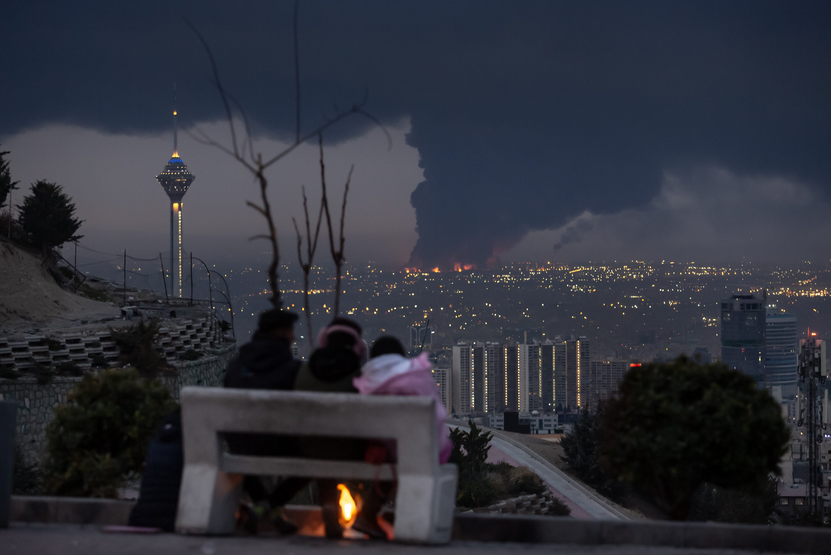
Reports are emerging of black rain falling over parts of Iran in the hours after US-Israeli airstrikes on oil depots on the weekend, with some outlets describing it as “acid rain”.
Iranian residents have reported headaches, difficulty breathing, and oil-contaminated rain settling on buildings and cars. Iran’s Red Crescent Society warned rainfall following the strikes could be “highly dangerous and acidic.”
This rain would include acids, but also likely a host of other pollutants that are harmful to humans and the environment in the short and long term. It may even be worse than the term “acid rain” conveys.
More broadly, the thick clouds of toxic smoke over densely populated areas in Iran are also a major problem for anyone breathing this air right now.
One of the primary ways air pollutants are removed from the atmosphere is through rain. When you have significant levels of pollutants in air they will be collected by falling water droplets and “rain out” of the atmosphere.
That’s why we are getting these reports of black rain falling from the sky after the oil depots were struck – evidence of just how contaminated the local air must be.
Israel and the United States claimed they were targeting Iranian military and government sites, but government officials and people say civilian structures such as schools, hospitals and major landmarks are increasingly coming under attack. At least 1,255 people have been killed in the strikes since February 28.
What Israeli and US military planners frame as a calculated degradation of state infrastructure is being described by local officials and environmental experts as an act of total warfare, and collective punishment.
Shina Ansari, head of Iran’s Department of Environment, described the systematic destruction of the oil depots as a blatant act of ecocide.
To Gabriel da Silva, associate professor of chemical engineering at the university of Melbourne, this black rain indicates toxic pollutants such as hydrocarbons, ultrafine particles known as PM2.5, and carcinogenic compounds called polycyclic aromatic hydrocarbons (PAHs) have made their way into the rain.
_1773122177.png)
Flames and smoke rise from an oil storage facility in Tehran (AP)
On top of this, there would be a mix of other unknown chemicals, likely including heavy metals and inorganic compounds from the building materials and everything else caught up in the initial explosions and the ensuing fires.
The smoke from the bombed oil depots would also contain sulfur dioxide and nitrogen dioxide, which are precursors to forming sulfuric acid and nitric aid in the air. This acid then makes its way into water droplets, and is responsible for what we conventionally label acid rain.
Ansari from Iran’s Department of Environment stated that the environment remains the silent victim of the war, noting that the incineration of vast fuel reserves has trapped the capital under a suffocating shroud of pollutants.
The medical and environmental fallout is immediate and severe. The Iranian Red Crescent Society warned that the smoke contains high concentrations of toxic hydrocarbons, sulphur, and nitrogen oxides. The organisation noted that any rainfall passing through these plumes becomes highly acidic, posing risks of skin burns and severe lung damage upon contact or inhalation.
Ali Jafarian, Iran’s deputy health minister, told Al Jazeera that this acid rain is already contaminating the soil and water supply. Jafarian added that the toxic air poses a life-threatening risk to the elderly, children, and those with pre-existing respiratory conditions, prompting authorities to advise residents to remain indoors.
Adel Shadid, a researcher in Israeli affairs suggests that the strategy is designed to make life hell for ordinary Iranians in hopes of sparking an uprising. Shadid noted a glaring contradiction in the rhetoric of Israeli Prime Minister Benjamin Netanyahu, who claims to support the Iranian people while overseeing the destruction of their basic means of survival.
There has been growing attention on the environmental impact of conflict worldwide. Part of this has emerged in the wake of past wars in Iraq and Kuwait, where there was large-scale deconstruction of oil wells and the use of burn pits.
We now know there are long-term health impacts on returning service people, including Australians. So we can assume local populations are also profoundly affected.
Source : the Conversation, news agencies

The best of Tired Earth delivered to your inbox
Sign up for more inspiring photos, stories, and special offers from Tired Earth
By signing up for this email, you are agreeing to news, offers, and information from Tired Earth. Click here to visit our Privacy Policy.


Comment