



18 Feb 2026

Tired Earth
By The Editorial Board
the mysterious plumes are caused by thermal convection, which is a kind of slow churning movement inside the ice driven by vertical differences in temperature.
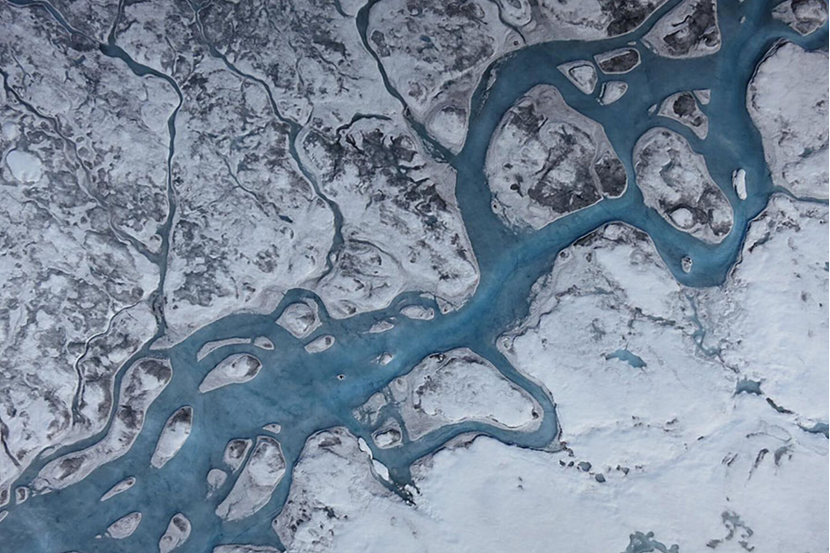
edited by Sadie Harley, reviewed by Robert Egan, phys.org
Deep inside the Greenland ice sheet are giant swirling plume-like structures. These have puzzled scientists for over a decade, but UiB researchers now believe they have cracked the mystery by applying the same mathematics used to understand how continents drift apart.
A new paper, published in The Cryosphere journal, suggests the mysterious plumes are caused by thermal convection, which is a kind of slow churning movement inside the ice driven by vertical differences in temperature. Thermal convection is a process usually linked to Earth's fiery mantle.
"We typically think of ice as a solid material, so the discovery that parts of the Greenland ice sheet actually undergo thermal convection, resembling a boiling pot of pasta, is as wild as it is fascinating," says Andreas Born, professor at the Bjerknes Center for Climate Research and the Department of Earth Science at UiB. He has researched ice sheets in the Northern hemisphere for more than 15 years and is co-author of the new paper.

Graphical abstract. Credit: The Cryosphere (2026). DOI: 10.5194/tc-20-1071-2026
"Finding that thermal convection can happen within an ice sheet goes slightly against our intuition and expectations. Ice is at least a million times softer than Earth's mantle, though, so the physics just work out. It's like an exciting freak of nature," says glaciologist and first author Robert Law.
"Our discovery could be key to reducing uncertainties in models of future ice sheet mass balance and sea-level rise," says Born.
Although the deep ice could be around ten times softer than commonly assumed, this does not necessarily mean it will melt faster.
"Improving our understanding of ice physics is a really major way to be more certain about the future," says Law, "but on its own, softer ice does not necessarily mean that the ice will melt faster or that sea level rise will be higher. We need further studies to fully isolate that."

Relevant GrIS properties when considering convection. Contour values are given in the top right of each panel. Credit: The Cryosphere (2026). DOI: 10.5194/tc-20-1071-2026
Greenland is frequently in the headlines. Mining, geopolitics and climate risks are regular topics in the news. Law says their findings do not predict disaster on Greenland or elsewhere, but they do highlight how complex and dynamic Greenland is.
"Greenland and its nature is truly special. The ice sheet there is over one thousand years old, and it's the only ice sheet on Earth to have a culture and permanent population at its margins," he says.
"The more we learn about the hidden processes inside the ice, the better prepared we'll be for the changes coming to coastlines around the world."
Source : phys.org

The best of Tired Earth delivered to your inbox
Sign up for more inspiring photos, stories, and special offers from Tired Earth
By signing up for this email, you are agreeing to news, offers, and information from Tired Earth. Click here to visit our Privacy Policy.


Comment