by ERINN Innovation
edited by phys.org
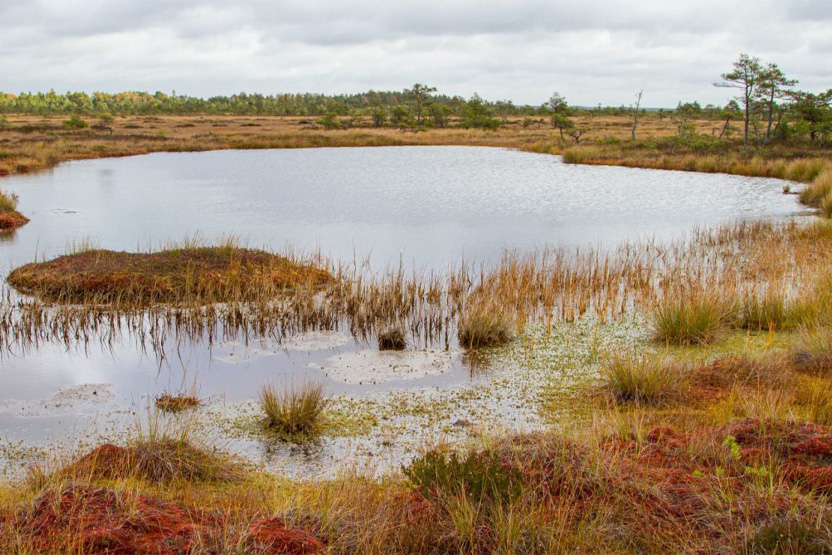
Only 7% of Europe's original area of peatlands remain. What's more: their climate boundaries are shifting. An international study led by Wageningen University as part of the WaterLANDS project analyzed the current distribution of peatlands and mapped their likelihood of remaining under future climate scenarios. They conclude that climate change will massively impact peatland functioning except for the most cool and wet parts of northern Scandinavia, Ireland, Scotland and in the mountains.
The paper is published in the journal Environmental Research Letters.
Peatlands loss
The research team determined the historical and current spatial distributions of peatlands, using the soil as a record to determine if peat had formed in any point in time, as well as the type of wetland to assess if peat forming potential had been retained.
"We have lost most European peatlands. Roughly 93% of the European soil area containing peat do not have ecologically functional peatlands today," says Enahu Tahitu, lead author and Ph.D. candidate at Wageningen University.
"This massive loss largely results from the peat extraction and agricultural conversion that contributed to building economic prosperity across the central lowlands of the continent."
Peatlands in the future
The research team mapped the climate conditions where peatlands occur today and projected the changes in these conditions under two scenarios of climate change. They found that climate suitability for peatlands will significantly decrease throughout most of the European continent.
"The remaining 7% of European functional peatlands will face increasing climatic pressure, likely persisting in smaller ranges of northern Scandinavia, Ireland, Scotland and at higher elevational ranges of the continent," adds co-author Milena Holmgren, Associate Professor on Ecosystem Resilience to Climate Variability and co-author of the study.
Peatland restoration and conservation
Peatlands are key ecosystems for mitigating climate change as globally they store twice as much soil carbon than forests do in their living biomass.
"Conserving and restoring what we have left is urgent—not only for our climate, but also for local communities. Degraded peatlands are vulnerable to drought, wildfire and erosion, which will directly impact air and water quality and future water supplies for human beings. We have identified the priority areas to work on in the coming years," stresses Juul Limpens, Associate Professor on Peatland Restoration and co-author of the study.
Developing best practices for large-scale, holistic wetland restoration
This study was carried out as part of the Horizon 2020 WaterLANDS project, a Green Deal project that's developing best-practices for wetland restoration in Europe. The WaterLANDS project is led by University College Dublin, Ireland and brings together 32 organizations from research, industry, government and non-profit sectors in 14 European countries.
"Previous attempts at wetland restoration have often been too localized or fragmented to make a significant difference to the re-establishment of ecosystems and species. We aim to co-create restoration at scale, based on ecological, social, governance and financial best practices, to connect habitats and communities across Europe, ensuring both thrive for many generations to come.
"The continental analysis of the distribution of historical and current peatlands, conducted by the team at Wageningen University, represents a major contribution in this direction by enabling us to identify where to prioritize our efforts," say Craig Bullock, Project Coordinator, University College Dublin.
Provided by ERINN Innovation







Comment