The analysis also reveals distinct global patterns in how butterfly ranges are shifting.
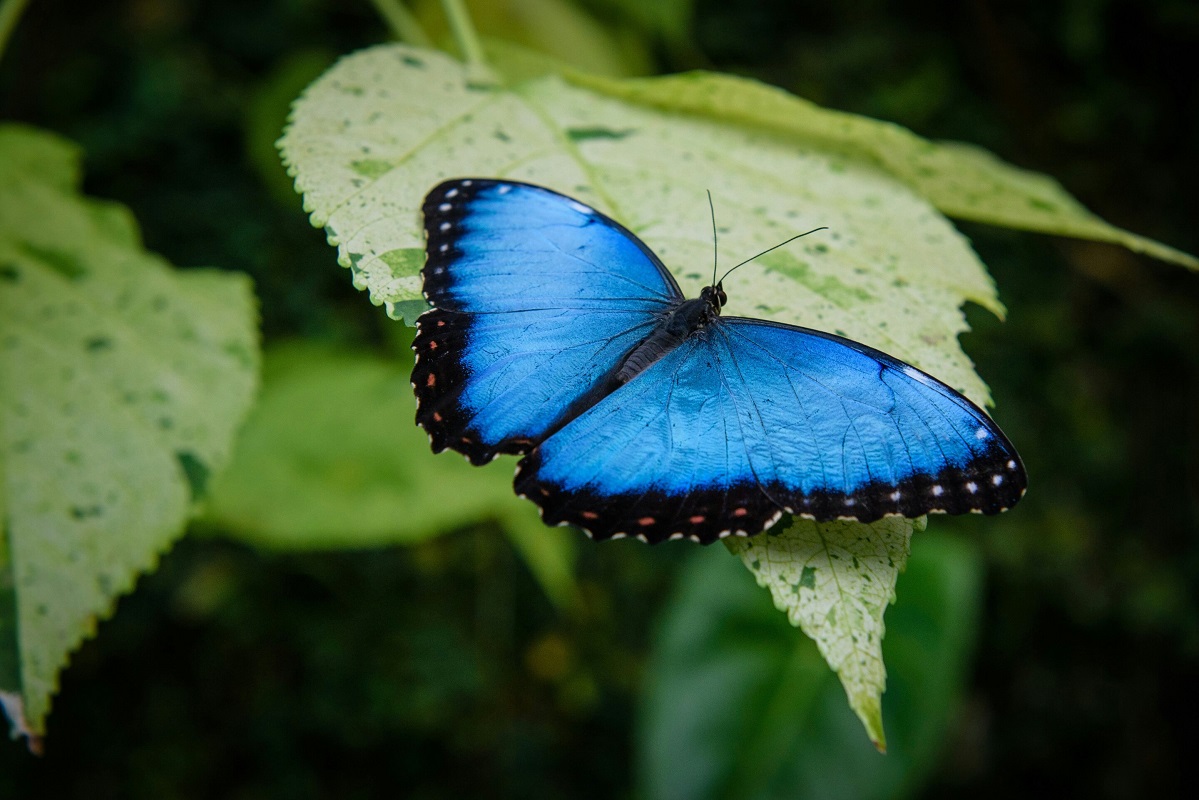
A global analysis of range-shift records for 1,758 butterfly species—10% of known butterfly species—found that 80% had expanded their range and that 79% of all recorded range shifts were linked to climate change and extreme weather events. The new study, published in Nature Ecology & Evolution, also reports range contractions for 27% of species, and 22% of species showed a change in elevation. Because many species exhibited multiple types of range shifts, the percentages for expansions, contractions and elevation changes are above 100%.
The study is the largest of its kind, analyzing 6,182 range-shift records across 105 countries and drawing on English- and non-English-language scientific literature as well as 68 expert assessments. It was led by researchers from Monash University, the German Center for Integrative Biodiversity Research (iDiv), the Friedrich Schiller University Jena, and the Helmholtz Center for Environmental Research (UFZ).
The analysis also reveals distinct global patterns in how butterfly ranges are shifting. Horizontal expansions were recorded on every continent, with particularly high numbers in tropical countries. Range contractions were seen more often in temperate regions, such as Europe and North America. Elevational shifts were almost exclusively in the Northern Hemisphere.
"We found butterfly species shifting their ranges on every continent where they occur," says first author Dr. Shawan Chowdhury, an alumnus of iDiv, the University of Jena and the UFZ, who now works at Monash University in Melbourne. "The scale is astonishing, and it's happening far beyond the well-studied regions of Europe and North America."
Butterflies are early indicators of change, Chowdhury adds, noting that "if their ranges are shifting this dramatically, it signals profound changes across ecosystems."
Insufficient monitoring leaves many gaps
The study also makes clear that countries differ greatly in how well butterfly range shifts are being documented.
For example, in some European countries, like the Czech Republic, Finland, Luxembourg, Spain and Sweden, records exist for more than half of the countries' butterfly species. In most other countries, however, range shifts have been documented for fewer than 10% of species, reflecting limited monitoring and a lack of data.
By including non-English studies and expert knowledge, the authors could generate a uniquely comprehensive global dataset.
"Recording contributions from butterfly experts from society and efforts of natural history societies [was] hugely important to understand global butterfly biodiversity patterns," says Dr. Aletta Bonn, research group head at UFZ and iDiv, and a professor at the University of Jena.
Still, severe geographic data gaps persisted in Central Africa, Southeast Asia, New Guinea and the Amazon Basin, all critically underrepresented despite being global biodiversity hotspots.
"The study helps balance the picture, but it also demonstrates an urgent need for coordinated action to expand monitoring efforts globally," explains senior author Dr. Guy Pe'er of iDiv and UFZ. The authors emphasize that without equitable, standardized and multilingual biodiversity monitoring, conservation efforts risk being guided by an incomplete evidence base.










Comment