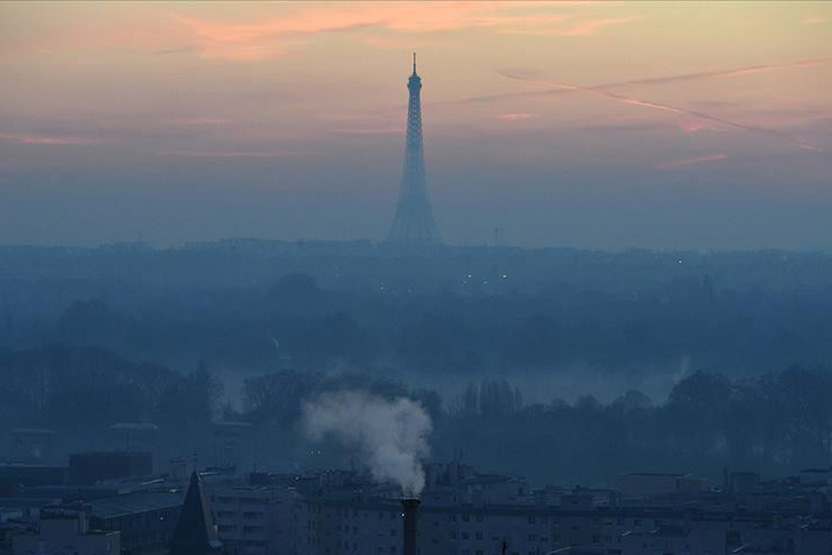
Air pollution remains one of the deadliest environmental threats in the European Union, despite notable improvements in air quality over the past two decades. A new assessment from the European Environment Agency (EEA) estimates that unsafe pollution levels caused 182,000 premature deaths in 2023 alone — even as mortality linked to fine particulate matter (PM2.5) has fallen by 57% since 2005.
According to the EEA, 95% of urban residents in Europe are exposed to pollution levels far exceeding World Health Organization guidelines. Air pollution continues to outpace noise, chemical exposure and even climate-related heatwaves as the continent’s most harmful environmental hazard.
PM2.5 — microscopic airborne particles no wider than 2.5 micrometers — is singled out as the primary killer. These particles penetrate deep into the lungs and bloodstream, worsening asthma, heart disease and lung cancer; emerging research also links them to increased dementia risk. While emitted largely by human activity — road traffic, industrial emissions, solid-fuel heating, even household air fresheners — PM2.5 levels are increasingly influenced by climate-driven wildfires.
Southern and Eastern Europe Hit Hardest
Italy recorded the highest toll in 2023, with more than 43,000 pollution-related deaths, followed by Poland (25,000) and Germany (over 21,000). Relative impacts — measured in years of life lost per 100,000 adults — were highest in the Balkans, particularly North Macedonia, Bosnia and Herzegovina and Albania.
At the opposite end of the scale, Iceland reported no air-pollution deaths, while Finland recorded just 34. Northern and north-western European countries, including Sweden, Estonia and Norway, experienced the lowest relative impacts.
Policy Response and Economic Costs
The findings arrive as the EU implements its revised Ambient Air Quality Directive, which came into force in December 2024. Jessica Roswall, the EU Commissioner for Environment, Water Resilience and the Circular Economy, warned that polluted air kills around 250,000 Europeans every year and weighs heavily on the bloc’s economy — up to €850 billion annually in health and productivity losses.
The new rules aim to sharply reduce exposure, improve biodiversity protection and strengthen economic resilience.
Globally, the WHO estimates that 9 in 10 people breathe polluted air, and around 7 million deaths each year are linked to long-term exposure to fine particulate pollution.








Comment