Books and Magazines

Introducing the best selling books about environment

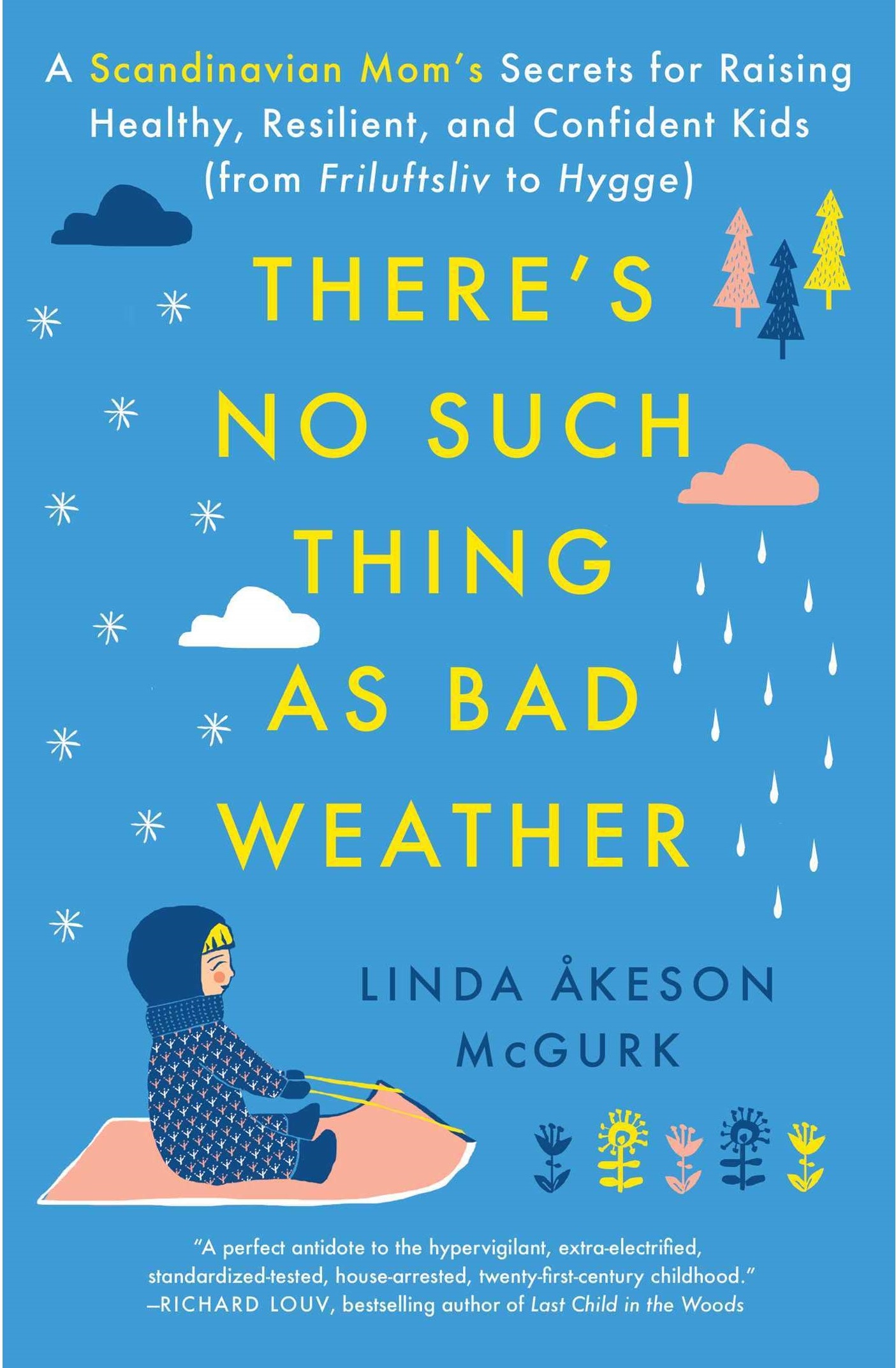
There's No Such Thing as Bad Weather

Bringing Up Bébé meets Last Child in the Woods in this lively, insightful memoir about a mother who sets out to discover if the nature-centric parenting philosophy of her native Scandinavia holds the key to healthier, happier lives for her American children.

When Swedish-born Linda McGurk moved to small-town Indiana with her American husband to start a family, she quickly realized that her outdoorsy ways were not the norm. In Sweden children play outside all year round, regardless of the weather, and letting young babies nap outside in freezing temperatures is not only common - it is a practice recommended by physicians. In the US, on the other hand, she found that the playgrounds, which she had expected to find teeming with children, were mostly deserted. In preschool, children were getting drilled to learn academic skills while their Scandinavian counterparts were climbing trees, catching frogs, and learning how to compost. Worse, she realized that giving her daughters the same freedom to play outside that she had enjoyed as a child in Sweden could quickly lead to a visit by Child Protective Services.

The brewing culture clash finally came to a head when McGurk was fined for letting her children play in a local creek, setting off an online firestorm when she expressed her anger and confusion on her blog. The rules and parenting philosophies of her native country and her adopted homeland were worlds apart.

Struggling to fit in and to decide what was best for her children, McGurk turned to her own childhood for answers. Could the Scandinavian philosophy of "there is no such thing as bad weather, only bad clothes" be the key to better lives for her American children? And how would her children's relationships with nature change by introducing them to Scandinavian concepts like friluftsliv ("open-air living") and hygge (the coziness and the simple pleasures of home)? McGurk embarked on a six-month-long journey to Sweden to find out.

There's No Such Thing as Bad Weather is a fascinating personal narrative that highlights the importance of spending time outdoors and illustrates how the Scandinavian culture could hold the key to raising healthier, resilient, and confident children in America.

PLANT A TREE- SAVE THE PLANET

Greetings from Energime University!

Welcome to the first issue of the EUC2 iNews digital magazine. There is a great deal going on at Energime University and we hope you will enjoy our stories and updates. 

You might be new to EUC2. It stands for Energime University Calling, Energime University Community.

We have articles about Future Pioneers ~ the Children, Young Entrepreneurs ~ finding new solutions to current sustainability problems, Experts, Influencers and Mentors.

The section on Future Pioneers will be focusing on how to help children reconnect with Mother Nature. Children who do not value nature, will not fight to protect it. 

Daniel McCollister is covered in our section of Young Entrepreneurs. He is the creator of CROPSWAP, an APP that facilitates community gardeners to swap fruits and vegetables. A great way to connect the community and keep the harvested produce from going to waste.

William Sosinsky, Energime University’s Founder and Executive Director, will be addressing complex issues, providing implementable solutions and interviewing influencers from around the world.

Bill's interview for this issue is with Dennis L. Meadows, Author of the book Beyond the Limits.

Energime University invites you to join our community and we look forward to hearing from you. In time we hope to establish a community of like-minded people. Mentors like you, who will guide others and empowering them in becoming ethical stewards of Mother Earth.

Together we can keep Mother Earth vibrant and alive.
 

The Sixth Extinction: An Unnatural History

*Starred Review* It didn’t take long for Homo sapiens to begin “reassembling the biosphere,” observes Kolbert, a Heinz Award–winning New Yorker staff writer and author of Field Notes from a Catastrophe: Man, Nature, and Climate Change (2006). By burning fossil fuels, we are rapidly changing the atmosphere, the oceans, and the climate, forcing potentially millions of species into extinction. Five watershed events in the deep past decimated life on earth, hence the designation “Sixth Extinction” for today’s ­human-propelled crisis. To lay the groundwork for understanding this massive die-off, Kolbert crisply tells the stories of such earlier losses as the American mastodon and the great auk and provides an orienting overview of evolutionary and ecological science. She then chronicles her adventures in the field with biologists, botanists, and geologists investigating the threats against amphibians, bats, coral, and rhinos. Intrepid and astute, Kolbert combines vivid, informed, and awestruck descriptions of natural wonders, from rain forests to the Great Barrier Reef, and wryly amusing tales about such dicey situations as nearly grabbing onto a tree branch harboring a fist-sized tarantula, swimming among poisonous jellyfish, and venturing into a bat cave; each dispatch is laced with running explanations of urgent scientific inquiries and disquieting findings. Rendered with rare, resolute, and resounding clarity, Kolbert’s compelling and enlightening report forthrightly addresses the most significant topic of our lives. --Donna Seaman

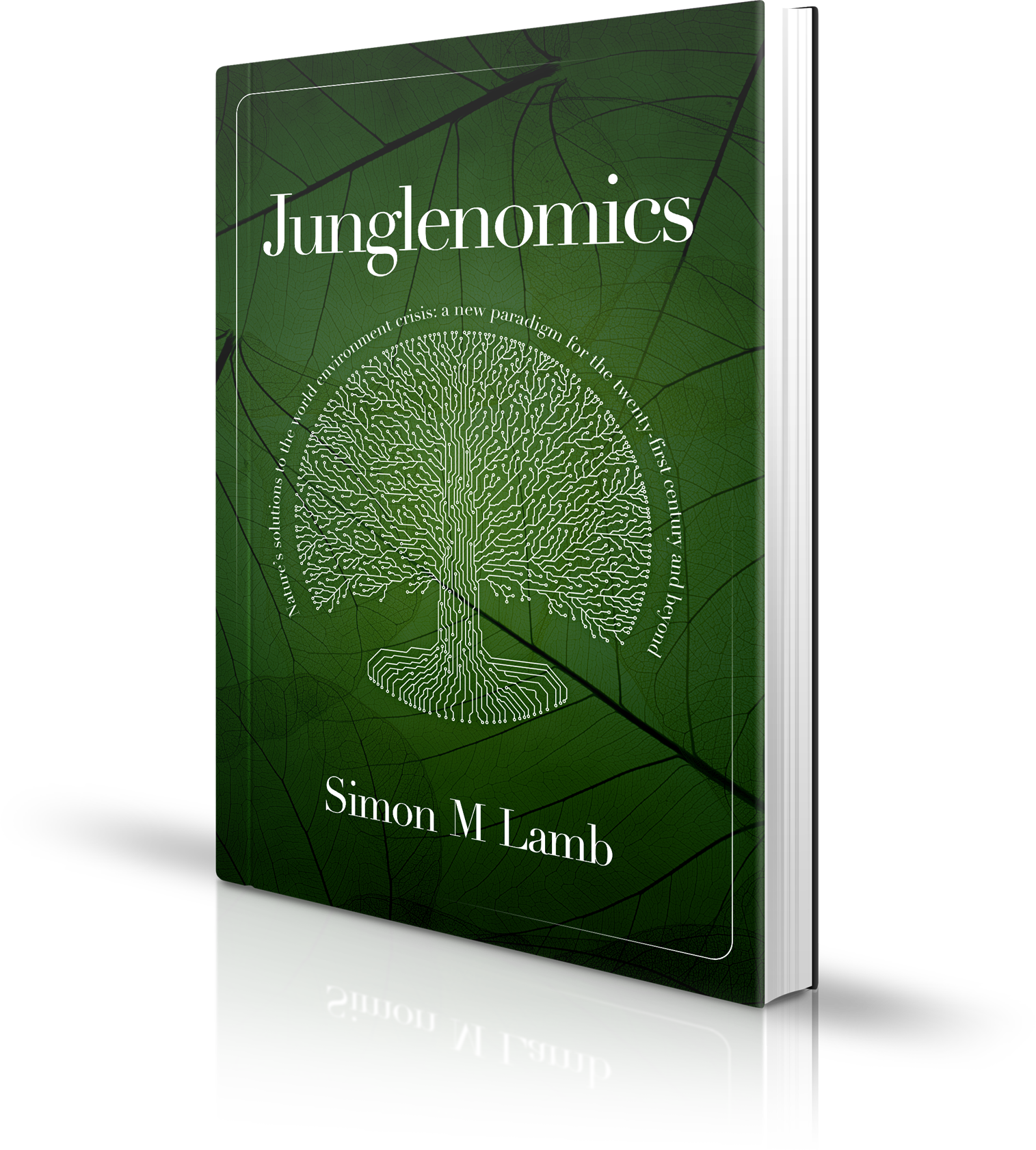
JUNGLENOMICS

Junglenomics is all about protecting and restoring the natural environment and its biodiversity by introducing a form of economics that imitates the workings of natural ecosystems.

    The book begins by tracing the origins and growth of our environmental problems from the birth of farming to the development of modern money-based economies. It argues firstly that, just like species in ecosystems, we humans are genetically programmed to seek out new resources; and secondly that we inhabit a worldwide “economic ecosystem” in which people act out roles that are the exact equivalent to species in natural ecosystems. The only real difference is that ours is a “virtual” ecosystem, where rather than needing to evolve physically to occupy a new role, we are “avatars” who can step in and out of roles as the opportunity arises. In the economic world, technology is the equivalent to evolution, and the roles of money, innovation and markets have combined to evolve a whole array of niches where none previously existed, for example in electronics, energy and financial services.

    This has brought a unique and often devastating set of problems. There has been a huge proliferation of economic niches exploiting the world’s resources so fast and furious that it has left the rest of the “economic ecosystem” behind. This is mostly because there has not been time for enough clean-up “species”, which we find everywhere in Nature, to evolve alongside them. Natural ecosystems have no waste because evolutionary change is very slow, and that slowness allows the discarded waste that comes from the activities of one species to become a vital resource for another. The consequence of high-speed economic evolution is that we have a large supply of ‘dirty’ big beasts colonising and dominating the economic ecosystem, with the supply of “detrivores” to clean up after them lagging far behind. Junglenomics’ conclusion is thus that the chief cause of our environmental problems is much too much ‘dirty’ economic evolution, much too fast.
     
So how can we now establish the kind of balance that natural ecosystems enjoy and stop ourselves from damaging the natural world ever further? The answer, Junglenomics argues, is that balance between economics and ecology can yet be found by using highly successful natural ecosystems as a blueprint. Only in this way can the world achieve benign economic growth while conserving valuable ecosystems and their biodiversity. This involves, among many other things, nurturing and fast-tracking “good” technology and environmentally benign markets to control or eliminate “bad” ones; by establishing economic “symbiosis” to clear up behind polluters; by enlisting powerful economic actors in pursuit of ‘green’ profit to conserve and restore vulnerable wilderness; and by re-valuing environments and biodiversity to make them more valuable intact and alive than destroyed and dead. 

      In subsequent chapters, the Junglenomics paradigm is applied variously to pollution, land degradation, marine ecosystems, wildlife markets, wilderness destruction (including rainforests), and to the overall decline of biomass and biodiversity. *

    Junglenomics concludes that a World Environment Organisation is needed to disseminate ideas efficiently, share new technology and co-ordinate policy. It argues that we cannot cure new problems with old, failed policies; that a fresh mindset is needed to tackle the enormous environmental challenges facing the world; and that the Junglenomics paradigm - Nature’s paradigm - is the only way to achieve this for the long term.


*a longer synopsis covering these chapters is available on request.

 

newsletter

The best of Tired Earth delivered to your inbox

Sign up for more inspiring photos, stories, and special offers from Tired Earth

By signing up for this email, you are agreeing to news, offers, and information from Tired Earth. Click here to visit our Privacy Policy.