


03 Jun 2026
Shember Andrew
On this World Environment Day, the question for policymakers, practitioners, and citizens is simple: will we treat climate action as compartmentalized spending or as a redesign of the systems that produce risk? Will we use the next five years to entrench halfway measures, or to catalyze the structural changes, finance reform, local empowerment, ecosystem restoration, governance coherence, and equity, that durable resilience demands?
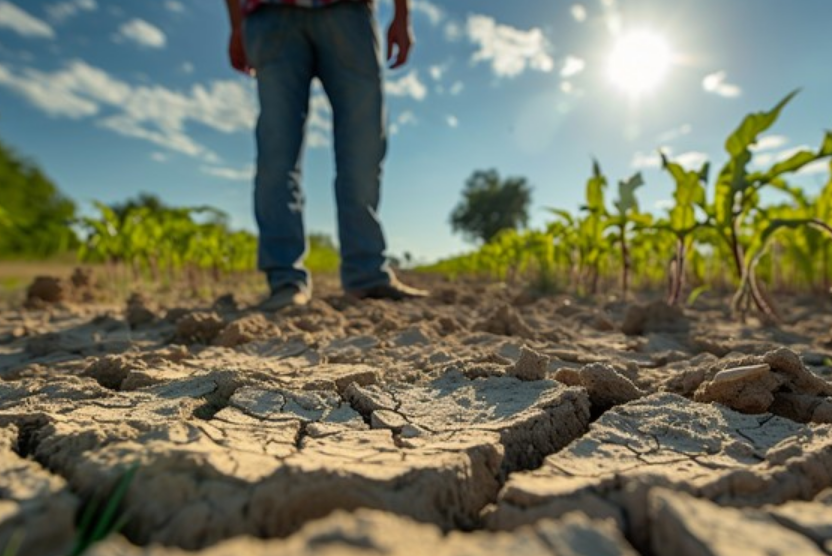
We stand at a hinge moment. The headline figures, temperatures, sea-level rise, and carbon budgets, are familiar enough to have lost their shock. What is less discussed in policy halls and donor reports is the lived urgency: the decisions communities, cities, and governments make this year will determine whether parts of the world stabilize into resilience or slide into chronic crisis. World Environment Day 2026 comes at this inflection: not a ceremonial calendar stops, but a call to move from incrementalism to coordinated, accountable action. Now for the climate means now for funding alignment, now for local ownership, and now for systems thinking.
In the last few years climate science and policy matured in parallel. Climate models became more precise; adaptation tools more practical; corporate net-zero pledges multiplied. Yet emissions have not dropped at the rates required to meet agreed targets, and adaptation financing remains badly skewed. Too often, money flows toward one-off projects that look good on paper but fail to shift trajectory on the ground. To change that, we must change the frame: treat the climate crisis as an operational, multi-scalar challenge requiring political courage, institutional redesign, and social inclusion.
First, finance must be practical and predictable. The unmet adaptation needs of vulnerable regions, coastal communities, arid agricultural zones, and rapidly urbanizing informal settlements, grow each year. Donors and development banks must pivot from short-term grants and pilot projects to long-term blended finance that couples concessional capital with private investment, guarantees, and locally governed revolving funds. Predictability matters: municipalities cannot strengthen drainage systems, restore wetlands, or retrofit schools without multi-year commitments. Equally important is aligning climate finance with ordinary public budgets; adaptation cannot be an afterthought shelved into separate accounts.
Second, decision-making must move closer to those who live the impacts. Top-down policies without local ownership create perverse outcomes: engineered solutions that ignore traditional land stewardship, compensation schemes that fail the most marginalized, and adaptation plans that never leave ministries' drawers. Community-led approaches, supported by technical assistance, legal backing for land rights, and measurable accountability, produce better, more durable outcomes. Local actors hold ecological knowledge and social capital; when they lead, projects are more likely to scale and persist.
Third, we must treat ecosystems as infrastructure. Soil, wetlands, forests, and coastal mangroves provide flood buffering, carbon sequestration, and livelihoods in ways that engineered infrastructures do not replicate at the same cost or co-benefit profile. Restoring degraded lands and protecting intact ecosystems should be core components of national adaptation and mitigation strategies. This requires reframing cost–benefit analysis to value long-term ecosystem services, and redesigning procurement and planning rules so natural solutions are competitive options.
Fourth, governance needs coherence and clarity of roles. Fragmentation, across ministries, agency mandates, and funding streams, undermines effort. Countries need national climate strategies translated into spatial plans, sector budgets, and metrics tied to delivery. Internationally, finance must reward plans with clear implementation pathways and measurable outcomes, not only well-written proposals. Performance-based financing, with safeguards for equity and rights, can help bridge ambition to action.
Fifth, the private sector must be a constructive partner, not merely a source of pledges. Businesses can accelerate decarbonization and adaptation when regulated by clear standards and incentivized through stable policy signals. Public–private partnerships should focus on long-term resilience assets, water systems, climate-smart agriculture supply chains, resilient housing, while ensuring that risk transfer mechanisms protect vulnerable households from privatization of essential services.
Finally, equity must be non-negotiable. The moral case for climate justice is straightforward: those least responsible for historical emissions suffer most. But justice is also practical. Inclusive processes yield better data, more durable investments, and stronger social license for change. Young people, women, Indigenous groups, and smallholder farmers must have seats at decision tables and direct access to finance. Reparative mechanisms, loss and damage funds, improved access to concessional finance, are not charity; they are necessary ingredients for global stability.
These shifts require courage. They ask political leaders to prioritize long-term welfare over short-term optics, donors to reconfigure risk appetites, and institutions to trade silos for systems. They also demand humility: policies should be designed to learn, iterate, and correct based on outcomes rather than defended as immutable blueprints.
World Environment Day is an opportunity to signal intent. But signals alone will not turn the tide. The real test is whether national plans are matched with budgets, whether communities exercise agency over contested lands, whether finance flows from pledges into measurable resilience, and whether every climate intervention is judged by its effect on people and ecosystems together.
Now for the climate is, at its core, a call for alignment, of finance, governance, knowledge, and justice, so that incremental work accumulates into systemic transformation. The cost of failing to align is large: not only economic losses measured in GDP, but the erosion of livelihoods, cultural heritage, and ecological integrity. The payoff for getting it right is also immense: healthier soils and coasts, more secure food systems, and cities that can withstand shocks without fracturing.
On this World Environment Day, the question for policymakers, practitioners, and citizens is simple: will we treat climate action as compartmentalized spending or as a redesign of the systems that produce risk? Will we use the next five years to entrench halfway measures, or to catalyze the structural changes, finance reform, local empowerment, ecosystem restoration, governance coherence, and equity, that durable resilience demands?
The clock is not yet against us. The window to limit damage and build resilient societies remains open, but it is narrowing. Now for the climate means turning commitments into credible plans with resources and accountability, amplifying local leadership, and reframing how we value nature’s services. The choices we make now will determine whether the next generation inherits a world we stabilized, or one we simply adapted to survive. The time for cautious optimism has passed; the time for decisive alignment is here.

The best of Tired Earth delivered to your inbox
Sign up for more inspiring photos, stories, and special offers from Tired Earth
By signing up for this email, you are agreeing to news, offers, and information from Tired Earth. Click here to visit our Privacy Policy.






Comment
Reply