


03 Jun 2026
Shember Andrew
The question for World Environment Day is not whether we can imagine a greener future—we can. The question is whether we will spend this year listening, funding, and scaling what already works for people who cannot wait. For them, now is not a metaphor. Now is a season of choices that will shape the lives of millions. Let our response start there.
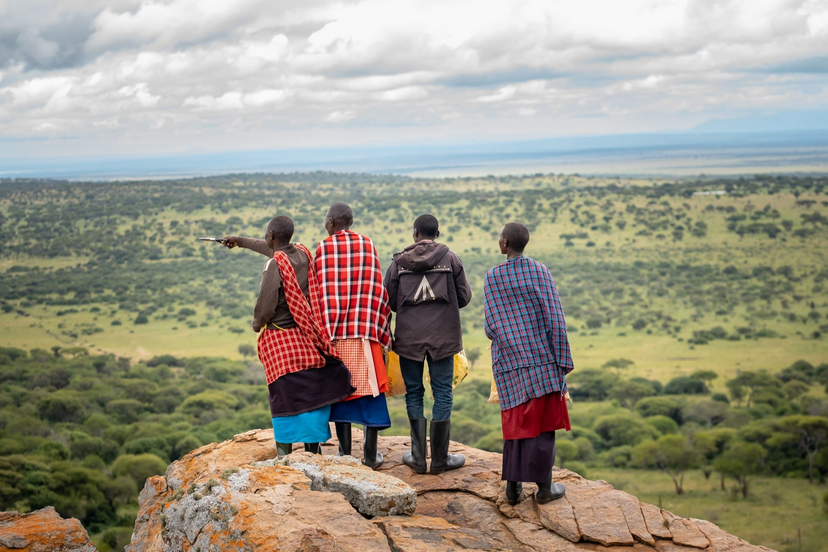
When Amina walks the cracked ridges of her millet field at dawn, she does more than check soil moisture, she reads a decade of changing weather. The rains that once arrived like clockwork now come in fits and violent pauses. Her neighbour's daughter sold the family goat last year to pay for school after a flood swept their compound. Across continents, in a low-lying fishing village, a teenager named Carlos keeps a notebook of tides that no satellite could explain: the days the sea rose higher than memory, the nights when the smell of salt made fishers hesitate to leave the shore.
These lived histories are the true ledger of climate change. They are not only statistics to be modelled; they are decisions waiting to be made, about where to build, what crops to plant, whose knowledge gets counted. World Environment Day 2026 should be less about grand pronouncements and more about scaling the small, smart responses that people like Amina and Carlos already use to survive.
I visited a riverside town last year where elders still point to a knot in a fig tree as proof of an earlier drought. That knot anchors a local plan: a community-managed sand dam that captures water in the dry season, a revived rota for grazing, and a shared fund for school fees when harvests fail. The project started with a few women proposing a simple measure, reinforce a traditional water point, and grew because outsiders learned to listen and to loosen control. When local voices lead, adaptation becomes less a project and more a practice.
This human-scale success shows what’s missing at larger scales. Funding flows often favour flashy pilots packaged for donors, not the patient, iterative work communities need. Municipalities plan drainage channels without consulting those who use them, engineers design seawalls that kill fisheries, and climate budgets sit in ministries while households remain exposed. To change outcomes, finance must follow people, not the other way around. Predictable, multi-year support for locally led solutions turns reactive coping into planned resilience.
Treating ecosystems as infrastructure also plays out in daily life. For coastal families who rely on mangroves for crab nurseries, a restored stand of trees is the difference between a steady income and one season of ruin. For smallholder farmers, restoring a patch of degraded soil can mean the return of a harvest that keeps children in school. These are not abstract co-benefits; they are concrete livelihoods, health, and dignity.
But scale and equity move in tandem. In cities where informal settlements are painted as inevitable risks, residents often lack legal rights that would let them plan or secure climate funds. In rural regions, women and young people carry disproportionate burdens—fetching water farther each year, patching roofs after storms, mobilizing food-sharing networks. When decision-making tables exclude these voices, responses fracture. Inclusion is not optional tokenism; it is a practical requirement for interventions that last.
The private sector can help, but only if policies channel investment toward social outcomes. Financing resilient housing or climate-smart supply chains must ensure that returns do not come at the cost of affordability or access. Performance-based contracts can tie private capital to measurable benefits for communities, and risk guarantees can unlock investment where uncertainty is high. Yet regulation and strong public institutions are needed to ensure private interest aligns with public good.
Finally, there is justice. For people whose lives have been reshaped by climate extremes, language like "loss and damage" is not an academic term, it is the story of a home lost to erosion, of crops failing year after year. Reparative financing, easier access to concessional loans, and locally governed risk pools are ways to acknowledge those harms and begin repairing them. Practical compensation, coupled with support for restoring livelihoods, helps rebuild trust and social resilience.
World Environment Day is an invitation to listen. Policymakers should travel not only to capital cities and conference halls but to farms, mangrove fringes, and informal settlements. Funders should ask whether their grants strengthen local institutions and whether recipients can sustain the work after the pilot ends. Practitioners should measure success not by the number of projects launched but by whether families sleep easier and crops survive the next shock.
Back in Amina’s village, plans are unfolding: a village savings group doubled as an emergency fund; a local school converted part of its grounds into a storm-resilient communal shelter; and a cooperative linked farmers to a climate information service that translates forecasts into planting calendars. These measures are imperfect and often incremental, but they are rooted in the realities people face daily.
Now for the climate, therefore, begins at the kitchen table, at the water point, at the schoolyard, the places where policy meets practice. It requires donors and officials to step back and let local agency lead; it needs finance structured for patience; it must value nature as infrastructure; and it must center justice as a guiding principle. If the next five years are to matter, they will be years when small acts of adaptation are recognized, supported, and amplified.
The question for World Environment Day is not whether we can imagine a greener future—we can. The question is whether we will spend this year listening, funding, and scaling what already works for people who cannot wait. For them, now is not a metaphor. Now is a season of choices that will shape the lives of millions. Let our response start there.

The best of Tired Earth delivered to your inbox
Sign up for more inspiring photos, stories, and special offers from Tired Earth
By signing up for this email, you are agreeing to news, offers, and information from Tired Earth. Click here to visit our Privacy Policy.






Comment
Reply