



07 Jan 2026

Tired Earth
By The Editorial Board
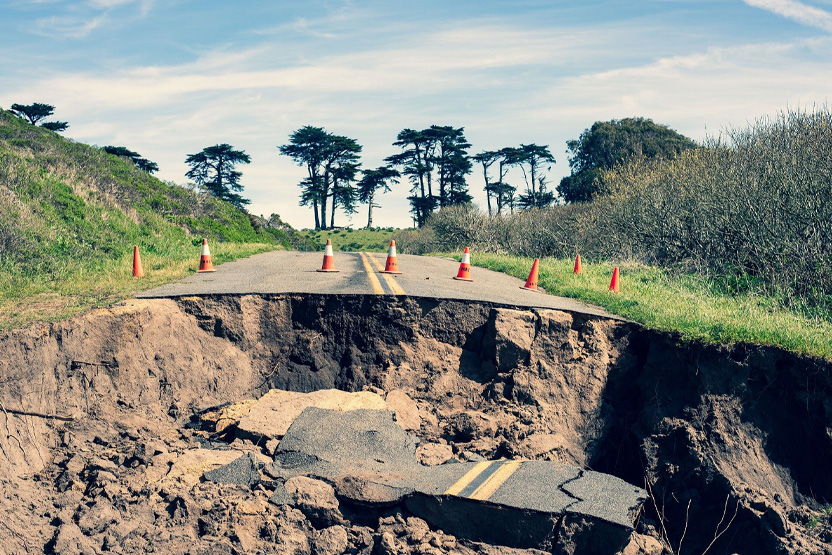
Credit: Pixabay/CC0 Public Domain
by Cynthia McCormick Hibbert, Northeastern University
edited by Lisa Lock, reviewed by Robert Egan
Municipal bonds are a time-honored way to fund roads, schools, bridges and other public projects while paying investors interest, usually at tax-free rates.
But what happens when floods, hurricanes, wildfires and other climate events buckle roads, swamp public buildings and disrupt the municipal revenues that pay for the bond debt?
They can create what researchers from Northeastern University call a climate debt doom loop that makes it even harder for cities and towns to respond to and prepare for future disasters.
In a paper published in Nature Cities, a new journal focusing on resilient, greener environments, professor Auroop Ganguly and Ph.D. graduate student Aayushi Mishra worked with finance experts to describe how climate risk creates challenges as well as opportunities for municipalities to protect their infrastructure and their tax base.
"If more and more bridges and roads get affected by climate disasters, the financing aspect becomes a greater challenge," said Mishra, who is working on her doctorate in interdisciplinary engineering. "This is especially the case for under-resourced communities, cities that don't have a great tax base to rely on."
But there are ways to disrupt the doom loop, she said.
Municipal bonds are debt securities issued by states, counties, cities and towns to cover costs such as capital projects, including the construction of schools, highways, water systems and sewers, according to the U.S. Securities and Exchange Commission.
Municipalities and states rely on their revenue base to repay investors when the bonds come due. For generations, investments in the bonds, which currently finance more than 70% of the country's public projects, have been considered low risk.
Climate events, both sudden and slow-moving, are exposing vulnerabilities within the public finance system, Mishra said. Underpricing bonds means there are not enough funds to address catastrophic storms, fires and rising waters.
The result is the "vicious cycle" known as the climate debt doom loop, according to the Nature Cities article. "Growing physical losses impact municipal public health, which limits adaptation efforts, thereby raising future climate exposure risks and subsequently increasing borrowing costs," the research found.
The costs are high, the researchers said. In 2023 alone, the U.S. experienced 28 separate billion-dollar disasters.
Holes in the safety net
The job of dealing with climate blows to infrastructure is increasingly falling on cities, states and towns as the federal government withdraws support for such agencies as the Federal Emergency Management Agency, Mishra and Ganguly said.
In the first week of the new year, CNN reported that the Trump administration is cutting dozens of frontline staff at FEMA.
At the same time, insurance companies are withdrawing from high-risk states such as Florida, Louisiana and California, Mishra said.
"The safety nets are getting eroded and the responsibility of not just recovery but resilience itself is falling onto states and municipalities," she said.
Mishra said that creates an opportunity for market growth.
Disrupting the loop
Taking advantage of the low-cost, low-financing aspects of municipal bonds can help cities prevent their subways from flooding and protect waterfronts important for tourism, said Tom Doe, founder and chairperson of the board of Municipal Markets Analytics Inc. He collaborated with Northeastern researchers and others on the Nature Cities article.
"Attention needs to be drawn to the tax revenue streams that are in harm's way," he said.
Doe said he predicts that the $500 billion in municipal bonds issued annually will increase to a trillion in the 2030s "largely because of projects related to climate resilience and adaptation."
Innovative approaches taken by cities and towns include an investment by Cincinnati in stormwater management and affordable housing due to anticipated in-migration as a climate safe haven.
Residents of Virginia Beach, Virginia, passed a multi-million-dollar bond referendum to finance flood defense infrastructure, Mishra said. And Miami voters passed a Miami Forever general obligation bond to address sea-level rise and promote affordable housing, among other things.
Ganguly, Northeastern distinguished professor of civil and environmental engineering, said in the Nature Cities article that Mishra built a bridge between academic theory, private sector expertise and public sector practice.
"She has been influencing or starting to influence best practices," he said.
"The key takeaway is that this market is something that a lot of cities rely on for infrastructure financing," Mishra said, adding that climate risk needs to be part of the conversation.
The Nature Cities paper is not about policy innovations that may be a hard sell to voters, Mishra said. "This is a paper that talks about things that are already here that we can employ."
Provided by Northeastern University
This story is republished courtesy of Northeastern Global News news.northeastern.edu.Source : phys.org

The best of Tired Earth delivered to your inbox
Sign up for more inspiring photos, stories, and special offers from Tired Earth
By signing up for this email, you are agreeing to news, offers, and information from Tired Earth. Click here to visit our Privacy Policy.


Comment