



07 May 2026

Tired Earth
By The Editorial Board
As of early May 2026, the international scientific community is intensifying its warnings regarding the health of the Amazon rainforest. Trapped between persistent deforestation and accelerating global warming, the world’s largest terrestrial biodiversity reservoir is nearing a breaking point.
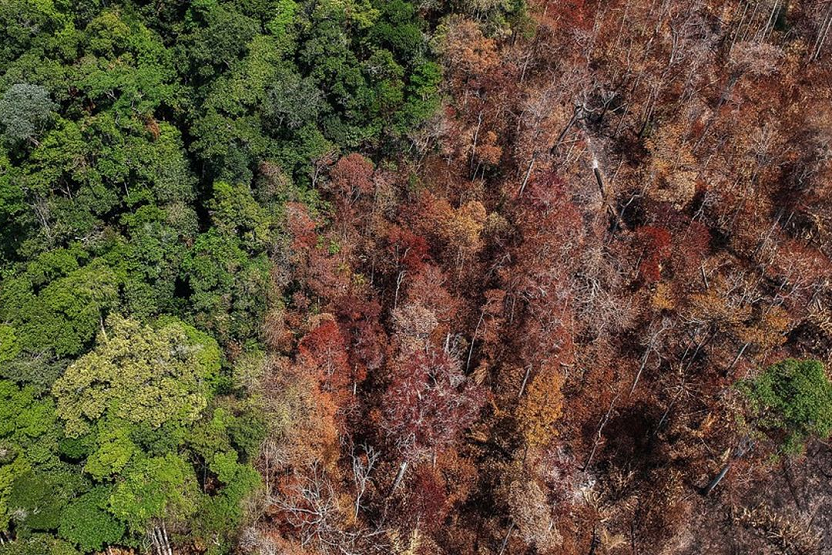
The Fatal Synergy Between Logging and Rising Temperatures
The Amazon is not facing a single threat, but a combination of self-reinforcing factors. On one hand, direct logging reduces the forest's ability to recycle moisture. On the other, rising global temperatures dry out the remaining vegetation. According to Humanité, this accumulation of anthropogenic and climate pressures could lead to an irreversible "savannization" of a vast portion of the biome.
This process is exacerbated by a positive feedback loop: fewer trees mean less evapotranspiration, which in turn reduces the rainfall necessary for the survival of the dense canopy. Data shared by Futura-Sciences indicates that the Amazon "is dangerously approaching its breaking point," a stage where the ecosystem no longer possesses the resilience required to regenerate after droughts or wildfires.
The "Tipping Point": A Scientific Concept Under Scrutiny
The concept of a "tipping point" is receiving renewed attention. An analysis published by Le Monde on May 6, 2026, highlights that this notion remains a "controversial core of a new study." While some researchers believe the shift is imminent, others provide a more nuanced view of the risk across the entire Amazon basin.
Nevertheless, the most pessimistic projections point to an alarming trajectory:
The critical deforestation threshold is often estimated between 20% and 25% of the total area; we are currently nearing this limit.
A global temperature increase of 1.5°C above pre-industrial levels serves as a safety barrier that appears to be on the verge of being breached.
The forest's carbon storage capacity is declining, to the extent that some areas now emit more CO2 than they absorb.
Potential Loss of Two-Thirds of the Forest at 1.5°C Warming
Forecasts regarding the impact of global warming are particularly grim. As reported by Reporterre, recent models suggest that "the Amazon rainforest could lose two-thirds of its surface area at 1.5°C of warming." This massive decline would not be gradual but sudden, once the forest's water regulation mechanisms are broken.
This transformation would have consequences far beyond local biodiversity and indigenous populations; it would impact the global climate. The massive release of carbon currently stored in Amazonian biomass would mechanically accelerate global warming, creating an uncontrollable climate crisis. In light of these findings, experts emphasize the urgent need for a total moratorium on deforestation and a drastic reduction in greenhouse gas emissions to keep the Amazon in its current forested state.
Source : News agencies

The best of Tired Earth delivered to your inbox
Sign up for more inspiring photos, stories, and special offers from Tired Earth
By signing up for this email, you are agreeing to news, offers, and information from Tired Earth. Click here to visit our Privacy Policy.


Comment