



07 Oct 2026

Tired Earth
By The Editorial Board
The heads of Saudi Aramco and Kuwait Petroleum Corporation warned on Monday in London that the tens of billions of dollars in damage to oil infrastructure can no longer be borne by producers alone. Consumer countries, particularly Europe, are being called upon to invest.
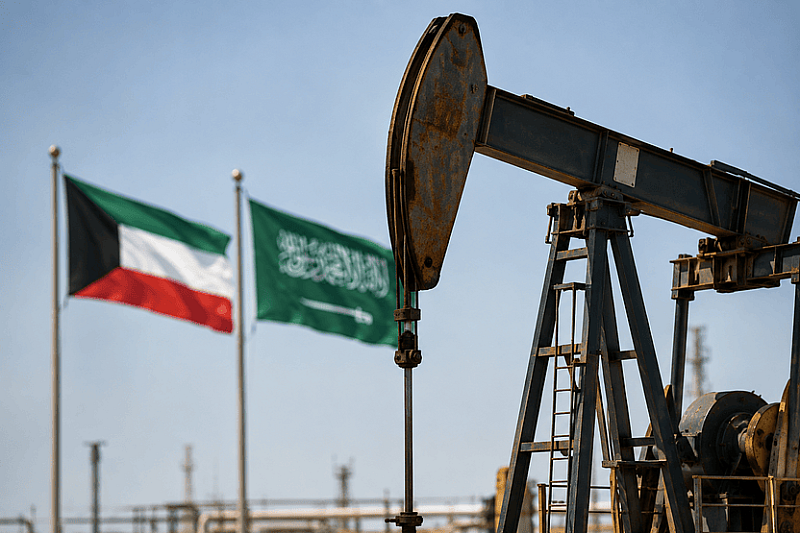
The heads of Saudi Aramco and Kuwait Petroleum Corporation warned on Monday in London that the tens of billions of dollars in damage to oil infrastructure can no longer be borne by producers alone. Consumer countries, particularly Europe, are being called upon to invest.
It is a message likely to rattle Brussels. Gathering in London for the "Energy Intelligence" forum, the heads of two of the Middle East's largest oil producers issued an unambiguous appeal: the rest of the world must assume its share of the financial burden resulting from the war involving Iran.
The conflict, now in its eighth month, has caused considerable damage to pipelines, refineries, gas facilities, and dozens of tankers. The bill for necessary new investments already runs into the tens of billions of dollars.
"No Country Should Have to Face This Alone"
Amin Nasser, CEO of Saudi Aramco, and Sheikh Nawaf Al-Sabah, his counterpart at Kuwait Petroleum Corporation (KPC), announced they are seeking to develop export routes and storage capacity outside the region. According to them, European partners must invest to cover logistical costs and rebuild depleted reserves.
"No country should have to face this problem alone," said Amin Nasser. "Oil and gas infrastructure is not an expense that can simply be minimized or avoided; it is a collective necessity, for producers and consumers alike."
Sheikh Nawaf was even more direct: if European nations wish to continue receiving Kuwaiti fuels—particularly diesel and jet fuel—they must invest in the necessary storage infrastructure. "We want to be able to supply you with distillates, but you must have the logistical infrastructure ready to accommodate that storage," he added.
Europe on the Front Line
Before the conflict, Kuwait had established itself as a key supplier of refined petroleum products to Europe. Since then, the continent has been plunged into an energy crisis and is facing severe diesel shortages. Kuwait is currently negotiating with European partners to invest in increased storage capacity, closer to end users.
Two Million Barrels per Day for Two Years
Amin Nasser also warned that even if the crisis ended immediately, additional demand of approximately 2 million barrels per day could be needed for two years, simply to replenish depleted stocks. According to him, the war has already removed nearly 3 billion barrels from the market.
The East-West Pipeline: Paid Off in 14 Days
The most striking detail revealed at the forum concerns Saudi Arabia's East-West pipeline, which allows the Strait of Hormuz to be bypassed. According to Amin Nasser, the construction cost of this infrastructure was recouped in just 14 days after the conflict began.
"We have three routes. Is that enough? Probably not for the future. It is up to the current generation to think about a fourth, a fifth export route," he declared, specifying that Aramco was considering doubling or tripling its storage capacity abroad.
A Shift in Doctrine
Patrick Pouyanné, CEO of TotalEnergies, present at the same forum, summed up the sector's shift: the oil industry has moved from a "just-in-time" model to a "just-in-case" model.
Kuwait, meanwhile, remains the most constrained. Its production slightly exceeds 2 million barrels per day, compared with approximately 2.6 million before the war. Lacking an alternative pipeline, its exports depend entirely on its own fleet, whose capacity caps at around 2.1 million barrels per day. Ships must carry out cargo transfers outside the strait, under the constant threat of Iranian attacks.
Source : bloomberg

The best of Tired Earth delivered to your inbox
Sign up for more inspiring photos, stories, and special offers from Tired Earth
By signing up for this email, you are agreeing to news, offers, and information from Tired Earth. Click here to visit our Privacy Policy.


Comment