



14 Oct 2026

Tired Earth
By The Editorial Board
Associated with the warming of surface waters in the tropical Pacific Ocean, the El Niño climate phenomenon can temporarily intensify global heat and disrupt rainfall patterns.
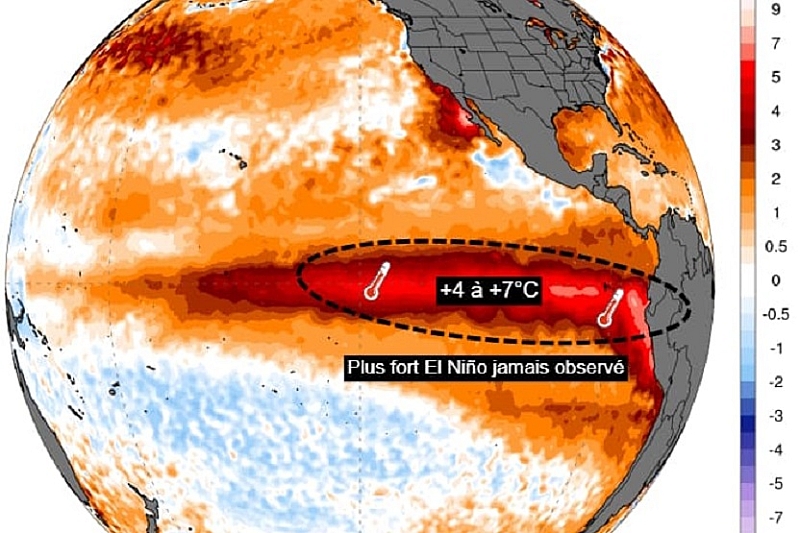
The El Niño climate phenomenon is raising fresh concerns among scientists as global temperatures remain exceptionally high. Associated with the warming of surface waters in the tropical Pacific Ocean, this natural phenomenon can temporarily intensify global heat and disrupt rainfall patterns. Its development could contribute to making 2026 one of the hottest years ever recorded.
El Niño is the warm phase of a natural climate pattern known as the El Niño–Southern Oscillation (ENSO). It is characterised by unusually warm sea-surface temperatures across the central and eastern equatorial Pacific, accompanied by changes in atmospheric circulation.
These changes can have consequences far beyond the Pacific region. Some areas experience heavy rainfall and flooding, while others face droughts, heatwaves and increased risks to agricultural production.
The phenomenon occurs periodically, but its intensity and impacts vary from one episode to another. To help the public better understand its mechanisms and consequences, the Museum of Orléans for Biodiversity and the Environment (MOBE) has also explored the subject through an educational presentation.
The development of El Niño is being closely monitored because of its influence on global temperatures. When the waters of the tropical Pacific warm, some of this additional energy is transferred to the atmosphere, potentially intensifying global warming in the short term.
At a time when the planet is already experiencing the effects of human-induced climate change, a strong El Niño episode could push global temperatures even higher.
An article published by Yahoo News discusses the possibility that 2026 could become the hottest year on record, highlighting El Niño's potential role in this development.
Read the analysis of the risk of record-breaking temperatures in 2026.
However, forecasts must be distinguished from final assessments. Whether 2026 ranks as the hottest year on record can only be confirmed using consolidated observations covering the entire year.
The strength of an El Niño episode is assessed partly by measuring sea-surface temperature anomalies in the equatorial Pacific. These measurements help scientists monitor the phenomenon and estimate its potential effects on the global climate.
Researchers also track changes in atmospheric circulation, rainfall and temperatures across different parts of the world. These indicators are essential for determining whether the episode is intensifying and anticipating its consequences.
The Huffington Post examines the data associated with the ongoing episode and the concerns they are raising among scientists.
Explore the figures behind El Niño and climate scientists' concerns.
These observations must be interpreted carefully. An intense El Niño does not produce the same effects everywhere, and its influence depends on the season, the region and other atmospheric and oceanic factors.
El Niño can have significant environmental consequences. In some regions, reduced rainfall increases the risk of drought, water shortages and wildfires. Elsewhere, heavy rainfall can trigger flooding, damage crops and disrupt natural habitats.
Marine ecosystems are also affected. Warmer Pacific waters can alter the upwelling of nutrient-rich deep water, disrupting food chains and fisheries. Coral reefs, already weakened by rising ocean temperatures, may face additional thermal stress.
The resulting economic and social impacts can be considerable, particularly for communities that depend directly on agriculture, fishing and freshwater resources.
To follow the latest developments and international implications of the phenomenon, Actu Orange provides a weekly overview of El Niño.
El Niño is a natural phenomenon and should not be confused with climate change caused by human greenhouse gas emissions. However, the two can interact.
Global warming is raising baseline temperatures in the atmosphere and oceans. When an El Niño episode temporarily pushes global temperatures higher, the likelihood of new heat records increases.
This does not mean that every extreme weather event can be directly attributed to El Niño. Scientists must examine observations and the mechanisms behind each event to determine the respective roles of natural variability and human-induced warming.
Monitoring the Pacific is therefore essential for anticipating climate risks, preparing agricultural and healthcare systems, and strengthening disaster prevention measures.
El Niño's development over the coming months will be important in understanding its effects on global temperatures and rainfall. Meteorological services and scientific organisations will continue monitoring ocean temperatures, winds and atmospheric anomalies to refine their forecasts.
In response to these risks, adaptation measures remain essential. These include sustainable water management, ecosystem protection, early-warning systems and better preparation for heatwaves, droughts and heavy rainfall.
The current episode is a reminder that natural climate variability is now unfolding in a warmer world. Although El Niño alone cannot explain rising global temperatures, its interaction with global warming reinforces the environmental challenges ahead and the need to reduce greenhouse gas emissions.
Source : News agencies

The best of Tired Earth delivered to your inbox
Sign up for more inspiring photos, stories, and special offers from Tired Earth
By signing up for this email, you are agreeing to news, offers, and information from Tired Earth. Click here to visit our Privacy Policy.



Comment