Cheetah attacks on humans are few and far between, but the risk of a fatal encounter can never be ruled out, writes Ryan Keane.

Whilst wild-cheetah attacks on humans are virtually unheard of, the picture in captivity looks slightly different.
In 2007, a tragedy unfolded at a zoo in northern Belgium. A 37-year-old cheetah lover managed to access the keys to their enclosure, sneaking into it once everyone had gone home. When keepers came into work the next morning, they found her mauled to death in the pen.
Then, in South Africa in 2021, a volunteer at a captive wildlife facility was clawed at and bitten by a cheetah. It's thought the animal lunged towards her throat at one point, and the traumatised volunteer was hospitalised afterwards.
So, attacks on humans do happen. But they’re very rare, especially when compared to other cats like leopards and tigers which are known to occasionally stray into villages and snatch humans to eat. Even then, in cases of confirmed attacks, it’s practically unheard of for cheetahs to chew on humans thereafter.
Interestingly, there have been no confirmed cases of wild cheetahs attacking and trying to eat a person. Of course, it’s possible a wild-cheetah attack on someone might have occurred, but there’s no credible evidence for this.
Why are cheetahs less aggressive towards humans than other cats?
Aside from the obvious fact that humans are not a staple of a cheetah’s diet, there are other factors at play here.
Whilst lions sometimes pounce on a 19-feet giraffe or 6,000-pound adolescent elephant, cheetahs prefer smaller prey like gazelle and impalas which are easier for them to catch and kill. Anything too tall and large can appear intimidating, given their slenderer frames and thinner skeletal structure.
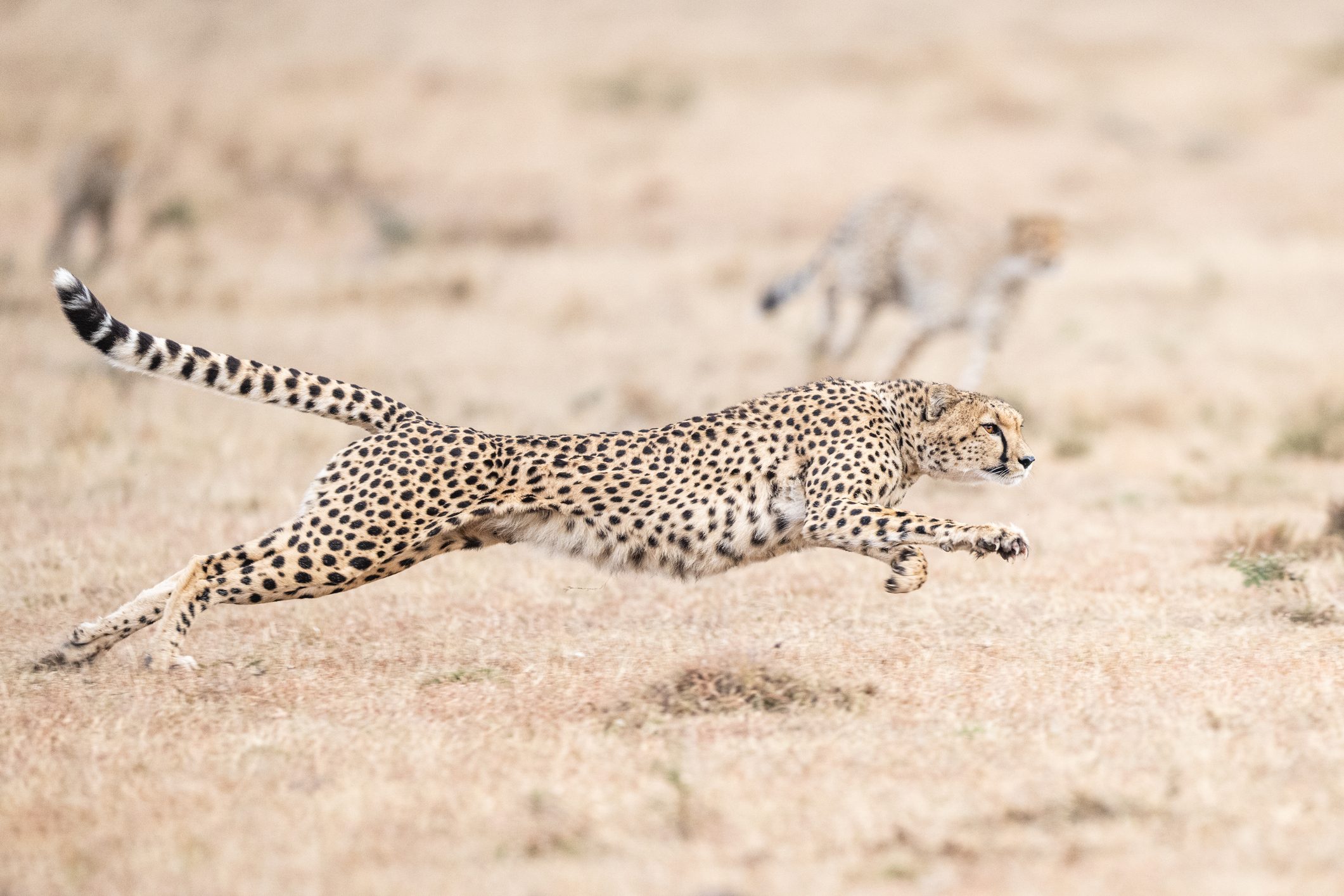
What’s more, cheetahs are built for velocity when it comes to hunting. They can reach speeds of up to 70 miles in just under three seconds. Because of this genetic emphasis on speed, they aren’t particularly effective at physical combat. They have a relatively weak bite force - in some cases 60% weaker than a lion’s - and with semi-retractable claws that act more like running shoes than knives, the risk of injury in combat is greater than that of say a panther’s or puma’s. So, it makes sense as to why they rarely assail a human.
Carlos Carreno/ Getty Images
What explains the attacks in captivity?
The main reason why attacks on people happen occasionally in captivity is likely stress. Since enclosures have limited space, if a captive cheetah feels a human presence is threatening, they may lash out thinking they need to protect themselves.
When it comes to humans and cheetahs, we’re the more dangerous ones
It’s far more likely to hear of a person killing a cheetah than the other way around.
There’s no official statistics on how many cheetahs we kill annually. But a 1997 report part-conducted by the Cheetah Conservation Fund charity claims that between 1980 and 1991, roughly 8,000 cheetahs were killed by farmers in Namibia alone. Even to this day, albeit rarely, Namibian farmers shoot or trap cheetahs wandering onto their land, fearful of their livestock being eaten. Overall, however, farmer-cheetah conflict has decreased in recent decades thanks to modern conservation efforts. These efforts include educating farmers on cheetah hotspots, so they know where to keep livestock and introducing guard dogs to deter cheetahs from farmland.











Comment