


19 Oct 2026

Tired Earth
By The Editorial Board
A study of six fragments from the stricken reactor reveals that some debris is chemically more stable than previously thought—good news for the soil, but not enough to lift restrictions in the exclusion zone.
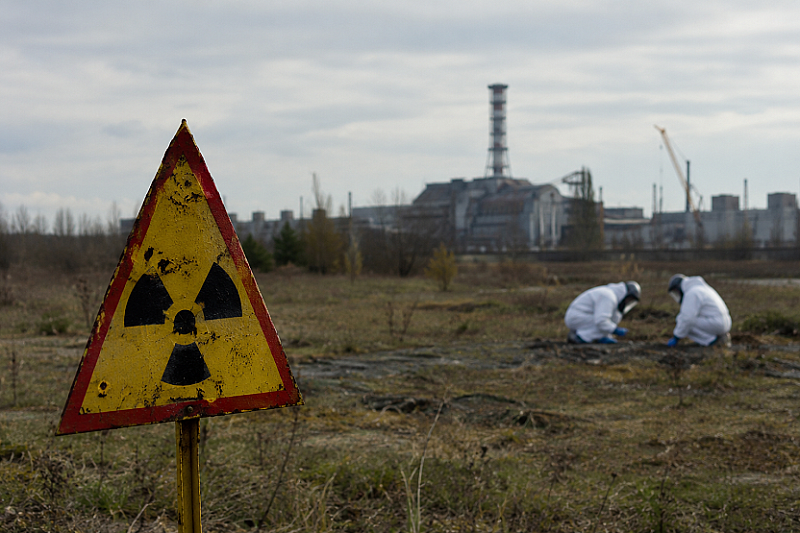
AI-generated image
Forty years after the disaster, the Chernobyl exclusion zone remains forbidden territory. Yet a discovery published in February 2026 in the Journal of Hazardous Materials complicates the image of an immediate, uncontrolled danger: certain radioactive particles from the reactor are more resistant than scientists had imagined.
What the Researchers Found
The team from Leibniz University Hannover and the Helmholtz-Zentrum Dresden-Rossendorf analyzed six "hot particles"—microscopic fragments measuring between 8 and 50 millionths of a meter, still highly radioactive today. To examine them, the researchers isolated them from Ukrainian soil and sent them to Grenoble, where they were bombarded with X-rays from every possible angle to reveal their internal structure.
The result surprised them: the crystalline structure of the nuclear fuel remained largely intact. In other words, these particles retain much of the radioactive material within them, rather than releasing it rapidly into the environment.
Three Types of Particles, Three Behaviors
The researchers distinguish three families of debris, formed under different conditions during the 1986 accident:
A Threat to All of Europe?
The short answer is no, not under the current scenario. The particles studied remain confined to the exclusion zone and contaminated soils. Measurements taken during the May 2026 forest fires in the area—an episode that had raised concerns—revealed no dangerous rise in radioactivity outside the forbidden perimeter. Ukrainian authorities and independent bodies confirmed that radiation levels remained within norms in Kyiv and elsewhere.
The risk would come rather from the resuspension of particles already present in the soil, for example during forest fires. But the quantities measured remain negligible on a continental scale.
Why Caution Remains Warranted
This apparent stability does not mean the zone is safe. The researchers themselves caution: six particles from two locations do not represent the entirety of the contamination. "Each particle has a different structure," emphasizes Tobias Weissenborn, one of the authors. Some particles could degrade more slowly—or, conversely, more quickly—and release their radioactivity belatedly.
In other words, scientists cannot yet say whether this resistance is the exception or the rule. To find out, hundreds of samples from dozens of different sites would need to be analyzed.
Meanwhile, the exclusion zone—nearly 5,000 km² straddling Ukraine and Belarus, roughly the size of a French department—remains off-limits without protective gear. And researchers are continuing their work on the most radioactive phases of this debris, particularly the "transuranic" elements, which are heavier than uranium.
Source : sciencedirect.com

The best of Tired Earth delivered to your inbox
Sign up for more inspiring photos, stories, and special offers from Tired Earth
By signing up for this email, you are agreeing to news, offers, and information from Tired Earth. Click here to visit our Privacy Policy.




Comment