


04 Apr 2026
Tired Earth
By The Editorial Board
In a significant escalation, US-Israeli attacks targeted key elements of Iran’s civilian healthcare infrastructure, including pharmaceutical production facilities and medical research centers.
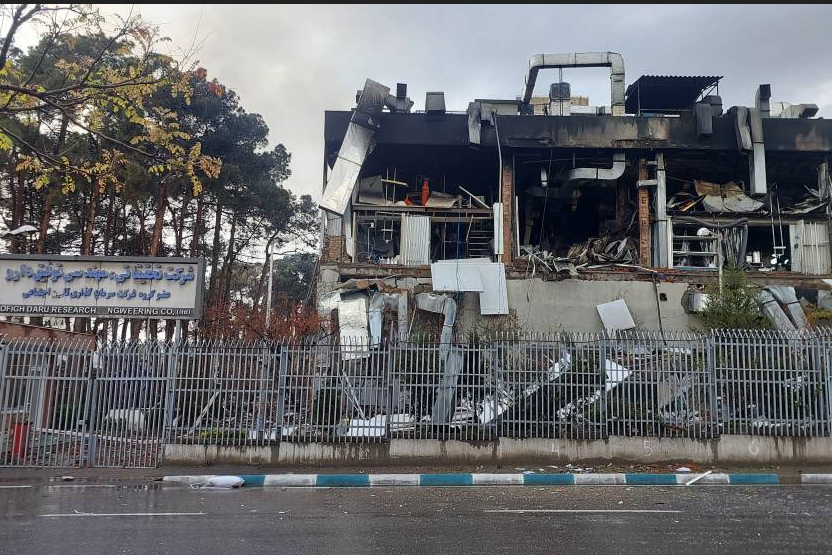
Damage caused by US-Israeli attacks on Tofigh Darou Company, Tehran
Among the most serious incidents reported is the destruction of major drug manufacturing sites, including the pharmaceutical company "Tofigh Daru" and also the historic "Pasteur Institute of Iran". These facilities play a critical role in producing medicines essential for patients with serious and chronic illnesses.
According to official and field reports, the attacks form part of a broader pattern of strikes on non-military infrastructure, raising concerns about what experts describe as an unfolding humanitarian crisis within Iran’s healthcare system. In particular, the direct targeting of pharmaceutical production—vital for the treatment of cancer, surgical care, and specialized diseases—has become a focal point of concern among medical professionals and human rights advocates.
Independent analysts have warned that such actions cannot be justified by military necessity and may constitute serious violations of international humanitarian law, including potential war crimes.
Destruction of a Key Pharmaceutical Producer
In the early hours of March 31, air and missile strikes reportedly hit one of Iran’s most strategic pharmaceutical manufacturers. The facility, known as Tofigh Daru, produces raw materials used in hospital medicines, including drugs for anesthesia, cancer treatment, and critical care.
According to Iran’s Deputy Minister of Health and head of the national Food and Drug Organization, the attack occurred at approximately 6:30 a.m., when multiple missiles struck the facility directly. The impact destroyed both production units and research and development laboratories.
The official warned that since the beginning of the conflict, around 24 pharmaceutical factories, medical equipment facilities, and distribution centers across Iran have sustained partial or total damage—further weakening the country’s already strained healthcare supply chain.
Notably, Tofigh Daru is described as being owned by workers and retirees, meaning that its destruction not only disrupts access to essential medicines but also directly affects the livelihoods and well-being of vulnerable social groups.
Damage to the Pasteur Institute: A Century-Old Scientific Hub
In another reported strike on April 2, parts of the Pasteur Institute of Iran—a research institution with more than a century of history in public health, disease control, and vaccination—were severely damaged.
According to the institute’s director, multiple departments were affected, including malaria research, cell banking, clinical research, and biotechnology units, along with key support divisions such as information technology and engineering services. The intensity of the attack reportedly caused extensive damage across the site, rendering the main complex largely inoperable.
The destruction of such a facility carries implications beyond immediate medical services. Research centers like the Pasteur Institute play a vital role in disease surveillance, vaccine development, and public health resilience—functions that are essential not only nationally but also in the context of global health security.
_1775291611.png)
Damage caused by US-Israeli attacks on the Pasteur Institute: A Century-Old Scientific Hub, Tehran
International Concern and WHO Warnings
Following reports of the damage, World Health Organization Director-General Tedros Adhanom Ghebreyesus expressed concern in a public statement, warning that the ongoing war in Iran and the broader region is affecting both healthcare delivery and the safety of medical personnel and patients.
He noted that the Pasteur Institute has a long history of collaboration with the WHO, particularly in disease control and vaccination efforts. Since the outbreak of hostilities, the organization has verified more than 20 attacks on healthcare facilities across Iran.
Beyond Humanitarian Impact: Environmental and Public Health Risks
While the immediate human toll of these attacks is evident, their environmental implications are also significant. The destruction of pharmaceutical and biomedical facilities raises the risk of chemical contamination, the release of hazardous substances, and long-term damage to surrounding ecosystems.
Moreover, the disruption of medicine production and public health systems can trigger secondary crises: untreated diseases, weakened epidemic response, and increased mortality from otherwise manageable conditions.
Source : news agencies

The best of Tired Earth delivered to your inbox
Sign up for more inspiring photos, stories, and special offers from Tired Earth
By signing up for this email, you are agreeing to news, offers, and information from Tired Earth. Click here to visit our Privacy Policy.


Comment