



03 May 2026

Tired Earth
By The Editorial Board
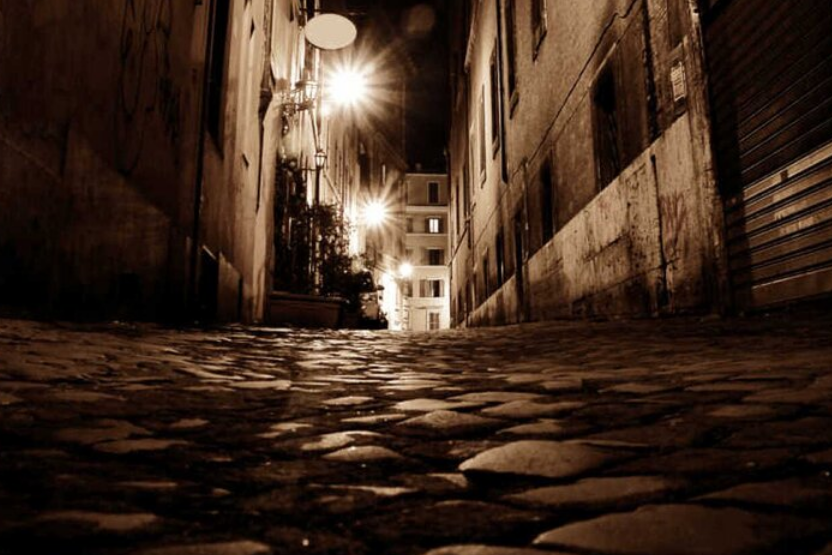
For two years, much of Bordeaux slept in the dark. Streetlights across the French city were switched off between 1 a.m. and 5 a.m. in a landmark policy designed to cut energy use and restore vital habitat for nocturnal wildlife. But as the city prepares to partially reverse course following a recent election, its evolving approach offers a potential global model for one of urban living’s most intractable tensions: the conflict between biodiversity and the basic human need to feel safe after dark.
The experiment in Bordeaux, which saved the city over €1 million and eased light pollution pressure on bats, hedgehogs, and moths, is being neither fully abandoned nor rigidly maintained . Instead, the city is shifting toward a “targeted glow” strategy—keeping 90% of nighttime journeys in lit areas while still maintaining dark corridors for wildlife . [1]
The 'Dark Sky' Dividend
The timing of this debate is critical. Global light pollution rose by approximately 16% between 2014 and 2022, according to satellite data published in the journal Nature. Yet Europe has bucked the trend, recording a 4% decline, with France leading the way. Some areas of the country recorded reductions of up to 33% in nighttime light emissions, largely due to post-energy-crisis policies enacted after 2022 .
For ecologists, this shift has been a lifeline. France’s Agence de la transition écologique has long identified artificial lighting as a major driver of ecological disruption. It alters feeding patterns, disorients migration, and fragments habitats by breaking up the dark corridors that species need to move and navigate .
“Where we see reductions in lighting, we are likely also seeing reduced ecological disturbance, even if the biological response takes time to appear,” the authors of the Nature satellite analysis note. [2]
The Human Variable: Fear in the Dark
Despite the ecological wins, the policy hit a wall of public anxiety. In Bordeaux, the darkness became a political liability. Residents filed petitions and shared testimonies of feeling trapped in their own homes after midnight. Women and students, in particular, reported changing their habits to avoid walking or cycling in unlit areas .
“I’ve had residents tell me they no longer go out at night,” said Emmanuel Sallaberry, mayor of Talence, a suburb of Bordeaux, describing the sentiment that drove a political backlash. [3]
This discontent became a central issue in the recent municipal elections. Thomas Cazenave, the victorious candidate who unseated Green Party Mayor Pierre Hurmic, campaigned on a simple promise: “Light up until dawn” .
The Bordeaux Compromise
However, the new administration is not simply flipping a switch back to the old, polluting norm. Instead, Bordeaux is moving toward a nuanced, data-driven compromise that experts believe could serve as a template for other cities facing the same conflict.
The new strategy, which took effect in late March 2025, pushes the lights-off time from 1:00 a.m. to 2:30 a.m., covering the crucial period when bars close and residents return home. Crucially, while 55% of lights will still dim or turn off after 2:30 a.m., a network of “strategic” thoroughfares and main axes will remain illuminated throughout the night .
“It enables 90 percent of night-time journeys to be made in lit areas,” former mayor Pierre Hurmic said of the adjustment, which was actually initiated before he left office . [4]
To offset the €300,000 annual cost of keeping the lights on longer, the city is accelerating a wholesale conversion to smart LED technology. Officials aim to convert 75% of the city’s 33,500 light points to LEDs by 2032. This includes piloting presence-detection lamps that brighten only when a pedestrian or cyclist passes by—offering light on demand without blasting constant illumination into the night sky .
A Scientific Roadmap for the Future
Beyond Bordeaux, French science is providing a granular roadmap for how to solve this puzzle. A landmark study published in the journal Nature Cities by researchers at INRAE and AgroParisTech focused on the Montpellier metropolitan area used high-resolution satellite data to map light pollution against the specific needs of six animal groups—including bats, amphibians, and insects .
The result is an interactive, street-by-street map that identifies exactly where reducing light benefits wildlife most and where residents are most resistant to change. It identifies "compromise zones" where technical fixes—changing the color of the light, lowering intensity, or redirecting beams—can satisfy both humans and nature .
“This map identifies different areas where actions on public lighting are mutually beneficial and those where compromises are necessary,” said Chloé Beaudet, a doctoral student at AgroParisTech who co-led the study .
A Balancing Act
For now, France remains a patchwork of approaches. While some newly elected mayors are turning lights back on, others are maintaining reductions where energy savings and ecological goals remain a priority .
Yet the "Bordeaux model" suggests that the binary choice of "lights on or off" is a false one. By utilizing LED timers, strategic dimming, and traffic-sensitive sensors, cities can protect their most vulnerable species without abandoning their citizens to the dark.
As the city prepares to establish a public committee—including representatives from women’s safety groups—to monitor the impact of the changes, the world will be watching to see if this French compromise can truly light the way forward
[1] https://www.bordeaux.fr/le-mag/bordeaux-readapte-leclairage-public-la-nuit
[2] https://www.connexionfrance.com/news/french-wildlife-prospers-from-darker-streets-but-debate-over-public-safety-remains/788448
[3] https://www.connexionfrance.com/news/french-wildlife-prospers-from-darker-streets-but-debate-over-public-safety-remains
[4] https://renouveaubordeaux.fr/actualite/perimetre/bordeaux/tribune-eclairage-public-enfin-un-peu-de-bon-sens-mais-beaucoup-de-retard/#content

The best of Tired Earth delivered to your inbox
Sign up for more inspiring photos, stories, and special offers from Tired Earth
By signing up for this email, you are agreeing to news, offers, and information from Tired Earth. Click here to visit our Privacy Policy.



Comment