



04 Apr 2026

Tangwa Abilu

BY TANGWA ABILU DZERNJO
CLIMATE AND ENVIRONMENTAL ACTIVIST FOR COLLECTIVE BENEFIT.
FOUNDER OF GREEN MISSION AND CLIMATE EDUCATION FOR COLLECTIVE BENEFIT (FACEBOOK PLATFORMS)
Email;abilutangwaabilu3@gmail.com
QUESTION:
1. What do you see as the most immediate and severe environmental damages caused by the ongoing war in Iran (for example, air pollution from strikes, oil spills, or destruction of infrastructure), and how do these compare to environmental impacts from other recent conflicts in the region?
In the unforgiving grip of the triple planetary crisis, climate change, biodiversity loss, and pollution, the world was already gasping for air. Now, the 2026 Iran war (Operation Epic Fury) has poured fuel on the flames, turning fragile ecosystems into collateral damage and forcing present and future generations to inherit a poisoned legacy of contaminated skies, waters, and soils. Launched on 28 February 2026 with joint U.S.-Israeli airstrikes and met by Iranian retaliation, this conflict is not abstract: it is measurable, visible, and accelerating the very planetary breakdown the UN has warned could render parts of the Middle East uninhabitable for decades.
As of mid-March 2026, the Conflict and Environment Observatory (CEOBS), the world’s leading independent monitor of conflict-related environmental harm, has documented over 300 incidents with potential environmental consequences, 232 of which have been formally risk-assessed. From these, 123 targeted military sites (including 26 airbases) and at least 30 struck oil processing/storage facilities. United Nation Environmental Programme (UNEP) has issued a direct statement urging immediate ceasefire to allow recovery, while Greenpeace and independent outlets (Guardian, Al Jazeera) corroborate the emerging catastrophe. Data are preliminary, active hostilities and restricted access limit full verification, but satellite imagery, on-ground reporting, and real-time monitoring paint a stark picture.
The guardian.com highlights that, High-risk oil spills and marine pollution in the Persian Gulf represent the most severe looming catastrophe. More than 43 Iranian naval vessels damaged or sunk, plus at least 12 merchant ships struck in ports or at sea (examples: MKD VYOM crude tanker off Oman, STENA IMPERATIVE in Bahrain, and HERCULES STAR off UAE). UNEP’s regional statement underscores that this war is “driving widespread environmental damage” beyond previous episodes, setting back resilience in a region already exhausted by drought and over-extraction.
In short, while the war’s air-pollution episode is the most immediate (millions breathing toxic “black rain” today), the Persian Gulf spill threat is the most severe potential tipping point, compounding the triple planetary crisis at a moment when the planet can least afford another decade-long toxic legacy. CEOBS, UNEP, and experts across the Guardian and Al Jazeera all converge on one urgent message: hostilities must cease now to enable assessment, containment, and remediation. The present generation is paying in blackened lungs and poisoned waters; the future risks paying in collapsed fisheries, uninhabitable coastlines, and accelerated climate feedback loops. The data are not speculation; they are already on the ground. The most immediate and severe environmental damages from the ongoing 2026 Iran War (launched February 28 by U.S. and Israeli airstrikes) stem primarily from targeted strikes on oil infrastructure, creating acute air pollution crises, risks of marine oil spills, and toxic releases from destroyed facilities.
These impacts are unfolding just weeks into the conflict and already compound the triple planetary crisis of climate change, biodiversity loss, and pollution. The Middle East was already water-stressed with degraded ecosystems;war-induced contamination sets back resilience for decades, affecting air quality, food chains, marine habitats, and human health across borders, costs that current and future generations will bear through chronic pollution exposure, ecosystem collapse, and amplified warming.
Immediate and Severe Damages
1. Air Pollution from Oil Facility Strikes and “Black Rain” (Most Acute Urban Threat)
Israeli-U.S. strikes on March 7–8 hit over 30 oil storage/processing sites nationwide, including four major depots and the Tehran refinery (capacity 225,000 barrels/day) around the capital. This triggered massive black smoke plumes and fires (still burning days later), releasing a toxic mix: soot, fine particulate matter (PM₂.₅),sulfur dioxide (SO₂), nitrogen oxides (NOx), volatile organic compounds (VOCs), polycyclic aromatic hydrocarbons (PAHs), black carbon, trace metals (nickel, vanadium), carbon monoxide, and potential dioxins/furans from incomplete hydrocarbon combustion.
In Tehran (population 9–10 million, trapped by Alborz Mountains and inversions), this produced “black rain”, acidic, oily precipitation from SO₂ forming sulfuric acid mixed with soot/oil droplets. It coated streets, buildings, cars, plants, pets, and entered storm drains/waterways. Residents reported headaches, breathing difficulties, and eye irritation; vulnerable groups (children, elderly, those with asthma/COPD) face heightened acute risks of respiratory emergencies and inflammation. Long-term: carcinogens (PAHs, benzene, formaldehyde) and deposited toxins risk chronic respiratory/cardiovascular disease, plus secondary exposure via contaminated croplands/groundwater.
The Conflict and Environment Observatory (CEOBS) identified this as the war’s single biggest pollution incident so far. UNEP (March 13, 2026 statement) confirmed via remote sensing: heavy smoke with hazardous compounds is inhaled directly (including by young children), with pollution entering soil/water, leaching into groundwater, and contaminating food supplies. WHO Director-General Tedros warned of severe health impacts on children, elderly, and those with pre-existing conditions from petroleum facility damage. Black carbon also acts as a short-lived climate forcer; models show potential deposition accelerating distant glacier melt (e.g., Altai range).
2. Oil Spills and Marine Pollution Risks (High-Seas Catastrophe Threat)
According to the Conflict and Environment Observatory (CEOBS) Strikes sank/damaged >43 Iranian naval vessels and 12 merchant ships in the Persian Gulf, with documented slicks (e.g., 20 km from one torpedoed frigate). Over 85 large tankers are trapped amid Strait of Hormuz disruptions, sharply raising spill probability.Iranian retaliatory drone strikes hit Gulf refineries/ports (e.g., Saudi Ras Tanura, UAE Fujairah, Qatar Ras Laffan), releasing similar plumes (PM, NOx, SO₂, PAHs, dioxins) plus hypersaline discharges. A single major spill could devastate already-stressed marine ecosystems, coral reefs, mangroves, sea grass, irreparably harming fisheries and coastal livelihoods for decades.
3. Infrastructure Destruction and Secondary Toxins
Strikes on military sites (missile depots, airfields) release propellants/explosives (e.g., unsymmetrical dimethylhydrazine, TNT, RDX, HMX,carcinogenic, bioaccumulative, and persistent in soil/groundwater for decades). Power blackouts from energy infrastructure hits cause secondary industrial pollution. Damaged desalination plants threaten water for millions.CEOBS has tracked >300 environmental-risk incidents (232 assessed by March 10), including 123 military targets.
4. Comparison to Other Recent Regional Conflicts
These damages echo, but differ in scale and exposure from the 1991 Gulf War (most direct analog, where Iraqi forces ignited >600 Kuwaiti oil wells). That event burned 355,000 tons oil/gas daily for 10 months, emitting 20,000 tons soot/day, 24,000 tons SO₂/day, and 130–140 million tons CO₂ total. It spilled 1–1.7 million tons oil into the Gulf (12× Exxon Valdez) and 10–20 million tons onto land (forming lakes/rivers covering up to 200 km² initially; tar Crete over 1,000 km²). Black rain fell as far as the Himalayas/China; marine recovery took decades; soil contamination persists.
Iran 2026 parallels: identical pollutants (soot, SO₂, black rain, marine slicks) and long-term legacy risks (decades of contamination, biodiversity loss). Differences: Iran’s incidents are smaller-scale so far (weeks-old, targeted depots vs. hundreds of wells) but far more immediate for civilians, urban Tehran exposure (millions directly inhaling/trapped) vs. remote Kuwait fields. CEOBS notes echoes of Gulf Wars, Ukraine refinery attacks, and Daesh oil fires, but emphasizes modern munitions’ heavy metals/PFAS add persistent toxins. Recent conflicts (e.g., Gaza/Lebanon) involve more water/soil disruption than this oil-focused scale; UNEP highlights how the current war amplifies pre-existing regional stresses unlike isolated past events.
In short, the war’s environmental toll, documented by UNEP, WHO, CEOBS, and independent analyses,is already severe and trans boundary. It directly intensifies the triple planetary crisis through added pollution loads, climate-forcing emissions, and ecosystem damage in a vulnerable region, with cleanup and health burdens falling on present and future populations regardless of the conflict’s origins. Cessation would be essential to mitigate further irreversible harm, as UNEP has urged.
QUESTION:
2- How has the conflict specifically affected Iran’s natural resources, such as groundwater, soil fertility, and biodiversity hotspots? Are there particular ecosystems or regions (like the Persian Gulf or Zagros Mountains) that have suffered irreversible harm?
The 2026 Iran conflict has introduced a terrifying new dimension to modern warfare: the systematic destruction of the natural systems upon which life depends. While the world watches missile trajectories and counts civilian casualties, a slower catastrophe unfolds beneath the surface, toxic chemicals leaching into ancient aquifers, heavy metals accumulating in soils that have sustained civilizations for millennia, and explosions reverberating through ecosystems that harbor thousands of unique species. This analysis examines how military actions have specifically affected Iran's groundwater, soil fertility, and biodiversity hotspots, with particular attention to the Persian Gulf and Zagros Mountains, regions facing potentially irreversible harm.
1. Groundwater: Poisoning the Lifeline of a Water-Stressed Nation
Iran was already facing a severe water crisis before this conflict began, with the UN Environment Programme noting that "the region was already facing severe environmental stress, especially relating to water resources". The war has transformed this chronic stress into acute poisoning.
The most immediate threat to groundwater comes from attacks on oil infrastructure. Israeli strikes on March 7 targeted fuel storage facilities in Tehran, triggering massive fires and the phenomenon of "black rain",precipitation laced with petroleum products, heavy metals, and toxic compounds. Iranian Foreign Minister Abbas Araghchi described these attacks as constituting "ecocide," warning that "soil and groundwater pollution may have effects that will last for generations”.
The mechanism of contamination is insidious.As UNEP (2026) explains,“pollution from uncontrolled fires may also enter soil and water, leach into groundwater, and be absorbed by crops, contaminating food supplies”. In Tehran, burning petroleum infrastructure released not only familiar combustion products but also dioxins and furans, among the most toxic synthetic compounds known, which settle onto soil and gradually percolate into underground water systems.
Professor Jeannie Sowers of the University of New Hampshire has raised particular concern about urban contamination pathways, noting that "oil from damaged fuel depots and refineries has reportedly flowed into streets and drains in Tehran, which also raises issues about potential contamination of groundwater". Unlike surface pollution that can be diluted or washed away, groundwater contamination persists for decades or centuries, creating toxic legacies that future generation must manage.
The vulnerability of Iran's groundwater systems compounds the tragedy. In a country where over-extraction has already caused land subsidence and aquifer depletion, the introduction of persistent chemical pollutants means that even the water remaining may become unusable. The Conflict and Environment Observatory (CEOBS) has documented that likely contaminants include PFAS chemicals “forever chemicals" extremely resistant to environmental breakdown, which will remain in groundwater systems essentially forever.
2. Soil Fertility: The Poisoning of Agricultural Foundations
The attacks on Iran's oil infrastructure have created a dual crisis for soil fertility: direct contamination from toxic deposition and indirect disruption of fertilizer supplies that will cascade through agricultural systems for years.
A. Direct Contamination from Oil Fires
The black rain that fell on Tehran carried a "cocktail" of pollutants that fundamentally alter soil chemistry. As Dr. Akshay Deoras of the University of Reading explained, this level of pollution is normally associated with "extremely severe industrial accidents, such as an entire refinery exploding". When these pollutants, including sulfur dioxide, nitrogen oxides, polycyclic aromatic hydrocarbons (PAHs), and heavy metals,settle onto agricultural land, they initiate a cascade of soil degradation.
Acid rain, formed when these pollutants combine with atmospheric moisture, depletes soil of essential nutrients such as calcium and magnesium. Historical parallels from the 1991 Gulf War, when Kuwait's burning oil wells caused "thousands of hectares of land to become completely barren," suggest that Iran's agricultural heartlands face similar long-term damage. The heavy metals deposited from smoke plumes, including lead, cadmium, chromium, and nickel,bio accumulate in crops, entering food chains and eventually human bodies, where they cause DNA damage, cancer, and reproductive harm.
B. The Fertilizer Shock: Indirect Agricultural Devastation
Beyond direct contamination, the conflict has severed Iran's access to the global fertilizer system upon which modern agriculture depends. The Strait of Hormuz, through which approximately one-fifth of global crude and LNG exports pass, has become a war zone. But the more fragile cargo is fertilizer.
According to United Nation Conference on Trade and Development (UNCTAD), about 1.33 million tons of fertilizers are exported through Hormuz every month. Gulf nations account for 20% of global traded volumes of key fertilizers including ammonia, phosphates, and sulfur. Nearly half the worlds traded urea; the most widely used nitrogen fertilizer, comes from the Gulf region. When Qatar Energy halted production after Iranian strikes on Ras Laffan, the world's largest LNG and fertilizer hub, hundreds of thousands of tons of key fertilizer nutrients were sidelined.
For Iran itself, this creates a catastrophic feedback loop. Iranian agriculture depends on imported fertilizers to maintain soil fertility in a region where soils are naturally low in organic matter. As Joseph Glauber of the International Food Policy Research Institute (IFPRI) explains, "Higher prices will affect crop choice. Farmers may go with the crop that needs less fertilizer rather than the one that needs nitrogen-intensive fertilizer, to avoid higher input costs". In poorer agricultural regions, farmers may simply cut overall fertilizer use, which directly reduces crop yields.
The deeper agricultural impact will unfold over multiple growing seasons. Modern agriculture runs on the Haber-Bosch process, which transforms natural gas into ammonia and ammonia into nitrogen fertilizers. Without synthetic nitrogen, estimates suggest the world could feed only a fraction of its current population. For Iran, where food inflation was already over 40% before the conflict, disruptions to fertilizer supplies will intensify hardship for millions of people and degrade soil fertility for years to come.
3. The Persian Gulf: A Biodiversity Hotspot on the Brink
The Persian Gulf represents one of the world's most unique and vulnerable marine ecosystems, and it is now ground zero for environmental catastrophe. As an Iranian Department of Environment official warned, military operations "could threaten sensitive habitats and the unique biodiversity of the region, in some cases causing irreversible damage”.
A.A Semi-Enclosed Sea with No Escape
The geography of the Persian Gulf makes it uniquely vulnerable to pollution. It is a shallow, semi-enclosed body of water with an average depth of only 35 meters and limited water circulation with the open ocean. Water renewal takes approximately two to five years, meaning pollutants become trapped and concentrated rather than dispersing. In summer months, water temperatures exceed 35°C, making it one of the warmest marine environments on Earth and placing constant stress on already-adapted species.
Into this fragile system, the war has introduced unprecedented threats. Greenpeace Germany has identified 85 large oil tankers carrying at least 21 billion litres of oil currently trapped in the Persian Gulf as mines are laid and missiles strike ships. Nina Noelle of Greenpeace Germany describes this as "an environmental disaster waiting to happen," warning that "a single oil spill in the Gulf could damage this fragile marine habitat beyond repair" .
B. The Biodiversity at Stake
The numbers reveal what stands to be lost. According to Iranian environmental officials, more than 5,000 marine species have been recorded in the Persian Gulf and Sea of Oman combined. This includes:
These species inhabit critical habitats that are themselves vulnerable. Mangrove forests, dominated by the species Avicennia marina, stabilize coastlines, store carbon, and provide breeding grounds for fish and crustaceans. The International Union for Conservation of Nature has already classified Persian Gulf mangrove ecosystems as vulnerable due to environmental pressures. Oil contamination or chemical spills could destroy mangrove root systems and disrupt nursery habitats that sustain local fisheries.
Coral reefs face similar risks. Corals in the Persian Gulf have adapted to extreme temperatures, making them scientifically invaluable as potential reservoirs of heat-tolerant genes that might help corals worldwide survive climate change. However, they are highly sensitive to pollution and sedimentation. Previous bleaching events linked to pollution have already damaged reef systems; additional stress from warfare could push them beyond recovery thresholds.
4.Irreversible Harm Mechanisms
The mechanisms of harm are multiple and overlapping. As Doug Weir of CEOBS explains, "Mines and other explosive devices create acoustic disturbances that affect marine mammals and other animals, and can cause damage to natural seabed structures such as coral reefs”. Underwater explosions generate intense acoustic waves that can disorient dolphins and whales, which rely on sound for communication, navigation, and feeding. These same shockwaves physically damage coral structures and disrupt fish populations.
Oil spills introduce multiple toxins simultaneously. When oil contaminates seabird feathers, it destroys their waterproofing, leading to hypothermia and drowning. During the 1991 Gulf War, when Iraqi forces released up to 1 million tons of oil, more than 30,000 seabirds died, and local environmental recovery took decades. For marine mammals like dugongs, which depend on seagrass meadows for food, oil contamination of these habitats means starvation?
Chemical pollution from damaged vessels introduces heavy metals, paints, and insulation materials into marine waters. These substances bioaccumulate through food chains, meaning that small concentrations at the base of the food web become concentrated in predatory fish consumed by humans.
Ahmadreza Lahijanzadeh, deputy head of Iran's Department of Environment for marine environments, warns that "military operations can generate multiple types of pollution simultaneously" across an area exceeding 500,000 square kilometers. He emphasizes that "these factors together create complex environmental stress that can affect biodiversity and marine habitats”.
A. The Zagros Mountains: Forests Under Fire
The Zagros Mountain range, stretching 1,600 kilometers from northwestern Iran to the Persian Gulf, represents one of the country's most important terrestrial ecosystems, and it has become a theater of war. Since the conflict began, the Zagros range has been "regularly targeted by Iranian drone and missile strikes”.
Pre-Existing Vulnerability
Even before the current conflict, the Zagros oak forests were under severe stress. According to the Iranian Department of Environment, more than 18 million trees had already died in the Zagros oak habitats. This pre-existing die-off, attributed to drought, pests, and mismanagement, means that forests enter the conflict in a weakened state, less resilient to additional shocks.
Direct Impacts of Military Operations
The current conflict introduces new threats. Shepherds in Iraqi Kurdistan, on the western slopes of the Zagros, report being forced to abandon traditional grazing areas due to drone strikes. Ajar Mustafa, a 50-year-old shepherd, now keeps his 150 goats and sheep near his village rather than ranging into the hills he has climbed for decades, explaining, "I'm afraid of losing some of my animals, that they'll be hit or panic and run away”. His 50 cows produce less milk because of noise from drones and fighter jets.
While human displacement is the immediate concern, the environmental implications are significant. Traditional pastoralism, practiced sustainably for millennia, maintains open woodlands and prevents catastrophic fires. When shepherds abandon traditional grazing areas, fuel loads increase, raising fire risks. The presence of military equipment, including drones and missiles, introduces ignition sources into drought-stressed forests.
The Community Peacemakers Teams (CPT) has recorded more than 300 strikes in Iraqi Kurdistan since the conflict began, attributed to Iran and its proxies. Many of these strikes occur in or near forested areas of the Zagros, introducing pollutants from munitions, including heavy metals and energetic compounds, into soil and water systems that drain into Iran.
B. Indirect Regional Threats
The Zagros ecosystem also faces indirect threats from the broader conflict. Smoke plumes from burning oil facilities in Tehran and elsewhere drift toward the mountains, depositing soot and toxic compounds on forest canopies. Black carbon deposition darkens snowpack in higher elevations, accelerating spring snowmelt and disrupting the water cycle upon which both forests and downstream agricultural communities depend.
C. Cross-Border Consequences: Pollution without Passports
The damage to Iran's natural resources does not respect national boundaries. Groundwater contamination in western Iran affects aquifers that cross into Iraq. Marine pollution in the Persian Gulf circulates through the waters of all eight littoral states. Smoke plumes from burning oil facilities carry heavy metals and hydrocarbons into Pakistan, Afghanistan, and Turkmenistan.
The Pakistan Meteorological Department has issued warnings regarding "toxic gloom" entering Pakistani airspace from Iran, threatening to fall as acid rain across Balochistan and Khyber Pakhtunkhwa. This trans boundary pollution will damage crops, contaminate groundwater, and affect human health in countries not party to the conflict.
As Professor Anjal Prakash of the Indian School of Business notes, "Middle Eastern dust has been known to traverse the Arabian Sea to impact India" and "strong jet streams have the potential to carry very fine particles towards the Indian states of Gujarat, Rajasthan or Punjab”. The black carbon settling on Himalayan glaciers accelerates melting, threatening water security for billions of people across South Asia.
5. Irreversible Harm: What Cannot Be Restored
The question of irreversibility haunts every assessment of environmental war damage. For some ecosystems and resources, the harm may indeed be permanent.
Groundwater contamination with PFAS chemicals and heavy metals is essentially irreversible on human timescales. These "forever chemicals" do not degrade in natural environments. Once an aquifer is contaminated, there is no practical technology to purify it. Communities must either find alternative water sources—increasingly scarce in water-stressed Iran, or accept long-term exposure to toxic substances.
Coral reef destruction from physical shockwaves or oil contamination may be irreversible because recovery times are measured in decades, while ongoing stressors prevent regeneration. The Persian Gulf's corals are already living at the edge of their thermal tolerance; additional stress pushes them beyond survival thresholds. When reefs die, the fish communities they support disperse or perish, collapsing local fisheries.
Soil fertility loss from heavy metal contamination can persist for centuries. Unlike organic pollutants that may eventually degrade, lead, cadmium, and mercury remain in soil profiles indefinitely. They can be remediated only through expensive excavation and replacement, impractical across agricultural landscapes. Affected soils may produce contaminated crops forever, requiring perpetual monitoring and management.
Species extinction is, by definition, irreversible. The dugong population of the Persian Gulf, already stressed by habitat loss and boat strikes, faces acute risk from oil spills that destroy seagrass meadows. Hawksbill turtles, already critically endangered, nest on beaches that may be oiled during the nesting season. The loss of even a few breeding females can push populations below viable thresholds.
Conclusively, the military actions in the 2026 Iran War have inflicted documented, severe damage on the country's natural resources. Groundwater systems face contamination from petroleum products and heavy metals that will persist for generations. Agricultural soils suffer both direct poisoning from toxic deposition and indirect degradation from fertilizer supply disruptions. The Persian Gulf's unique marine ecosystems, home to thousands of species, including the world's second-largest dugong population, face potentially irreversible harm from oil spills, acoustic trauma, and chemical pollution. The Zagros Mountains' oak forests, already stressed by pre-existing die-off, now contend with military operations that displace traditional land management and introduce new ignition sources.
The environmental destruction of this war will outlast any peace agreement. It will be measured not in territory regained but in contaminated wells that can never be drunk from again, in coral reefs that will not regrow within human lifetimes, in soils that will produce poisoned crops forever. For the Persian Gulf's dugongs, the Zagros oaks, and the millions of Iranians who depend on healthy ecosystems for their survival, the war's end will not mean the return of peace. It will mean the beginning of a long, uncertain struggle with a poisoned inheritance.
Documenting this damage now is essential for future accountability and remediation. But as Doug Weir of CEOBS observes, the track record of environmental compensation after conflicts is poor, most payments go to corporations for lost profits rather than to restoring damaged ecosystems. The challenge for the international community, when this war finally ends, will be to ensure that Iran's natural resources receive the protection and restoration they deserve, not as an afterthought to peace negotiations but as a central component of justice.
QUESTION:
3:In your opinion, what are the long-term nefarious effects of the war on Iran’s environment and public health — for instance, contamination from depleted uranium, chemical residues, or disrupted climate patterns — and how might these effects extend beyond Iran’s borders?
The images emerging from Tehran in early March 2026 till today are apocalyptic: black rain falling from darkened skies, families hurriedly pulling laundry from outdoor lines as oily soot stained everything it touched, and respiratory warnings echoing through a city of 18.5 million people. What residents witnessed was not merely another episode of the Iranian capital's notorious air pollution, but something far more sinister, the toxic aftermath of strikes on oil depots on the city's outskirts, where burning petroleum infrastructure released a cocktail of hazardous compounds into the atmosphere.
War has always claimed victims beyond those immediately killed by bombs and bullets. But the conflict unfolding in Iran, now entering its fourth week, reveals how modern warfare against a highly industrialized nation creates environmental destruction that will persist for decades, poisoning soil, water, and human health across national boundaries. As the Conflict and Environment Observatory (2026) has documented, more than 300 incidents with environmental risk have already occurred, with 232 formally assessed for their potential to cause long-term harm.
This analysis examines the nefarious long-term effects of the war on Iran's environment and public health, from depleted uranium contamination and chemical residues to disrupted climate patterns, and traces how these consequences extend far beyond Iran's borders, threatening regional stability and global environmental security.
1. The Legacy of Depleted Uranium: Invisible and Eternal
Among the most insidious weapons employed in modern conflict are those containing depleted uranium (DU), a dense heavy metal used in armor-piercing munitions for its pyrophoric properties, it ignites upon impact. When these munitions strike targets, they aerosolize into microscopic particles that can remain suspended in the air for hours and travel hundreds of kilometers before settling into soil and water sources.
Recent academic research on depleted uranium contamination in Iranian surface soils, river sediments, and roadside deposits has raised urgent concerns about radiological risks in areas affected by dust storms. The study by Behzadi and colleagues (2026), published in Water, Air, & Soil Pollution, highlights a critical pathway for human exposure: windblown dust. Iran is already a global hotspot for sand and dust storms, and contaminated particles from strike sites can be swept into the atmosphere and deposited across vast areas, including agricultural land and urban centers.
The health implications are profound. Depleted uranium, while less radioactive than natural uranium, remains chemically toxic. When inhaled or ingested, DU particles accumulate in kidneys, bones, and lungs, with epidemiological studies from previous conflicts showing elevated risks of cancer, birth defects, and kidney disease among exposed populations. Unlike chemical pollutants that may degrade over time, uranium isotopes have half-lives measured in billions of years, once deposited, they remain hazardous essentially forever.
What makes this particularly alarming is the geography of contamination. Many targeted military facilities lie in rural areas where monitoring is difficult, but other sites near cities increase public exposure risks to conflict-generated pollutants. The CEOBS assessment notes that strikes rarely destroy all hazardous materials at military installations; instead, they generate additional pollution through secondary explosions and fires, releasing "fuels, oils, heavy metals, energetic compounds and PFAS (Per- and polyfluoroalkyl substances)”. PFAS, known as "forever chemicals," are extremely resistant to environmental breakdown and will contaminate groundwater for generations.
2. Toxic Residues and the Poisoning of Daily Life
Beyond depleted uranium, modern munitions release a witches' brew of toxic substances upon detonation. The United Nations Environment Programme (UNEP 2026) has warned that "widespread use of munitions may lead to the release of heavy metals and toxic chemicals into the environment," noting that even modest quantities of these substances can be toxic.
The March 8 strikes on Tehran's oil depots represent this war's single largest pollution incident. Satellite-confirmed attacks ignited massive fuel fires that released not only familiar combustion products but also dioxins and furans, among the most toxic synthetic compounds ever studied. These chemicals form when fossil fuels burn incompletely and have been linked to cancer, immune system suppression, and endocrine disruption at extremely low exposure levels.
Professor Nejat Rahmanian of the University of Bradford, who experienced similar black rain in Iran during the 1991 Gulf War, recognizes the pattern. That earlier conflict saw Iraqi forces set hundreds of Kuwaiti oil wells ablaze, generating plumes of soot, hydrocarbons, and sulfur dioxide that blew over Iran and accelerated glacier melting as far away as the Himalayas. The current war's pollution, however, is being released directly adjacent to a major population center, ensuring far higher exposure concentrations.
The health consequences are already manifesting. UN World Health Organization (WHO 2026) spokesperson Christian Lindmeier confirmed that Iranian authorities issued alerts advising residents to stay indoors following the oil depot strikes, warning that acidic rain could cause chemical burns and damage lungs. David J.X. González, assistant professor at UC Berkeley, notes that "acute impacts on respiratory health" are expected immediately, with young children and pregnant women facing particular vulnerability.
But acute effects represent only the beginning. The full range of pollutants released includes heavy metals such as lead, cadmium, chromium, and nickel, all detected in Tehran's water and air even before the war. These substances accumulate in human tissues over lifetimes, contributing to cardiovascular disease, neurological damage, and cancer decades after exposure.
3. Nuclear Shadow: The Catastrophe That Hasn't Happened, Yet
Perhaps the most frightening environmental dimension of this conflict involves Iran's nuclear facilities, which have come under repeated attack. International Atomic Energy Agency (IAEA) Director General Rafael Grossi provided a chilling assessment to the UN Security Council in June 2025, detailing damage to multiple nuclear sites.
At Natanz,strikes destroyed electrical infrastructure including the main power supply and emergency backup generators. Ground-penetrating munitions damaged the main cascade hall, and the Pilot Fuel Enrichment Plant's above-ground section was "functionally destroyed." Within these facilities, IAEA confirms there is both radiological and chemical contamination, with uranium isotopes dispersed inside as uranium hexafluoride, uranyl fluoride, and hydrogen fluoride.
While off-site radiation levels have remained normal so far, indicating no widespread environmental release, Grossi’s warning about the Bushehr Nuclear Power Plant should chill every reader: "In case of an attack on the Bushehr Nuclear Power Plant a direct hit could result in a very high release of radioactivity to the environment. Similarly, a hit that disabled the only two lines supplying electrical power to the plant could cause its reactor's core to melt, which could result in a high release of radioactivity to the environment”.
Such a release would necessitate protective actions including evacuations and sheltering extending "from a few to several hundred kilometers." Radiation monitoring would need to cover hundreds of kilometers, and food restrictions might need implementation across a vast region. An attack on the Tehran Research Reactor could have "severe consequences, potentially for large areas of the city of Tehran and its inhabitants”.
The IAEA's consistent position, affirmed in its General Conference resolutions, holds that "armed attacks on nuclear facilities should never take place, and could result in radioactive releases with grave consequences within and beyond the boundaries of the State which has been attacked”. We are now living through the precise scenario the agency has warned against for decades.
4. Climate Disruption: From Local Fires to Global Effects
The environmental consequences of this war extend beyond direct contamination to influence regional and even global climate patterns. Alexander Vorotnikov, coordinator of the expert council of the Arctic Development Project Office, warns that soot from burning Iranian oil facilities could deposit in the Russian Arctic, accelerating glacier melting and altering climatic conditions.
This mechanism is well-documented: black carbon from incomplete combustion absorbs solar radiation when deposited on ice and snow, reducing reflectivity and increasing melt rates. The 2018 study led by Jiamao Zhou at the Chinese Academy of Sciences demonstrated that smoke from the 1991 Gulf War oil fires reached the Himalayas and accelerated glacial retreat. Current fires, burning closer to major population centers and potentially involving even larger volumes of petroleum, could produce similar or greater effects.
Beyond black carbon, the massive release of carbon dioxide from burning fossil fuels directly contributes to global greenhouse gas concentrations. While precise emissions data remains unavailable due to communication cuts and active hostilities, the scale of fires visible in satellite imagery suggests a significant carbon pulse entering an already overloaded atmosphere.
Egyptian climate change and environmental economics professor Alaa Sarhan (2026) emphasizes that the use of advanced weaponry produces "severe air pollution and a significant increase in carbon emissions, directly and seriously affecting the health of local residents”. The environmental consequences, he notes, have already manifested in the black clouds observed over Iran.
5. Trans boundary Contamination: Pollution Knows No Borders
Perhaps the most politically explosive dimension of this environmental crisis involves its spread beyond Iran's borders. Pollution from the war is already affecting neighboring countries, and the mechanisms for further spread are well-established.
Meteorologists warn that prevailing winds from Iran can carry airborne pollutants eastward, particularly affecting western Pakistan, including Balochistan province. Even diluted across long distances, particulate matter from refinery fires can worsen air quality and aggravate respiratory diseases. This threat arrives as Pakistan already struggles with severe environmental stress; its cities routinely endure hazardous smog while public health systems are overwhelmed by pollution-related illness.
The UN (2026) has confirmed that Iranian strikes on oil infrastructure in Bahrain and Saudi Arabia raise concerns of "wider regional pollution exposure," highlighting the long-term effects of pollutants that affect respiratory health and contaminate water. The Strait of Hormuz, through which roughly one-fifth of global oil production passes, has become a conflict zone, with shipping disruptions affecting global supply chains and delaying essential humanitarian aid .
UNEP's (2026) statement warns that "pollution from uncontrolled fires may also enter soil and water, leach into groundwater, and be absorbed by crops, contaminating food supplies. Oil spills have also been reported in marine areas, further impacting the health of coastal communities”. The marine ecosystems of the Persian Gulf, already stressed by high temperatures and salinity, face additional pressure from oil contamination that will persist for decades.
6. The Afghan Dimension: Secondary Displacement and Humanitarian Crisis
The environmental crisis intersects with humanitarian catastrophe in ways that compound suffering. According to UNHCR,approximately 110,000 Afghans have returned from Iran since the beginning of 2026, with around 1,700 crossing daily since the war began. These returnees face "more precarity and uncertainty" upon arriving in Afghanistan, a country already grappling with economic collapse and humanitarian need.
UNICEF's representative for Afghanistan, Tajudeen Oyewale, reports that the number of children screened and treated for malnutrition has doubled in the past week at border crossings. The environmental degradation driving people from Iran, including air pollution so severe that authorities advise staying indoors—creates secondary effects that ripple through neighboring states already ill-equipped to handle additional burdens.
Meanwhile, supply chain disruptions through the Strait of Hormuz delay essential humanitarian supplies. Jean-Martin Bauer of the World Food Programme explains that shipping routes once transiting from India through Oman and Saudi Arabia to Port Sudan now require detours around Africa via Tangiers, adding approximately 25 days and 9,000 kilometers to voyages. Each container requires war risk insurance premiums of $2,000 to $4,000, diverting resources from food purchases to shipping costs.
7. The Longue Durée: Generations of Poison
What makes environmental warfare uniquely nefarious is its temporal scale. Chemical weapons kill quickly; their effects may be horrific, but they are often bounded in time. Environmental contamination, by contrast, operates on generational timescales.
Doug Weir of CEOBS emphasizes that "missiles and bombs contain heavy metals and other toxic pollutants, which are released into the air, soil and water when they explode and crash, lingering often for decades and posing health risks. Cleanup is difficult and expensive”. Unlike battlefields that can be cleared of unexploded ordnance, chemically contaminated soil requires remediation that may prove technically impossible or prohibitively expensive.
Egyptian experts stress that determining the full extent of contamination requires "continuous analysis and monitoring of natural samples" by authoritative international scientific bodies. Without such assessment, the true scale of environmental damage remains unknown, and appropriate cleanup cannot be planned.
The geography of contamination compounds the challenge. Dimitris Kaskaoutis of the National Observatory of Athens explains that Tehran's location at the base of the Alborz Mountains creates a thermal inversion that traps pollutants, leading to poor air quality episodes lasting weeks or months. Normally, rain would wash pollution away, but when rain mixes with burning oil, it becomes "much more unhealthy and toxic for human health," with pollutants diluted in water "easily absorbed in our bodies, the nervous system, the blood system, and might affect kidneys, liver and other organs".
8. Accountability and the Right to Remediation
As Nazanine Moshiri of the Berghof Foundation (2026) notes,documentation of environmental damage is "necessary for accountability and cleanup when the conflict ends". International humanitarian law imposes obligations regarding environmental protection during armed conflict, including the prohibition of widespread, long-term, and severe environmental damage. The Rome Statute of the International Criminal Court classifies intentional attacks causing such damage as war crimes when they are clearly excessive in relation to anticipated military advantage.
Whether the strikes on Tehran's oil depots,sites that "do not appear to be of military exclusive usage" according to UN Human Rights office spokesperson Ravina Shamdasani,meet proportionality and precaution obligations under international humanitarian law raises "serious questions" . Future accountability mechanisms will need to address not only immediate civilian casualties but also long-term environmental and public health consequences.
Conclusion
The conflict in Iran will eventually end. Bombs will stop falling, and diplomats will negotiate terms. But the environmental consequences will continue for generations, silently poisoning those who had no part in the fighting, children playing in contaminated soil, farmers drawing water from polluted aquifers, families breathing air that carries the chemical signature of war.
The black rain falling on Tehran is not merely a meteorological curiosity or a temporary nuisance. It is a harbinger of a future in which the boundaries between wartime and peacetime, between battlefield and home, between combatant and civilian, dissolve into toxic air that settles everywhere. As the LA Times reported, the Iranian engineer whose relatives fled Tehran found the poor air quality and black rain less bearable than the military conflict itself. This calculus, choosing between bombs and poison, should never be forced upon civilian populations.
For Pakistan, Afghanistan, and the broader region, the war's environmental legacy represents a crisis arriving at a moment of maximal vulnerability. Strained health systems, economic precarity, and existing environmental degradation leave neighboring states ill-equipped to absorb additional shocks. The international community must recognize that environmental remediation is not a postwar luxury but a humanitarian necessity, and that accountability for environmental damage is essential to any just peace.This “war of choice” has accelerated the triple crisis at the worst possible moment. The present pays in blackened lungs and poisoned fields; the future will pay in collapsed fisheries, cancer clusters, and altered weather for decades. We owe it to the next generation to document, contain, and learn from this avoidable legacy before it becomes irreversible.
QUESTION:
4- Have military actions during the war (missile strikes, drone operations, or use of certain weapons) led to specific environmental disasters, such as forest fires, desertification acceleration, or marine pollution? Can you share any documented cases or data you’ve analyzed?
The 2026 Iran War, which erupted on February 28 with joint U.S.-Israeli strikes against Iranian targets, has introduced a terrifying new dimension to modern warfare: the deliberate weaponization of the environment itself. While military analysts track missile trajectories and territorial gains, a parallel catastrophe unfolds across the Middle East, one measured not in troop movements but in toxic plumes drifting across borders, oil slicks strangling marine ecosystems, and "black rain" falling on millions of civilians. This analysis examines specific, documented environmental disasters caused by military actions during the conflict, drawing on remote sensing data, official statements from the UN Environment Programme (UNEP), the World Health Organization (WHO), and independent monitoring by organizations tracking conflict-related environmental damage.
1. Atmospheric Warfare: The "Black Rain" Phenomenon and Air Pollution Crisis
The most visually dramatic and scientifically documented environmental disaster of this conflict involves the deliberate targeting of oil infrastructure in and around Tehran. Satellite imagery confirmed by British Broadcasting Cooperation (BBC) Verify identified at least four petroleum facilities struck around the capital since February 28, including the Shahran oil depot in the northwest and the Tehran Refinery in the southeast. These were not accidental collateral damage; on March 7, the Israel Defense Forces explicitly posted on X that they had attacked a "fuel" near Tehran, sharing what they claimed was a photo of the damaged refinery.
The environmental consequences have been catastrophic and immediate. On the weekend of March 7-8, Tehran's nine million residents experienced the "black rain" phenomenon, rainfall turned dark and toxic by mixing with extreme concentrations of soot, sulfur dioxide, and nitrogen oxides from burning petroleum. Dr. Akshay Deoras, a research scientist at the University of Reading, described the situation as "absolutely unprecedented" because this level of pollution is typically associated with "extremely severe industrial accidents, such as an entire refinery exploding," not wartime attacks adjacent to a megacity .
The air pollution data, while limited due to conflict-related monitoring disruptions, tells a terrifying story. The smoke contains exceptionally high levels of sulfur dioxide, nitrogen oxides, hydrocarbons, polycyclic aromatic hydrocarbons (PAHs), and PM2.5, particles 2.5 microns or smaller that penetrate deep into lung tissue and enter the bloodstream. When these pollutants combine with atmospheric water vapor, they form sulfuric acid and nitric acid with pH levels below 5.6, the definition of acid rain.
Professor Eloise Marais of University College London's Department of Atmospheric Chemistry notes that such pollution levels are normally only seen in "extremely severe industrial accidents" . The scale is unprecedented because these attacks occurred in one of the Middle East's most densely populated urban centers. Dr. Akshay Deoras of the University of Reading emphasizes that while conflicts typically generate dust and particulate pollution, the chemical "cocktail" released by these refinery strikes is "very unusual”.
The World Health Organization (2026) has expressed "high concern" about health impacts. WHO Director-General Tedros Adhanom Ghebreyesus warned that damage to oil facilities "could contaminate food, water, and air, hazards that particularly threaten children, the elderly, and people with underlying health conditions”. Professor Anna Hansell, an environmental epidemiologist at the University of Leicester, adds that beyond immediate lung damage, such high-intensity exposure "may also have long-term effects over many years, including respiratory problems and increased cancer risk”.
The Conflict and Environment Observatory (CEOBS 2026), a UK-based monitoring group, reported that as of March 10, 2026, they had identified over 300 incidents with environmental implications, of which 232 had been formally assessed for environmental risk. The group noted that while many targeted military facilities are in rural areas, potentially reducing human exposure, other sites near cities are dramatically increasing public health risks from conflict-generated pollutants.
Critically, CEOBS documented that attacks rarely destroy all hazardous materials at military facilities and may actually generate additional pollution through secondary explosions and fires.
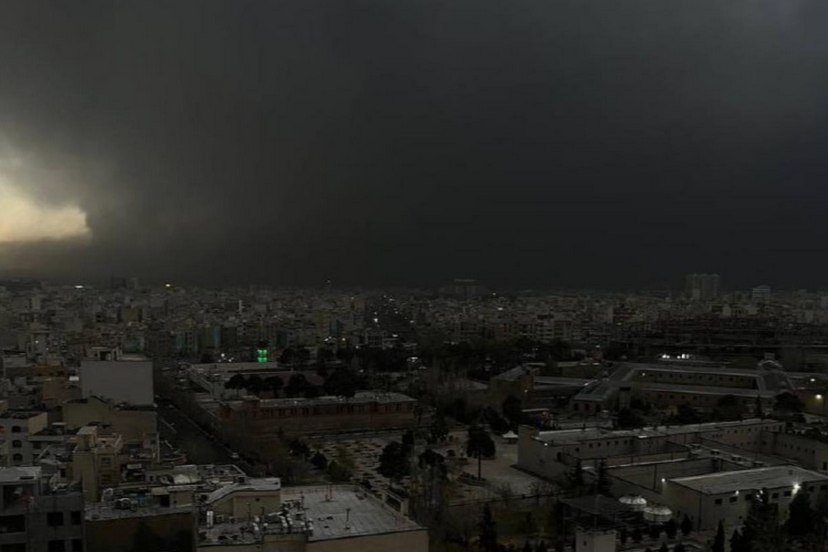
After the American-Israeli attack on oil storage depots in Tehran, the city was showered with black acid rain in the form of thin tar. Iran, on March 8, 2026. (Photo via X)
2. Marine Pollution: The Persian Gulf as a Toxic Sink
The Persian Gulf, already one of the world's most environmentally stressed bodies of water due to high temperatures, salinity, and heavy maritime traffic, has become a direct theater of environmental warfare. The UN Environment Programme confirmed that "oil spills have been reported in marine areas, further impacting the health of coastal communities”.
As highlighted by CEOBS (2026).The scale of marine contamination is staggering. With over a dozen merchant ships struck during the conflict, satellite imagery has revealed oil slicks extending up to 20 kilometers in length near the coastlines of Oman and the United Arab Emirates. These spills threaten to trigger a total collapse of marine ecosystems that sustain regional fisheries, upon which millions depend for food and livelihood.
The Persian Gulf's geography makes it uniquely vulnerable to oil pollution. It is a shallow, semi-enclosed body of water with limited circulation, meaning pollutants become trapped and concentrated rather than dispersing into open oceans. Oil spills in this environment linger for decades, moving slowly along coastlines and damaging coral reefs, mangrove forests, and critical fish nursery habitats.
UNEP's statement emphasizes that "pollution from uncontrolled fires may also enter soil and water, leach into groundwater, and be absorbed by crops, contaminating food supplies”. In marine environments,this contamination bioaccumulates through food chains, meaning that small concentrations of heavy metals and toxic hydrocarbons at the base of the food web become concentrated in predatory fish consumed by humans .
3. Desalination Plants: Targeting Existential Infrastructure
Perhaps the most strategically dangerous environmental targeting involves attacks on desalination plants, facilities upon which Gulf populations depend for their very survival. In a region where desalination provides up to 90% of potable water, the destruction of this infrastructure represents what analysts call "water bankruptcy”.
Documented strikes have hit both sides of the conflict. U.S. forces allegedly struck a desalination plant on Iran's Qeshm Island, while Iran retaliated with a drone strike on a desalination facility in Bahrain. These attacks fit a disturbing pattern identified by researchers tracking Middle Eastern conflicts. Professor Erika Weinthal of Duke University notes that "different armies and armed groups have targeted desalination plants in the wars since 2011 in the MENA," citing examples from the 1990-1991 Gulf War when Iraqi troops destroyed most of Kuwait's desalination capacity, as well as more recent attacks in Yemen and Gaza .
The vulnerability is existential. Gulf States, despite their wealth, have built their entire water supply systems around a single technological chokepoint. As Weinthal explains, "the confluence of water scarcity in the Gulf States and revenue generated from sales of oil and gas means that these nations can invest heavily in desalination facilities to meet domestic demand for drinking water”. This creates a structural vulnerability: when those facilities are destroyed, there are no alternative water sources at sufficient scale.
International humanitarian law is explicit on this point. Additional Protocol I (Article 54, paragraph 2) states that "it is prohibited to attack, destroy, remove or render useless objects indispensable to the survival of the civilian population". Desalination plants clearly fall under this protection. Yet Weinthal observes that despite the legal clarity, "civilian objects such as desalination plants continue to come under fire”.
4. Groundwater Contamination: The Invisible Crisis
Beyond visible marine oil slicks and atmospheric plumes, military actions are creating longer-term groundwater contamination risks that may prove even more difficult to address. Professor Jeannie Sowers of the University of New Hampshire points to an overlooked consequence: "oil from damaged fuel depots and refineries has reportedly flowed into streets and drains in Tehran, which also raises issues about potential contamination of groundwater”.
This urban contamination pathway means that toxic hydrocarbons and heavy metals are not remaining contained within industrial facilities but are migrating through storm drainage systems into the broader environment. Once in groundwater, these contaminants are extraordinarily difficult to remediate and can persist for decades, affecting drinking water supplies for millions.
The CEOBS assessment confirms that many attacked sites have shown "secondary explosions and fires" that rarely destroy all hazardous materials and "may generate additional pollution”. The contaminant profile includes PFAS chemicals, extremely resistant to environmental breakdown that will remain in groundwater systems essentially forever.
5. Methane "Super-Events" and Climate Disruption
The environmental consequences of the joint American and Israel strikes on Iran extend beyond immediate toxicity to affect global climate patterns. Attacks on the Ras Laffan gas hub in Qatar and the shared North Field gas reservoirs have triggered what scientists are calling "methane super-events”. Methane is approximately 80 times more powerful than carbon dioxide at trapping heat over short timescales, meaning massive leaks from damaged pipelines and venting facilities have likely "negated years of global efforts to reduce carbon emissions”.
Analysts describe this as a literal "climate bomb" being detonated in the heart of the Gulf, accelerating global warming in a region already among the most water-stressed and heat-vulnerable on Earth. The long-term climate implications extend far beyond the immediate conflict zone, affecting global temperature trajectories and weather patterns.
6. Regional Trans boundary Pollution: Contamination without Borders
The environmental destruction from military actions does not respect national boundaries. The Pakistan Meteorological Department has issued high-priority warnings regarding "toxic gloom" entering Pakistani airspace from Iran, carried by prevailing westerly winds. This pollution plume, containing heavy metals and hydrocarbons, threatens to fall as acid rain across Balochistan and Khyber Pakhtunkhwa, potentially ruining winter harvests and contaminating already scarce groundwater supplies.
Professor Anjal Prakash of the Indian School of Business, an IPCC author, warns that "Middle Eastern dust has been known to traverse the Arabian Sea to impact India" and that "strong jet streams have the potential to carry very fine particles towards the Indian states of Gujarat, Rajasthan or Punjab" . Afghanistan and Turkmenistan face similar spillover threats.
The black carbon and soot from burning refineries are traveling even farther. As these particles settle on the glaciers of Gilgit-Baltistan in northern Pakistan, they darken the ice surface, reducing the "albedo effect"—the ability of snow to reflect sunlight. This causes glaciers to absorb more heat and melt at unnaturally accelerated rates. For a nation dependent on these glaciers for water security and already threatened by Glacial Lake Outburst Floods (GLOFs), soot from a war 1,500 kilometers away directly threatens river systems and millions of people living along the Indus.
7. Desertification and Long-Term Soil Damage
The environmental legacy of oil fires extends to soil degradation and accelerated desertification. Drawing on historical parallels, experts note that when Kuwait's oil wells burned in 1991, "thousands of hectares of land became completely barren”. Acid rain from current fires depletes soil of essential nutrients such as calcium and magnesium, weakening plant root systems, damaging leaves, and eliminating species diversity in forests and agricultural areas.
The CEOBS report emphasizes that even after active hostilities cease, contaminated soils will require extensive remediation. The presence of PFAS chemicals, heavy metals, and persistent organic pollutants means that agricultural land near affected areas may remain unusable for years or decades.
8. The Fertilizer Crisis: Agricultural Systems Under Stress
A cascading environmental and economic consequence of the conflict involves the disruption of fertilizer supplies. The war has severed the global "nutrient vein" by blocking the export of urea and phosphate from the Gulf. This has created an immediate fertilizer crisis for Pakistan and India precisely as the spring planting season begins.
Without access to affordable fertilizer, agricultural yields will drop, leading to food insecurity and rising prices. This creates a dangerous feedback loop: military conflict causes economic hardship, which forces farmers to use lower-quality inputs that further degrade soil, producing long-term agricultural decline that persists long after peace returns.
Conclusion:
The military actions in the 2026 Iran War have produced a cascade of documented environmental disasters: atmospheric contamination affecting millions, marine oil spills threatening ecosystem collapse, groundwater pollution creating long-term health risks, methane releases accelerating climate change, and trans boundary pollution affecting nations not party to the conflict. Each of these has been confirmed through satellite imagery, remote sensing, and official statements from UN agencies and monitoring organizations.
As Professor Anjal Prakash concludes, "the consequences can be devastating, Heavy metals such as lead and mercury bioaccumulate, contaminating food chains and causing DNA damage, cancer, and infertility in succeeding generations. In the case of Iran, these effects will haunt generations to come, causing a human health and economic toll in the order of billions of dollars.
Documenting these impacts now is not merely an academic exercise; it is essential preparation for the remediation, compensation, and accountability that must follow when the guns finally fall silent.
QUESTION:
5- What practical solutions or international actions would you recommend to mitigate and repair the environmental damage caused by the war in Iran, and what role could environmental organizations, governments, or the Iranian people themselves play in this recovery?
The environmental catastrophe unfolding in Iran demands immediate, coordinated international action. Based on the analysis of damage from strikes on oil refineries and military infrastructure, the following practical solutions and international actions are recommended to mitigate and repair environmental damage, with clearly defined roles for environmental organizations, governments, and the Iranian people.
1. Immediate Emergency Response (0-6 Months)
A. International Environmental Emergency Declaration
The UN Environment Programme (UNEP) should formally designate affected regions as an environmental emergency zone, triggering:
B. Emergency Containment in the Persian Gulf
Given the trans boundary nature of marine pollution, immediate action requires:
C. Public Health Emergency Response
The World Health Organization must:
2. Medium-Term Restoration Projects (6 Months - 3 Years)
A. Soil Remediation Programs
Phytoremediation: Planting hyperaccumulator species (poplars, willows, Indian mustard) across contaminated agricultural lands to absorb heavy metals including lead, cadmium, and mercury from soil.
Bioremediation: Deploying oil-degrading microorganisms (bacteria and fungi) in areas contaminated by crude oil and refined products. This low-cost, low-tech solution can be implemented with community participation.
Excavation and treatment: For severely contaminated hotspots around targeted facilities where contamination exceeds bioremediation capacity.
B. Water Infrastructure Rehabilitation
C. Air Quality and Health Monitoring
Establish a real-time, publicly accessible air quality monitoring network across Iran, operated by UNEP in coordination with Iranian environmental agencies. This network would:
D. Reforestation and Ecosystem Restoration
3. Long-Term Structural Solutions (3-10 Years)
A. Permanent Environmental Health Surveillance
The Iranian people's exposure to refinery toxins will have health consequences lasting decades. A permanent surveillance system should:
B. Green Energy Transition as Reconstruction Strategy
The war demonstrates how fossil fuel infrastructure becomes both a military target and an environmental weapon. Reconstruction should:
C. Climate Damage Accounting
Military emissions from the conflict must no longer be exempt from reporting. This requires:
4. International Actions and Accountability Mechanisms
A. UN-Led Environmental Compensation Fund
Modeled on the successful United Nations Compensation Commission (UNCC) from the 1991 Gulf War, which paid over $52 billion in claims including $3 billion for environmental damage:
B. Codify Ecocide in International Law
The Independent Expert Panel's definition of ecocide"widespread, long-term, and severe environmental destruction that threatens the survival of ecosystems and species" must be:
C. Punishment for Wars of Choice and Codification of Ecocide:
The UN must institute binding punishments for states that orchestrate and perpetuate wars of choice, exactly as the United States did here by bypassing diplomacy, targeting Iranian oil assets, and enabling refinery strikes despite known ecocide-level consequence without exhausting diplomatic options:
D. Strengthen the Geneva Conventions
Amend Additional Protocol I to explicitly:
ROLES IN RECOVERY
Environmental Organizations
UNEP should coordinate international response, verify damage assessments, and administer compensation funds. Greenpeace and other international NGOs can provide independent monitoring, technical expertise for bioremediation, and global advocacy. Local Iranian environmental groups (such as the Persian Gulf Environmental Association) must lead community engagement and ground-level implementation, as they possess local knowledge and trust.
These organizations should:
Governments
Regional governments (Gulf States, Turkey, Pakistan) affected by trans boundary pollution must contribute to recovery proportionate to their exposure. European Union member states should provide technology transfers for soil and water remediation. China and Russia as permanent Security Council members must not veto accountability mechanisms.
All governments should:
Most critically, the United States government, which bypassed diplomatic channels through the JCPOA framework to pursue military action, must be held fully accountable through international tribunal proceedings. No nation, regardless of power, should be permitted to launch a war of choice that causes environmental catastrophe and then evade responsibility.
THE IRANIAN PEOPLE
The Iranian people are not passive victims but active agents of recovery. Their deep connection to the land, traditional knowledge of local ecosystems, and demonstrated resilience through decades of hardship position them as essential leaders in restoration.
The Iranian people should:
International partners must support Iranian-led recovery, not impose solutions from outside. Training programs, technology transfers, and funding should flow through Iranian institutions and community organizations, respecting local agency and expertise.
Conclusively, while accountability for past destruction is essential, the ultimate goal must be preventing future environmental warfare. The Iran conflict demonstrates a dangerous pattern: powerful nations bypass diplomacy, target energy infrastructure for strategic advantage, and unleash environmental catastrophe with impunity.
The precedent exists, the UNCC after the Gulf War proved nations can be held financially liable. The legal framework is ready, ecocide as an international crime provides the foundation for criminal accountability. The moral imperative is clear, when military action deliberately poisons the air millions breathe and contaminates the water communities’ drink, the world must respond.
The environmental devastation of Iran must be the last such tragedy. Establishing that waging a war of choice causing widespread, long-term, and severe environmental damage is a crime against humanity and against the planet is not merely a legal technicality, it is essential for the survival of ecosystems, species, and future generations who will inherit the consequences of today's impunity.
REFERENCES

The best of Tired Earth delivered to your inbox
Sign up for more inspiring photos, stories, and special offers from Tired Earth
By signing up for this email, you are agreeing to news, offers, and information from Tired Earth. Click here to visit our Privacy Policy.
Comment
Reply