



24 Mar 2026

Pen Densham
British-Canadian
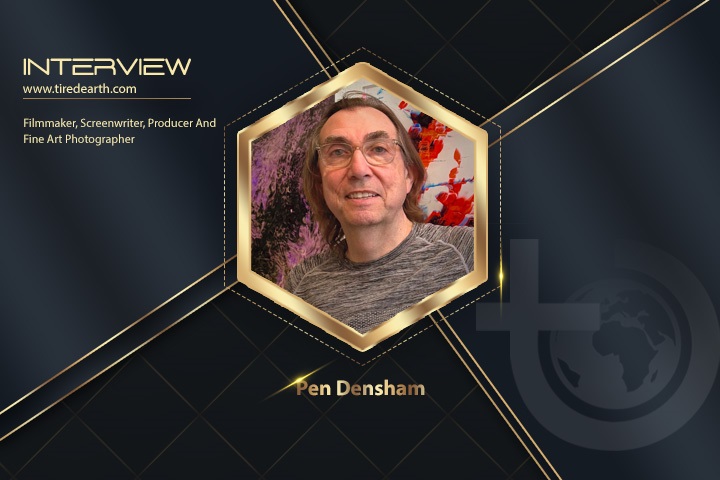
1. Tell us about your journey to becoming Oscar-nominated British-Canadian-American filmmaker, screenwriter, producer and fine art photographer.
I was born in England where my folks made short films that went into the movie theaters. I don't think they could afford babysitters because I have strong memories of them taking me with them and learning that cameras attracted crowds of curious people and that there was an amazing transformation when the images were projected in a darkened theater. At the age of four they even had me ride a live 7 ft alligator in a movie they made about people who kept strange pets.
Cameras seemed like magicians’ instruments and I knew from that age I had a life goal to cast spells with them. My mother died when I was eight and the fragility of life was forced onto myself and my younger siblings. My father married a very damaged woman who was a bit like Cruella Deville on Acid. She tried to get rid of us so I spent a while in an orphanage. And developed an instinct to help others find strength in their goals. Living in the New Forest as a teenager I was surrounded by open heathland occupied by wild ponies and was within a few miles of the sea. All the time my cameras where an exploratory escape. At fifteen I decided to leave school and worked in photography. Even photographing the Rolling Stones for the BBC at seventeen. But my success was sparse and at 19, I say, I fled to Canada thinking I was a washed-up failure. And found a culture that celebrated its arts with grants and openness to ideas. Suddenly I was surrounded with young creative people all exploring images and filmmaking.
2. Did you have any role models in pursuing your stellar artistic career?
I was enraptured by the landscape and natural wonder of Canada and because of film was able to travel all over the country including three trips to Canada’s arctic. Which was so stimulating, with a culture and people unlike any other I had experienced. I also made a short film for the Iroquois people in Ontario about passing on their arts to their children. My wife and I have a treasured collection of indigenous sculptures which celebrate and respect animal life. I was also very touched by the belief in native people that they were responsible for preserving their lands for the next seven generations.
I had a lot of self-doubt about my own creativity, I think artists are vulnerable to that, but after several years making documentaries I felt I should try writing and directing a drama. Because of my experience with the fascinating world of horse racing (we made a film on Secretariat among others). I wrote a story about a horse breach-birthing where the blue-collar owner and the vet only had twenty minutes to physically wrestle to turn the foal or chose whether it or the mother would survive. It was called “If Wishes Were Horses”. The film won multiple awards and was reviewed by TV Guide as one of the best films of any length shown on TV in Canada. Norman Jewison an amazingly successful filmmaker saw the film and offered to mentor me as a fellow Canadian into Hollywood.
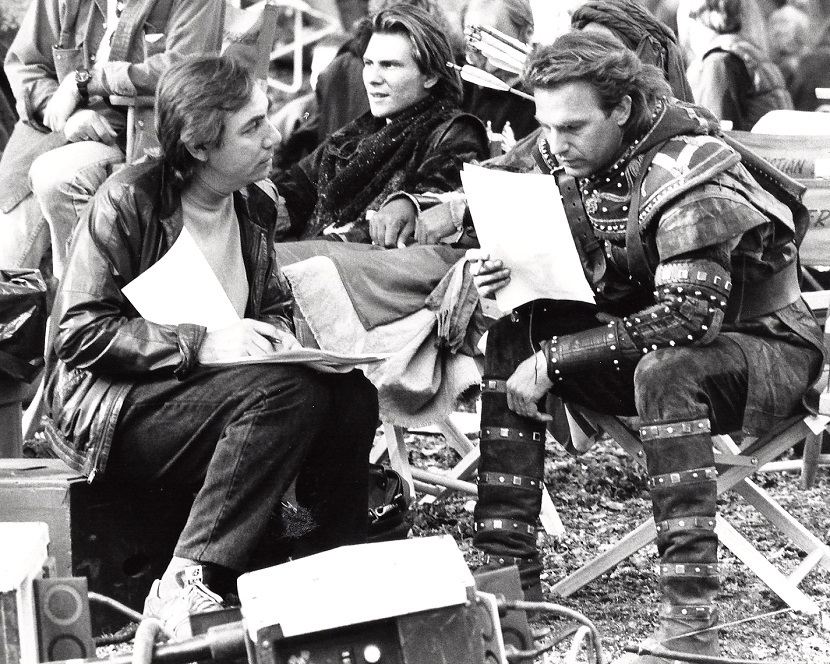
I wasn’t sure my success was a fluke? And almost turned Norman down. But my wife supported me and I got to shadow the man who made films like Moonstruck, In the Heat of the Night, The Russians Are Coming, Jesus Christ Superstar, Fiddler on the Roof. I was struck that a lot of his films had a social conscious as they entertained. Something that I applied to my own films - like Robin Hood Prince of Thieves, which was a major hit starring Kevin Costner, Morgan Freeman and Allan Rickman. Where I created an adventure that paired a Muslim and a Christian side by side learning and trusting each other as they took on a force of evil.
Thanks to Norman, John Watson and I moved to Hollywood and made multiple features working with major stars and almost 300 hours of television. I was personally able to revive both the Twilight Zone and the Outer Limits to network runs. Anthology shows that gave us weekly freedom to tell dramatic parables about human nature.
3. You are the co-founder to Trilogy Entertainment, winning over a hundred awards, including Oscar Nominations, Emmys and even medals from the Queen of England. How did IF WISHES WERE HORSES, a short film about an owner fighting to save the life of his horse shape your film career?
I leased a giant house and rented out rooms to young artists. One of whom was an editor, John Watson. We started our own film company in the basement and found we could sell our very impressionistic short films on nature subjects to CBC TV. It changed our lives we made films on flowers, ice forms, thoroughbred horses, artists, magicians and sports people. While always financially stressed we experienced great joy at our creative freedom. Our awards came because our films avoided dry spoken narrations and were highly visual and emotional. We made one five-minute film on flowers that we cut to the music of the1812 Overture called Sunburst. It was put in movie theaters and feature critics reviewed it because it was so up-lifting. We also got a grant and worked with nine school children teaching them film and letting them each write and direct a commercial selling life as if it was a product. My goal was to illustrate the often-overlooked creative potential of young people. The movie ended up being nominated for an Oscar and we took all nine to the Oscars in Hollywood.
4. Trilogy produced the creature-feature two-part miniseries Creature (1998), based on a Peter Benchley novel about a shark-human hybrid, that is genetically engineered which terrorizes a Caribbean island after escaping a secret military project. Do you have any other nature focused projects in the making?
It was great fun having the author of Jaws, Peter Benchley’s trust to take his book, White Shark, to the screen. A cautionary tale about human science experiments running amok.
I have one feature project that is a nature-oriented passion piece that I have been working on for years. As often happens in Hollywood. I wanted to create an environmental family adventure which supported the oceans. It centers on a four-year-old child who is kidnapped and abandoned by illegal fisherman on a remote Pacific island. He grows up with a pod of dolphins as his only companions until at age 17. Then an Oceanographer who is helping create ocean sanctuaries brings his granddaughter to the island and she discovers the young man. I humorously call it a “wet” Tarzan. A chance to envision ocean preservation, suggest that dolphins should be left unmolested and show teen humans coming of age in an entertainment form.
5. In recent years, you have pivoted to fine art photography. Tell us about your fine art photography of nature and how you developed this unique beautiful style?
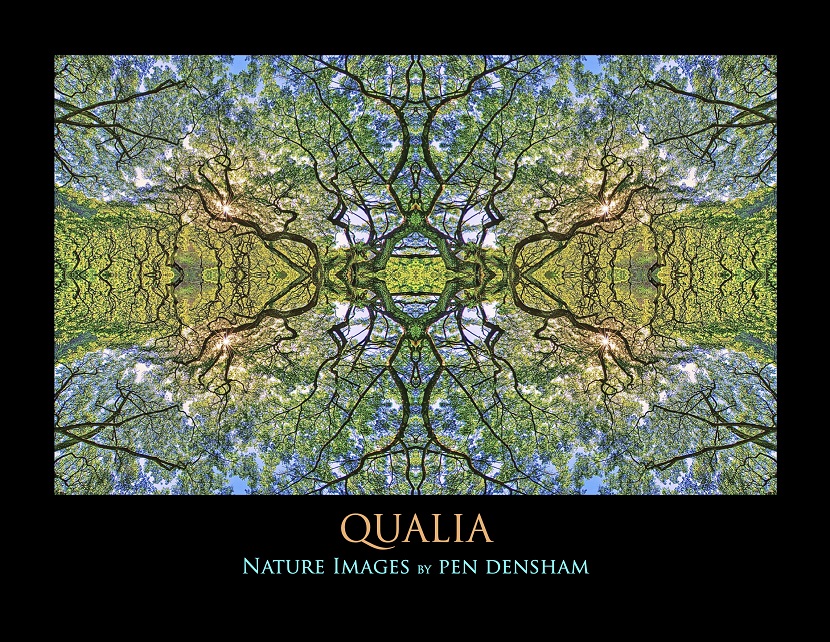
Despite yearning to cast spells with a camera. I was approaching photography with an unconscious “rigidity”. While making “good” images I was not breaking free. I let my cameras languish and concentrated on filmmaking. The idea of trying to make images that impacted the subconscious instead of just being figurative first occurred when my teenage daughter used my old Nikons and took pictures that weren’t framed in ordinary ways, because she had not been raised on the photo rules. Her images were naive, poetic, weirdly focused and framed. They drew me into a mystery because they were not familiar. I had been trained to focus clearly, frame subjects on the thirds, expose properly! And you end up with images that repeat the forms, not disrupt the medium. Her works opened my head to “there was another way to do this”. Not to get it right. But to explore the what if?” I discovered digital photography, which is incredibly flexible and lets one see results immediately. I tried to let go of my photographic inhibitions, to respond to the environment unconsciously. To regard the camera as part of a dance to discover the mystery surrounding the fusion of light, water and living elements. I like to say my camera was the brush and nature my palette. I decided to see what happened if I moved the camera as I made images. Trees danced, plants flew, waves turned into wondrous sculptured lines of joy. I exposed weirdly, focused wildly, composed without rules. Deliberately trying to create what I had never seen before. My influences are much more abstract and impressionist art than photography. Jackson Pollack, Turner, Monet powerful visionaries that I am in awe of. Trying to reach from seeing what the environment looks like to what it spiritually feels like. Despite that nagging voice in my head telling this was all stupid. The results often looked sensory and exultant. I force myself to look at every frame I make no matter how abstract. When something is unlike anything I have seen before I realize I have to allow the images to speak to me. Then I make adjustments and when I choke up, I know the picture has found me.
6. Do you exhibit your photography work at the United Nations, Museums, Universities, Galleries? Where can people see your work?
I would be totally honored if the United Nations exhibited my work. Most of my pieces are currently in the hands of private collectors in the US and Europe. But I have made it a goal not to let sales be my main objective I want my art shared. I have a website at pendenshamphotography.com called Qualia - which is a philosophical term for things that cannot be describe in words. People can see my work and even download a free pdf of a coffee table book of my images.
7. Does your photographic style translate to film?
I like to say I want to make movies not talkies. Films where the camera transports you into the story. Freeing my creative energy has given me a lot of confidence in using instinct to create. And conversely, I think being a filmmaker has generated a style of filling the frame where my images tell a visual story without words. Kind of music for the eyes. I want pictures that can’t be dismissed in a glance that people can live with and find daily pleasure. When humans get familiar with an object we almost no longer see it. When we drive home our brains run on auto-pilot. We barely see our surroundings the trees on our street etc. But by making a picture of a tree into a fresh flowing organic explosion of colors and light it allows the viewer to re-discover their inner emotions to nature almost like a natural Rorschach Test. I want people to feel the oceans we came from. To remember that trees breath for us. To sense that we are all sharing one environment and it can be utterly beautiful.
8. What are your thoughts on the impact of streaming on distribution of film and art?
I had the privilege of working with Marshall McLuhan the 70’s Canadian guru of communications. He talked about the innate nature of human beings evolved to tell stories. They are organic to us and teach values. Other than a few outliers. Mankind is a moral creature. Sharing fairness and decency through hero’s, devoted loves, bands of underdogs standing up against unfairness is the way tribes bonded together to create safe spaces to mutually raise their young. No matter what medium we will tell stories because their examples heal and teach how we chose to live our own lives. Humans will keep exploring the arts through all mediums as we have with ballet, opera, theater etc. We will explore our lives with AI and streaming and mediums yet to be discovered. Because good story telling is organic and can live beyond us.
9. The University of Toronto is currently acquiring your extensive film and photography archives. What does this mean to you?
I am incredibly grateful that the University of Toronto is preserving my creative history. When we were in our 20’s we literally went to awards ceremonies with holes in our shoes because we sunk everything we had into our early Canadian movies. They contain the creative gifts of hundreds of people. The University of Toronto also asked that I donate all kinds of ephemera from my life, letters, tape, notes, scripts etc. Right down to birthday cards! They say they can’t guess what people will want to see 300 years in the future. It conjures my imagination.
10. Anything else you would like to share with us.
I have been lucky to be able to work in a world that I love. Some people ask what was the biggest mistake that I have made? My answer is my errors of omission. When though fear of embarrassment, failure, or the thought that I was not skilled enough I held back. Those choices have cost me so much compared with the time I did take the risk. And in one case, three Studios told me that my idea for a new Robin Hood would never work. Audiences wanted stories with guns not swords. They would not pay me to write it. I wrote it anyway! - And changed my life.
11. How can people reach you?
pdensham.com has multiple connections with my career and art and ways to connect with me.

The best of Tired Earth delivered to your inbox
Sign up for more inspiring photos, stories, and special offers from Tired Earth
By signing up for this email, you are agreeing to news, offers, and information from Tired Earth. Click here to visit our Privacy Policy.
Comment
Reply