



14 Oct 2026
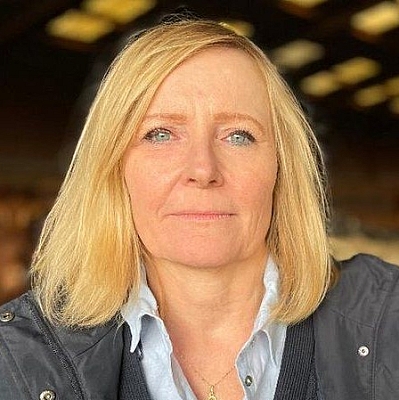
Liz Webster
British
Food security is not a farming issue. It is a whole-economy national resilience issue.

1. How has Brexit affected the economic and practical realities of farming in Britain, particularly in terms of production costs, labour, access to inputs, and market access?
For farmers, Brexit has meant the loss of four things that previously underpinned the business model: support, a level playing field, market access and labour.
First, we lost the old system of direct farm support under the Common Agricultural Policy. In England that has been replaced by environmental schemes such as the Sustainable Farming Incentive. I support paying farmers to deliver environmental benefits, but these schemes are not a straightforward replacement for income support and the funding has become increasingly uncertain. The 2026 SFI closed in September after its allocated budget was exhausted.
Second, we have lost the level playing field. Agriculture is devolved, so England, Scotland, Wales and Northern Ireland now operate different support systems. That means farmers within the United Kingdom can be operating under substantially different financial conditions.
At the same time, British farmers are increasingly expected to compete with imports produced under systems and production standards that would not necessarily be permitted here. That is profoundly frustrating: government can impose higher costs on domestic producers through environmental and welfare rules and then expose them to cheaper imports produced differently.
Third, we have lost frictionless access to our biggest export market. Food and drink export volumes in 2025 were still 27% below 2019 levels overall and 31% lower to the EU. In the first half of 2026 exports weakened again. The Food and Drink Federation attributes much of the EU decline to the additional costs and complexity of trading since Brexit.
And fourth, we lost easy access to European labour. Agriculture, horticulture, food processing and related sectors had relied heavily on workers who could previously move freely from the EU. That has been replaced in part by visa schemes, sponsorship requirements and additional bureaucracy. A Seasonal Worker visa now costs £340 before travel and other associated costs are considered.
So when farmers talk about Brexit damage, it is not one isolated problem. It is the cumulative effect of less predictable support, unequal competition, impaired access to our main market and a more expensive and bureaucratic labour system.
That combination has made farming more difficult at precisely the moment when Britain should be strengthening domestic food production and resilience.
2. To what extent has Brexit changed the UK’s approach to food security? Has greater control over agricultural and trade policy made the British food system more resilient, or introduced new vulnerabilities?
Brexit gave the UK greater legal autonomy over agricultural and trade policy, but autonomy and resilience are not the same thing.
Food security is ultimately about whether a country can continue feeding its population when the world becomes unstable. That depends on domestic production, diversified imports, secure energy and fertiliser supplies, functioning ports, labour, processing capacity and reliable relationships with neighbouring countries.
The UK Food Security Report itself identifies extreme weather, labour shortages, energy and fertiliser shocks, dependence on imported fruit and vegetables and single points of failure in supply chains as important risks. It also confirms that the EU remains the UK’s largest external food supplier.
Brexit therefore created a paradox. Britain gained the theoretical ability to design its own trade and farm policies, but simultaneously removed itself from a deeply integrated European food system.
That became particularly obvious in the way border controls developed. The EU introduced full controls on British goods from January 2021, while the UK repeatedly delayed equivalent checks on EU imports. Even in 2026, some physical checks on medium-risk fruit and vegetables have been postponed again until 2027.
To me, food sovereignty is not the ability to write your own rulebook. It is the ability to withstand shocks.
If your food, fertiliser, fuel and animal-feed systems become increasingly dependent on global markets over which you have little control, then sovereignty on paper can coexist with dependency in practice.
That is why I have argued repeatedly that food security is national security.
3. How have changes in agricultural trade since Brexit affected British farmers and consumers, particularly in relation to imports, exports, food prices, and competition from overseas producers?
The central contradiction is that Britain left its most important agricultural market while remaining economically dependent on it.
Before Brexit, roughly two-thirds of UK agri-food exports went to the EU. That was not an accident: Europe is geographically close, wealthy and capable of absorbing large quantities of British meat, dairy, seafood and processed food.
The Trade and Cooperation Agreement avoided tariffs on qualifying UK-EU goods, which was extremely important, but it did not reproduce Single Market membership. Farmers still face customs procedures, SPS certification, rules of origin and regulatory checks. Agricultural exporters make high use of the tariff preferences available under the agreement, but the administrative friction remains.
At the same time, the UK has pursued trade agreements with countries including Australia and New Zealand. The Government stresses that imported food must continue to meet UK food-safety requirements and that products such as hormone-treated beef remain prohibited.
But food safety is only one part of the issue.
British farmers can be required to meet environmental, animal-welfare and production rules that raise their costs, while competing with imports produced under different systems. That creates a legitimate concern about whether government is effectively exporting environmental or welfare impacts while asking domestic farmers to bear higher standards.
Consumers are affected too. Britain is a significant food importer, particularly for fruit, vegetables and seafood. The food-security report acknowledges this dependence.
So trade policy cannot simply be about making imported food cheaper. The long-term question is whether the policy preserves enough domestic productive capacity to feed the country when international markets are disrupted.
4. There have been concerns about whether post-Brexit trade agreements could expose British farmers to food produced under different environmental, animal-welfare, or production standards. How significant are these concerns in practice?
They are very significant, but the distinction between food-safety standards and production standards is crucial.
The Government is correct when it says that imported food must comply with UK food-safety rules. For example, the Australia and New Zealand agreements did not legalise hormone-treated beef, which remains prohibited.
But two products can be equally safe to eat while having been produced under very different environmental, welfare or regulatory regimes.
British farmers may face restrictions on pesticides, animal medicines, stocking practices, environmental management and welfare standards that increase the cost of production. Imported food may have been produced under different conditions.
That creates two risks.
The first is economic. If British farmers are required to produce to more expensive standards but government simultaneously opens the market to cheaper production from elsewhere, domestic production can become uncompetitive.
The second is environmental. Britain can make its domestic statistics look greener simply by importing more food and therefore importing the environmental footprint associated with producing it.
That is not sustainable policy.
The correct principle should be that trade policy reinforces domestic environmental and welfare policy rather than undermining it.
This problem was understood even before Brexit. Parliamentary analysis warned that future trade agreements could expose British farmers to competition from products produced under standards not permitted here.
The debate therefore should not be reduced to whether food is technically safe to eat. The wider question is whether British farmers are competing on genuinely comparable terms.
5. The UK has introduced new agricultural policies following Brexit, including a greater emphasis on environmental outcomes. How do you assess the relationship between supporting farm incomes, maintaining food production, and delivering environmental improvements?
This is where I think British policy has made a fundamental conceptual mistake.
There should never have been a choice between food production and the environment.
Healthy soils, clean water, biodiversity, pollinators, functioning ecosystems and climate resilience are the foundations of long-term food production. Environmental recovery is therefore essential.
But farmers also need viable businesses.
The post-Brexit English agricultural policy was designed around replacing the Common Agricultural Policy with a system increasingly based on paying farmers for environmental public goods. That offered opportunities to improve land management, but the danger was that government began talking about environmental delivery almost independently of food production.
The EU’s Common Agricultural Policy, whatever its many faults, explicitly combines several objectives: improving agricultural productivity, ensuring food security, supporting reasonable farm incomes, protecting natural resources and sustaining rural economies.
That balance matters.
If environmental schemes make it financially more attractive to stop producing food than to farm sustainably, the policy has failed.
Likewise, if farm incomes collapse, environmental outcomes eventually suffer too because farmers cannot invest in soil management, hedges, water infrastructure or nature recovery if their businesses are insolvent.
I would therefore move away from treating food and nature as competing land uses.
Government should reward farmers for producing nutritious food efficiently while simultaneously improving soils, biodiversity, water quality and carbon resilience.
A sustainable farm should be rewarded for both.
6. Looking ahead, what should the UK government prioritise if it wants to build a food and farming system that is economically viable for farmers, secure for consumers, and compatible with ambitious environmental standards?
The first priority should be to recognise food as critical national infrastructure.
Government conducts national-security planning around energy, defence and communications. Food deserves the same seriousness.
That requires several things.
First, Britain should remove unnecessary barriers with its nearest and largest food market. The proposed UK-EU SPS agreement is important because both sides have agreed that it should allow the vast majority of movements of animals, animal products, plants and plant products to take place without certificates or routine controls.
Second, we need a serious national food-security strategy based on domestic productive capacity. That means asking what proportion of essential foods Britain should be capable of producing even during international disruption.
Third, government should rebuild resilience in the inputs farming depends upon: fertiliser, energy, animal feed, veterinary capacity, machinery, processing and abattoirs.
Fourth, trade policy must stop being developed separately from agricultural policy. If government requires British farmers to meet environmental and welfare standards, trade agreements should not systematically undermine them.
Fifth, agricultural environmental policy must be rooted in food production rather than treating farming as something environmentally problematic that should gradually disappear.
Finally, Britain needs to recognise the extraordinary interconnectedness of these systems.
Gas affects fertiliser. Fertiliser affects crop yields. Diesel affects tractors and haulage. Energy affects refrigeration and processing. Ports affect imported food. Climate affects harvests.
Food security is not a farming issue. It is a whole-economy national resilience issue.
7. To what extent have European governments, including the UK government, failed to adequately balance the interests of farmers, food security, trade, and environmental protection in their agricultural policies, and where do you see the most significant policy shortcomings?
I would separate the UK from the European Union here, because since Brexit they have developed in very different directions.
The UK no longer really has a single agricultural policy. Agriculture is devolved, so farmers in England, Scotland, Wales and Northern Ireland now operate under different support systems and, in some cases, very different trading circumstances. That fragmentation itself has created problems because farmers competing within one United Kingdom no longer necessarily operate on anything resembling a level playing field.
The European Union still has the Common Agricultural Policy, and in many respects I think that provides a stronger framework because it continues to recognise that food production, farm incomes, rural communities and environmental protection have to be considered together. Its stated objectives include fair farm incomes, competitiveness, environmental protection, biodiversity, rural vitality and food quality.
But Europe has a different challenge: its sheer geographical and agricultural diversity.
Farming in southern Spain or Greece bears little resemblance to farming in Ireland, northern France, Scandinavia or eastern Europe. Climate, rainfall, soil, farm structure and production systems vary enormously. A policy that is appropriate for one region can therefore be burdensome or inappropriate elsewhere.
The current CAP already recognises this more than is sometimes appreciated. Each member state has its own CAP Strategic Plan and can tailor interventions to national and local circumstances while working towards common European objectives.
I think the future question is whether that principle should go further.
Europe may need common standards, a common market and a common agricultural budget to prevent countries competing by lowering standards or subsidising their farmers unfairly. But there may also be an argument for giving member states greater discretion over how their allocated agricultural budgets are used, provided they remain within agreed European objectives.
That could help reduce some of the political tensions we are seeing in strongly agricultural countries such as France, where farmers can feel that decisions are being imposed from too far away and without sufficient understanding of local conditions.
The challenge is therefore not necessarily to choose between European or national agricultural policy. It is to find the right level for each decision: European coordination where a level playing field and common standards are essential, but national and regional flexibility where farming conditions genuinely differ.
That problem is not unique to Europe. Large federal systems such as the United States face similar tensions because agricultural conditions differ enormously across a continent while trade and national food security require an overarching framework.
For me, the guiding principle should always be the same: environmental policy must work with farmers rather than against them, and food production must remain economically viable.
Selected references
House of Commons Library – UK-EU trade and the post-Brexit border regime: https://commonslibrary.parliament.uk/research-briefings/CBP-10680/
UK Food Security Report 2024 – food supply chain resilience: https://www.gov.uk/government/statistics/united-kingdom-food-security-report-2024/united-kingdom-food-security-report-2024-theme-3-food-supply-chain-resilience
House of Commons Library – UK trade statistics: https://commonslibrary.parliament.uk/research-briefings/cbp-7851/
House of Commons Library – Agriculture and Brexit / agri-food trade: https://commonslibrary.parliament.uk/research-briefings/cbp-7974/
UK Government – UK-Australia FTA agri-food explainer: https://www.gov.uk/government/publications/uk-australia-fta-agri-food-explainer/uk-australiafree-trade-agreementagri-food-explainer-web-version
European Commission – Common Agricultural Policy at a glance: https://agriculture.ec.europa.eu/common-agricultural-policy/cap-overview/cap-glance_en
House of Commons Library – UK-EU SPS agreement: https://commonslibrary.parliament.uk/research-briefings/cbp-10312/
European Commission – Vision for Agriculture and Food: https://agriculture.ec.europa.eu/vision-overview/vision-agriculture-and-food_en
UK Government – Sustainable Farming Incentive 2026: https://www.gov.uk/government/publications/sustainable-farming-incentive-2026-sfi26
Food and Drink Federation – UK food and drink exports in 2025: https://www.fdf.org.uk/fdf/news-media/press-releases/2026/food-and-drink-export-values-reach-record-high-in-2025-but-volumes-fail-to-return-to-pre-brexit-levels/
UK Government – Seasonal Worker visa: https://www.gov.uk/seasonal-worker-visa/overview
European Commission – CAP Strategic Plans: https://agriculture.ec.europa.eu/cap-my-country/cap-strategic-plans_en
European Commission – Key policy objectives of the CAP 2023–27: https://agriculture.ec.europa.eu/common-agricultural-policy/cap-overview/cap-glance/key-policy-objectives-cap-2023-27_en

The best of Tired Earth delivered to your inbox
Sign up for more inspiring photos, stories, and special offers from Tired Earth
By signing up for this email, you are agreeing to news, offers, and information from Tired Earth. Click here to visit our Privacy Policy.
Comment
Reply