


10 Nov 2026

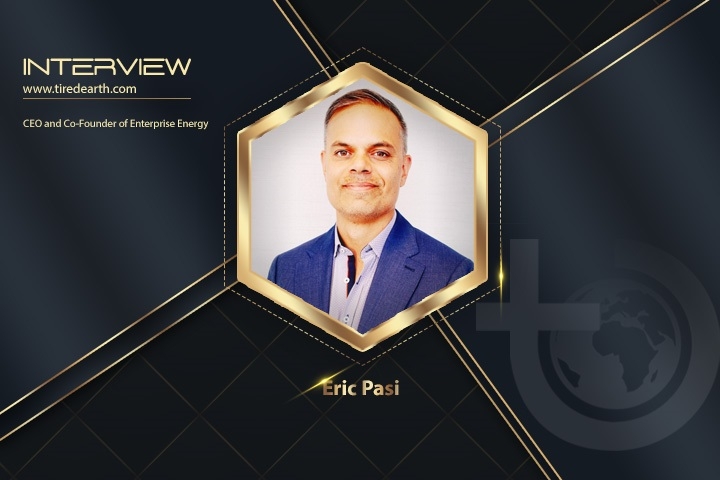
Eric Pasi
Today, as CEO of Enterprise Energy, I’m applying that experience to community solar and battery storage projects that expand access to affordable energy.
By Selva Ozelli
Eric Pasi is the CEO and co-founder of Enterprise Energy, a Minneapolis-based clean energy company developing community solar, energy storage and other distributed energy infrastructure. Under his leadership, Enterprise Energy was ranked No. 114 on the 2026 Inc. 5000 list, including No. 1 among Minnesota companies and No. 4 nationally in the energy category.
Pasi has spent his career advancing renewable energy projects that create lasting value for landowners, communities, businesses and energy customers. Before founding Enterprise Energy, he served as Chief Development Officer at IPS Solar, which later became part of ALLETE.
He is also the author of “CleanWave: A Guide to Success in the Green Recovery,” which explores careers, entrepreneurship and opportunity within the clean energy economy. Pasi is particularly passionate about expanding access to affordable clean energy, supporting workforce development and demonstrating that Minnesota-based companies can lead the country’s energy transition.
At the upcoming COP31 UN Climate Summit in Antalya, Türkiye (November 9–20, 2026), solar energy stands as the operational backbone of the conference’s headline push for global electrification. Guided by a collaborative leadership between Türkiye and Australia, the summit is pivoting the global climate conversation from abstract emissions pledges toward rapid, practical infrastructure deployment.
The Core Push: The “35-by-35” Electrification Target
The defining feature of the COP31 presidency—announced by Turkish Environment Minister and COP31 President Murat Kurum—is a bold proposal to achieve a 35% global electrification target by 2035, up from the current global level of roughly 23%.
Because meeting this target requires replacing fossil fuels in transport, heating, and industry with clean power, solar energy is under the spotlight as the fastest-growing and cheapest source of new electricity generation. Globally, solar energy deployment has shattered prior expectations, with the world adding over 600 gigawatts of solar capacity in 2025 alone—accounting for more than three-quarters of all new renewable capacity.
Geopolitics and Energy Security
Solar energy is increasingly being framed at the summit through the lens of national security and economic resilience. The ongoing geopolitical blockades in critical fossil fuel chokepoints like the Strait of Hormuz have underscored the vulnerability of imported oil and gas. Host country Türkiye is using the summit to showcase its own massive investments in solar farms (such as the Kalyon Karapınar facility) as a blueprint for reducing reliance on imported fuels, even as it balances a heavy legacy baseline of coal.
The Critical Bottlenecks Facing Solar at COP31
While solar capacity is scaling exponentially, negotiators and industry groups are converging in Antalya to solve the secondary bottlenecks preventing it from fully replacing fossil fuels:
Active Dedicated Forums
To turn these targets into reality, major international coalitions are setting up dedicated deployment hubs in the COP31 Blue Zone:
1. Tell us about your educational and professional journey to co-founding Enterprise Energy.
I graduated from the University of Minnesota’s Carlson School of Management in 2006 with a business degree. Around that time, watching *An Inconvenient Truth* pushed me to think seriously about how I could contribute to climate solutions.
My dad is from Tonga, where low-lying coastal communities face the threat of rising seas. That connects the work I do with my own family’s roots and with the future of Pacific Island communities.
I joined Innovative Power Systems, later known as IPS Solar, in January 2007. My first job involved sales, but I also worked with installation crews, measured roofs and learned how projects came together. My first sale was a two-panel solar hot-water system for a family in West St. Paul. Those early experiences taught me about both the technology and the trust customers place in us.
I eventually became Chief Development Officer at IPS, helping grow its community solar business across several states. Today, as CEO of Enterprise Energy, I’m applying that experience to community solar and battery storage projects that expand access to affordable energy. I also wrote the book “CleanWave: A Guide to Success in the Green Recovery” to help others find their own path into this industry.
2. Did you have any role models?
Two people who stand out are Ralph Jacobson, the founder of IPS, and Jigar Shah.
Ralph showed me the importance of equity in the energy transition. One example was creating an all-minority installation crew that included returning citizens. It made the work tangible: Expanding clean energy could also mean opening doors for people who had been excluded from opportunity. That shaped how I think about who benefits from the projects we build and who gets the opportunity to build them.
I met Jigar at a signing for his book, “Creating Climate Wealth”. He encouraged me to understand what capital wants and to be disciplined. That advice stuck with me. Climate solutions need people who understand financing and can execute a sound business plan. His book helped change how I thought about solar, and I later interviewed him for “CleanWave”.
3. Tell us about Enterprise Energy.
Enterprise Energy is a Minneapolis-based company developing community solar, battery storage and other distributed energy infrastructure. We work with landowners, communities, utilities and development partners to move projects from an idea to operating energy infrastructure.
Our work is hands on. Finding a good site is only the beginning. A successful project also requires permitting, engineering, a utility connection, financing and relationships with the people affected by it.
In 2026, Enterprise Energy ranked No. 114 on the Inc. 5000, making us the fastest-growing company in Minnesota and No. 4 nationally in the energy category. That recognition reflects a lot of work by our team and partners. The purpose behind that growth is to bring more affordable, locally produced power to the people and communities we serve.
4. Why could Minnesota’s solar model bring budget relief to millions of Americans?
Community solar makes it possible to benefit from solar without buying a rooftop system or even owning a home. A household subscribes to a share of a solar garden and receives credits on its electricity bill. When the subscription costs less than those credits, the household keeps the difference.
Minnesota’s newer program builds affordability into its rules.
For income-qualified households, subscription charges cannot exceed 90% of the value of their solar bill credits. A $100 credit therefore costs no more than $90, leaving at least $10 in savings. That’s a discount on the solar credits, not a guaranteed percentage reduction in the household’s entire utility bill.
The opportunity nationally is to make that kind of access available to more renters, families and small businesses. Reaching millions of people would require more states to enable workable programs and enough projects to meet demand.
5. Tell us about Minnesota’s pioneering Community Solar Garden program and its impact.
Minnesota established its original community solar program in 2013. It opened a path for people and organizations to participate in solar even when installing panels on their own property wasn’t practical. It also created a market in which independent developers could finance and build projects.
The Legislature updated the program in 2023, creating a new framework administered by the Department of Commerce with a stronger focus on low- and moderate-income households. At least 30% of each garden’s capacity must serve income-qualified households. At least 55% must collectively serve those households, affordable housing providers and public-interest subscribers such as schools and nonprofits.
The newer program also includes consumer protections, including restrictions on residential credit checks and exit fees. Those details matter. Expanding solar adoption means making participation practical for people who have historically faced barriers to it.
6. Can Minnesota’s solar legislation be adopted nationally? What are the barriers?
Yes. I would start with two priorities: Restore a long-term solar investment tax credit and require states to implement community solar programs that expand access.
Those programs should make participation practical for renters, lower-income households, and people whose properties can’t accommodate solar. Minnesota offers useful lessons about bill credits, subscriber protections and making sure benefits reach people who have historically been left out.
The barriers include utility opposition, interconnection delays and costs, permitting challenges and policy uncertainty. States have different electricity markets and regulatory structures, so implementation will vary. But those differences shouldn’t prevent us from setting a national expectation that people can access shared solar and benefit from it.
7. Can Minnesota’s solar legislation be adopted globally? What are the barriers?
The most useful thing to export is the approach: Make clean energy accessible to people who cannot put panels on their own roof, and design the program so the benefits reach the surrounding community.
The details need to fit each country. Utilities, electricity tariffs, land rights, financing and consumer protections differ substantially. In some places, a subscription model with utility bill credits may work well. In others, a cooperative or community-owned system may be a better fit.
Affordable financing and reliable grid access are major considerations. So are local expertise and public trust. Minnesota offers lessons about opening a market and broadening participation, but local communities need a meaningful role in shaping how those lessons are applied.
8. Is Enterprise Energy a partner in America Is All In, the Global Solar Council, the Global Renewables Alliance, or IRENA?
No, Enterprise Energy is not currently a formal partner in those organizations. Our work focuses on developing community solar and battery storage projects and expanding access to affordable clean energy.
9. Will you or delegates from Enterprise Energy attend COP31?
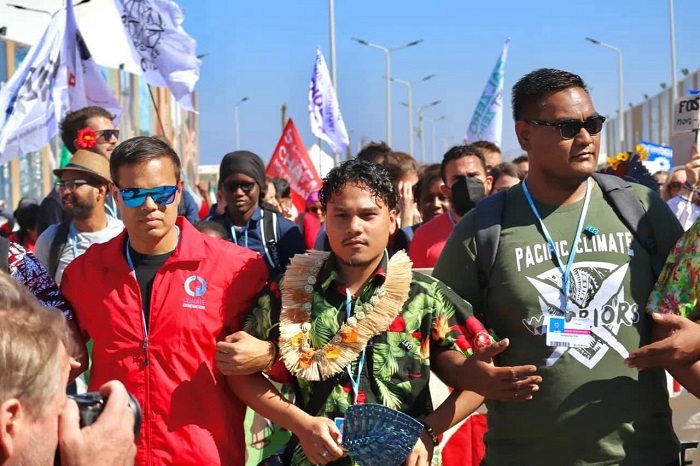
We won’t be attending COP31, but I attended COP27 in Egypt, and it was an amazing experience. I got to meet Al Gore and a lot of Pacific Island warriors. I even ended up in “Teen Vogue”.
My dad is from Tonga, so the effects of climate change in the Pacific feel personal to me.
Many Pacific Island communities are low lying, and face rising seas and increasingly severe climate impacts. Meeting Pacific Island warriors at COP27 brought that connection home. They weren’t talking about a distant threat. They were standing up for their homes, their cultures, and their future.
10. Anything else you would like to add?
The clean energy transition needs people with many different skills. You don’t have to be an engineer to contribute. We need electricians, developers, finance professionals, educators, communicators, and people who know how to build relationships in their communities.
That was a big reason I wrote “CleanWave”. I want people to see a place for themselves in this industry.
We also need to be deliberate about who benefits as the industry grows. Lower energy costs, good jobs, and opportunities for communities that have historically been left out should be part of how we measure success. Building more projects and broadening participation need to happen together.
11. How can people reach you?
People can learn more about Enterprise Energy and our projects at enterpriseenergy.com, or connect with me on LinkedIn at linkedin.com/in/ericpasi.

Plastic Pollution in Cameroon and Africa Plastic Pollution in Cameroon and Africa

The best of Tired Earth delivered to your inbox
Sign up for more inspiring photos, stories, and special offers from Tired Earth
By signing up for this email, you are agreeing to news, offers, and information from Tired Earth. Click here to visit our Privacy Policy.
Comment
Reply