


20 Nov 2026
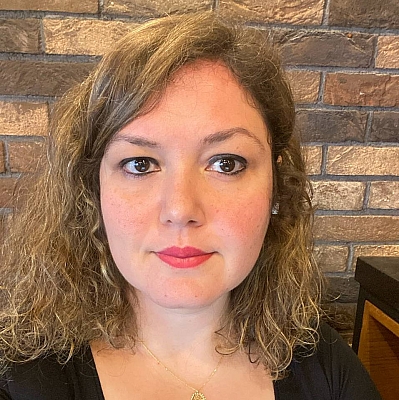
Dr. Aybeniz Civan Kahve
Turkish
Heatwaves are linked to more psychiatric emergencies. Floods, wildfires and droughts leave people with trauma, grief and displacement.
By Selva Ozelli
Assoc. Prof. Dr. Aybeniz Civan Kahve is a Turkish psychiatrist, pharmacologist, and academic serving in the Department of Psychiatry at Gazi University Faculty of Medicine in Ankara, Turkey.
Academic & Clinical Background
She is an Associate Professor in the Department of Psychiatry at Gazi University, having joined the faculty in June 2023.
Before her current appointment, she served as an Associate Professor at the University of Health Sciences Ankara City Hospital and worked as a psychiatrist at Ankara Numune Training and Research Hospital. She also served as a board member for the Psychiatric Association of Turkey from 2018 to 2022.
Research Focus & Publications
Her primary scientific work focuses on psychopharmacology, clinical pharmacology, and neuroinflammation.
According to her Google Scholar profile, her most cited research examines anxiety and hopelessness levels during the COVID-19 pandemic, physician burnout, and treatment compliance among schizophrenia patients.
She frequently participates in educational panels and talks for organizations like the Psychiatric Association of Turkey and CETAD, discussing stress management, mental health, and holistic care.
1. Tell us about your academic and professional journey to becoming a psychiatrist and pharmacologist.
I studied medicine at Gazi University Faculty of Medicine. During medical school I became interested in two questions at once. How does the mind become unwell? And how exactly does a molecule change the way a brain works?
That led me to specialise in psychiatry. I later completed a PhD at the Department of Medical Pharmacology, also at Gazi University Faculty of Medicine, because I wanted to understand the drugs I prescribe at the level of receptors, metabolism and interactions, not just guidelines.
I then worked as a psychiatrist at Ankara Numune Training and Research Hospital and later as an associate professor at the University of Health Sciences, Ankara City Hospital. In 2023 I returned to Gazi University as a faculty member in the Department of Psychiatry. Today I work in adult psychiatry, teach fifth-year medical students and supervise psychiatry residents.
My research tends to sit at intersections: psychopharmacology and neuroinflammation on one side, and interdisciplinary collaboration with colleagues from other medical departments on the other. Patients don’t arrive divided into specialties, so I try not to divide them in research either.
2. Did you have any role models?
I owe a great debt of gratitude to my teachers at the Department of Psychiatry, Ondokuz Mayıs University Faculty of Medicine, where I began my psychiatry residency. Much of my professional identity took shape there, including my ethical values. They taught me what it means to be a good physician and a good person, and to treat every patient with respect. I still carry those lessons into my clinical work and into how I teach my own residents today.
3. Your most cited research examines anxiety and hopelessness levels during the COVID-19 pandemic. Tell us about this research.
In the early months of the pandemic, healthcare workers carried an enormous burden. They faced long shifts, the risk of infection and the fear of bringing the virus home to their families. Our research team wanted to measure this toll while it was happening rather than afterwards. We published the study in a respected international psychiatry journal.
More than 2,100 people took part, about half of them healthcare workers. Healthcare workers had higher hopelessness and state anxiety than people working in other fields. Nurses were especially affected, and women and people living with a high-risk family member also had higher scores. Among healthcare workers, longer working hours and working in a hospital that treated COVID-19 patients were linked to higher anxiety.
The message was practical. Psychosocial support for high-risk groups should be planned in advance, not improvised in the middle of a crisis.
I believe that’s why the paper has been cited so widely. It’s a lesson for the next pandemic, and for any large-scale disaster.
4. What is the impact of air pollution on one’s mental state, or its neurological impact?
Congratulations on the WHO award. Art reached people during the pandemic in ways that statistics could not.
The brain isn’t protected from what we breathe. Fine particles (PM2.5) and ultrafine particles can trigger inflammation throughout the body, and the smallest may reach the brain directly, including through the olfactory pathway. In experimental and human studies, this is linked to oxidative stress, activation of the brain’s immune cells (microglia) and disruption of the blood–brain barrier. As a pharmacologist with a research interest in neuroinflammation, I find this pathway especially compelling, because inflammation is one of the biological threads linking depression, psychosis and cognitive decline.
As a psychiatrist, though, I see air pollution as part of a larger story: the climate crisis. The same fossil fuels that pollute our air also warm our planet. Climate change then reaches mental health in several ways. Heatwaves are linked to more psychiatric emergencies. Floods, wildfires and droughts leave people with trauma, grief and displacement. And many young people now live with a persistent worry about the planet’s future. The people who suffer most are often those who were already vulnerable: people with severe mental illness, the elderly, and people living in poverty. For me, clean air and climate action are therefore also mental health issues. Prevention in psychiatry has to begin with the environment we live in.
5. Are there studies on increased psychiatric diagnoses in Türkiye, or Ankara specifically, relating to the 1970s air pollution?
The large study you’re probably thinking of is from the US and Denmark. In Denmark, exposure to polluted air during the first ten years of life predicted a more than two-fold increase in schizophrenia and personality disorders. In the US data, people in the counties with the worst air quality had a 27% increase in bipolar disorder and a 6% increase in major depression compared with the cleanest areas. Even so, a critical appraisal in the same journal noted that only the bipolar disorder finding was consistent across both countries, and that the effect was modest.
As for Ankara, your memory matches the record. Into the 1980s, the city’s fast-growing population heated homes with Turkish lignite and low-quality fuel oil. In 1988 Türkiye began replacing these fuels with natural gas. Turkish research on air pollution began in the 1960s with Ankara itself as the subject. That early work focused on the lungs and blood. For example, one study compared blood measures in young military students living in Ankara before and after a period of heavy pollution.
To my knowledge, nobody has studied whether people who grew up in 1970s Ankara later had higher rates of psychiatric illness. There are real reasons for that. Türkiye had no national psychiatric registry like Denmark’s, diagnostic systems changed substantially after 1980, and stigma kept many people from seeking care. It remains an open and interesting question. The switch to natural gas from 1988 onwards is a kind of natural experiment that researchers could still examine.
6. What are the challenges in diagnosing psychiatric illnesses stemming from worldwide occurrences or living conditions such as a pandemic or air pollution?
The first challenge is attribution. We can diagnose depression reliably, but we can rarely say that a particular person’s depression wascaused by pollution or a pandemic. These exposures act alongside poverty, isolation, job loss, grief and genetic vulnerability.
The second is telling distress apart from disorder. Fear and sadness during a pandemic or a disaster are often normal reactions to abnormal circumstances, and labelling every reaction as illness can do harm. On the other hand, underestimating distress means people who need treatment don’t get it.
The third is measurement.
Rapid studies, including our own COVID-19 study, often depend on online self-report surveys. These are fast but miss people without internet access, the elderly and the most severely affected. Effects such as air pollution’s impact on child brain development may also take decades to appear.
Finally, many people, especially in our culture, express psychological distress through physical symptoms such as fatigue, pain or sleep problems. In those cases the psychiatric picture may be missed entirely.
7. Are there studies on the impact of environmental disturbances such as floods, wildfires, earthquakes and famine on mental health?
Yes, there is a substantial body of research, and I touched on some of it above. Here I’d like to add two points that are often overlooked.
The first comes from my pharmacology background. Several psychiatric medications make heat more dangerous. Lithium levels can rise to toxic ranges with dehydration, and some antipsychotics and anticholinergic drugs impair the body’s ability to regulate temperature. As heatwaves become more frequent, people with severe mental illness need to be part of climate adaptation planning.
The second is a small clarification. Earthquakes are geological rather than climate-driven, but they teach us a great deal about disaster psychiatry. After the February 2023 Kahramanmaraş earthquakes, a meta-analysis of adult Turkish survivors over the first 18 months found a pooled prevalence of probable PTSD of 41%. These findings show how important early and sustained psychosocial support is after any disaster.
8. Are you taking part in any COP31 events?
I’m not personally taking part in COP31 events. Still, I’m glad that Türkiye is hosting it. COP31 is taking place in Antalya from 9 to 20 November 2026, and health is one of the ten priority areas of its Action Agenda, with a new Antalya Initiative for Health Resilience being launched. I hope mental health gets explicit space within that health agenda. A health system isn’t truly climate-resilient if it overlooks the mind.
9. Anything else you would like to add?
I would emphasise that mental health is a whole-body and whole-environment matter. The air we breathe, the heat we endure, the disasters we live through and the medications we take all meet in the brain. I’m also committed to women’s health and well-being through my work on the board of GÜKÇAM, Gazi University’s women’s research and application center.
References
1.Hacimusalar Y, Kahve AC, Yasar AB, Aydin MS. Anxiety and hopelessness levels in COVID-19 pandemic: A comparative study of healthcare professionals and other community sample in Turkey. J Psychiatr Res.2020;129:181–188. Doi:10.1016/j.jpsychires.2020.07.024
2.Khan A, Plana-Ripoll O, Antonsen S, et al. Environmental pollution is associated with increased risk of psychiatric disorders in the US and Denmark. PLoS Biol.2019;17(8):e3000353.
3.Ioannidis JPA. Air pollution as cause of mental disease: Appraisal of the evidence.PLoS Biol. 2019;17(8):e3000370.
4.Çınaroğlu M, Yılmazer E, Noyan Ahlatcıoğlu E, Ülker SV, Hızlı Sayar G. Psychological impact of the 2023 Kahramanmaraş earthquakes: a systematic review and meta-analysis of PTSD, depression, and anxiety among Turkish adults. Front Public Health.2025.
Plastic Pollution in Cameroon and Africa Plastic Pollution in Cameroon and Africa

The best of Tired Earth delivered to your inbox
Sign up for more inspiring photos, stories, and special offers from Tired Earth
By signing up for this email, you are agreeing to news, offers, and information from Tired Earth. Click here to visit our Privacy Policy.
Comment
Reply