


14 Nov 2026
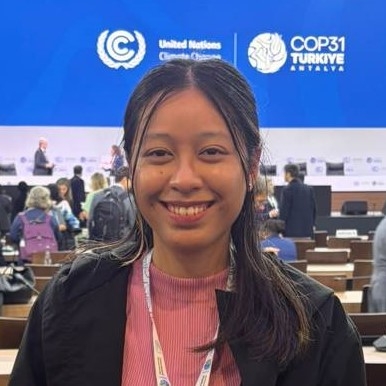
Cassandra Ma
Right now, I am part of a project team working on an infographic to demystify concepts about distributed energy resources and encourage people to utilise these for a more sustainable source of power.
By Selva Ozelli
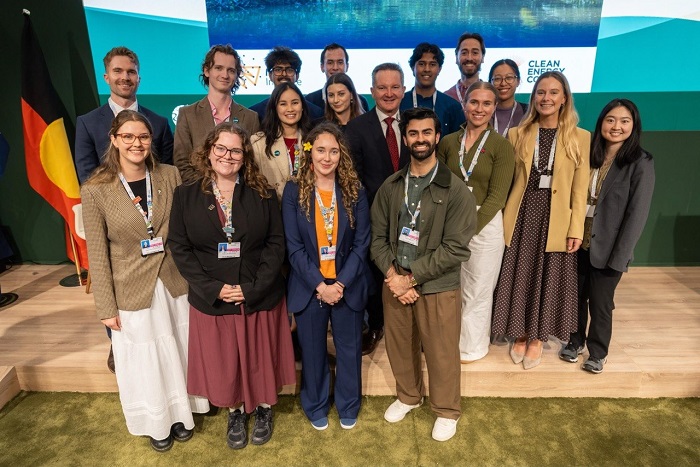
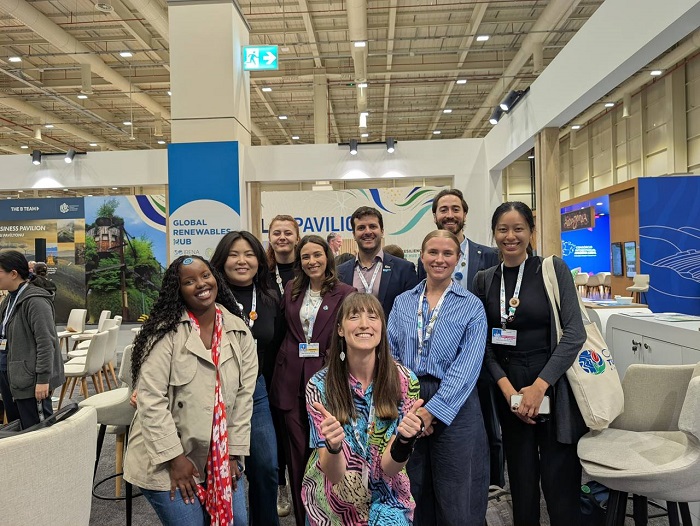
Cassandra Ma is a Future Energy Engineer at Synergy in Perth, Western Australia, and is attending COP31 as a member of the Global Shapers Community.
Background & Role
COP31 & Climate Involvement
She previously volunteered with Engineers Without Borders, WaterAid, and Epilepsy WA.
1. Tell us about your educational and professional journey to become a Global Shaper attending the United Nations Climate Change Conference (COP31).
When I attended high school at Penrhos College, my science teacher at the time taught us the concept of renewable energy. I remember feeling fascinated by the concept that you can generate energy from natural resources like the sun and wind. From that moment I decided that I would love to work with renewables and teachers advised me to look into engineering. Fast forward a couple of years and I have now finished my electrical engineering degree and volunteering activities with UWA’s Engineers Without Borders (EWB) Chapter. Through my university volunteering activities I met friends who were Global Shapers and they encouraged me to apply and join! Once I became a shaper, there was an existing development program for global shapers to attend COP so I applied for it and got selected to attend.
2. Did you have any role models?
Greta Thunberg is a role model for her activism. She has brought awareness about climate change and climate action to many youth which is very inspiring. Another role model I have is Audrey Hepburn. What I mainly admire about her is her work as an UNICEF ambassador. She is an early champion of giving back to the community.
3. What does it take to become a Global Shaper — an initiative of the World Economic Forum—and what are the responsibilities?
To become a global shaper you have to apply to your local hub! The application process usually consists of a written application and then a 3 month probation process! No prior experience is needed but a passion for social impact is what the organisation is looking for! The responsibilities vary! The hub will have community projects that you can work on or you can choose to be a leadership role which involves managing the hub.
4. Tell us about the World Economic Forum and its mission and the World Economic Forum (WEF) Global Shapers Community COP31 youth and changemaker platform. When does it take place and what are the priorities?
Global Shapers Community is a network of young changemakers who are aged between 18 to 30 years old. They are advancing local solutions to global challenges with 11,000 members across 450 local hubs around the world.
Global Shapers Community was an initiative started from the World Economic Forum to develop youth leaders, accelerate youth action and amplify youth voices. The projects that global shapers run are guided by six core areas of impact -ISHAPE. I stands for inclusive communities. S stands for skills for the future. H stands for health and well being. A stands for aid and basic needs. P stands for planet protection. E stands for engagement of the community.
5. How does your background as an electrical engineer prepare you for your Global Shapers responsibilities? Which priorities and focus areas are you involved with?
My background as an electrical engineer definitely helps with my Global Shapers responsibilities. My expertise can be used for projects that involve energy literacy and for contacts in industry. Also the communication, project management and leadership skills you gain at work are transferable to volunteering! My focus areas are health and planet protection. In June this year, my team and I ran an art exhibition on mental health. Right now I am part of a project team working on an infographic to demystify concepts about distributed energy resources and encourage people to utilise these for a more sustainable source of power.
6. Tell us about Synergy the state-owned electric and gas corporation of Western Australia, serving as the region’s largest energy retailer and a major generator transitioning toward a low-carbon grid. Working for Synergy how did implementing the Western Australia Battery Rebate initiative help the region transition towards a low carbon grid?
Synergy is Western Australia’s state-owned energy retailer and electricity generator. It supplies households and businesses on the South West Interconnected System (SWIS). Working with them has been an awesome experience! They are working with technologies such as distributed energy resources.
Distributed Energy Resources (household solar and batteries) are powerful because they can be utilised to ensure power grid stability (demand = supply). For example, DER can provide a source of load during the day when demand is low due to high solar production and they can be utilised to provide a source of supply at night when demand is high. The Western Australia Battery Rebate is key to building a low carbon grid as it encourages people to buy solar and batteries for their home.
7. You are involved with CIGRE Australia Next Generation Network (NGN) which is an early-career division of CIGRE Australia serves as a gateway to the broader international CIGRE network, allowing young engineers to share technical knowledge in electricity generation, transmission, and distribution. Tell us more about this and how can engineers get involved?
CIGRE (Conseil International des Grands Réseaux Électriques, or the International Council on Large Electric Systems) is a global, non-profit association for power system expertise. It’s headquartered in Paris and was founded in 1921. Its members include engineers, utilities, manufacturers, researchers, and regulators. It covers transmission, distribution, grid modernisation, and the energy transition. Much of its work is done by technical study committees and working groups that produce reference documents called Technical Brochures. Its flagship event is the biennial Paris Session. It’s held in Paris in even-numbered years and attracts around 5,000 participants from more than 100 countries. The most recent one ran 23–28 August 2026, and the next is CIGRE 2028 in Paris. Alongside it, CIGRE runs symposiums, workshops, and tutorials across many countries. Engineers can get involved by contacting their local CIGRE group.
A membership fee is involved but many companies have collective memberships which means employees can become members without paying out of their own pockets.
8. How can people reach you?
@cassandra_ma_ on Instagram or https://au.linkedin.com/in/cassandra-ma on LinkedIn.
Plastic Pollution in Cameroon and Africa Plastic Pollution in Cameroon and Africa

The best of Tired Earth delivered to your inbox
Sign up for more inspiring photos, stories, and special offers from Tired Earth
By signing up for this email, you are agreeing to news, offers, and information from Tired Earth. Click here to visit our Privacy Policy.
Comment
Reply