



19 Apr 2026
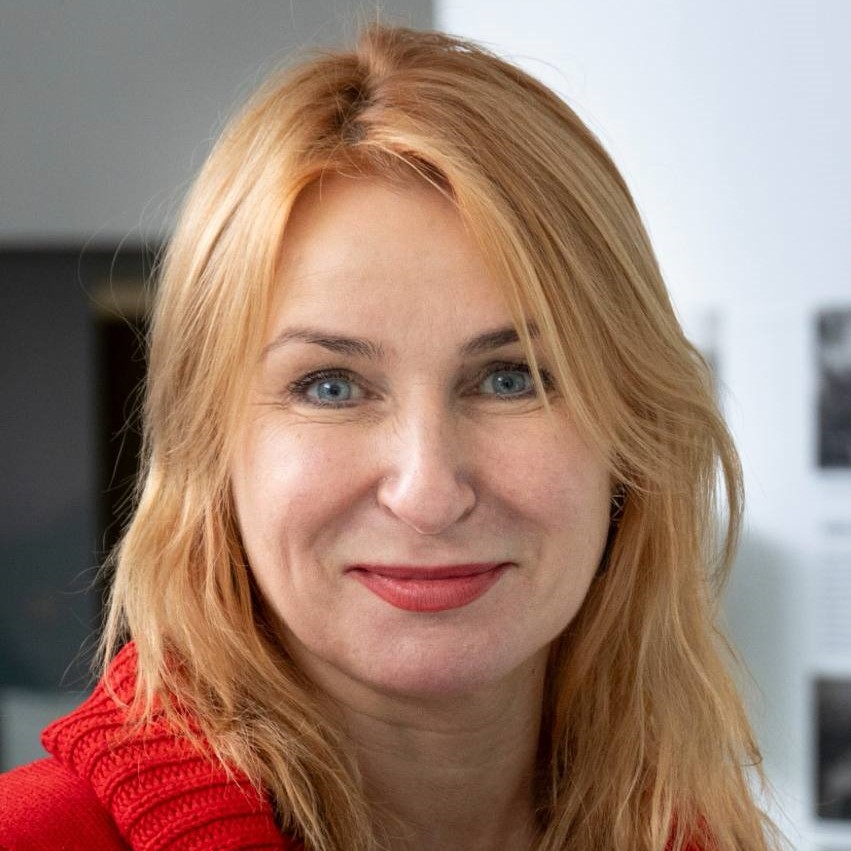
Ave Paulus
Estonian
Grounded in the Paris Agreement and inspired by the Global Stocktake, the CGST recognises culture not simply as a sector, but as a foundational, cross-cutting dimension of climate action, shaping how societies understand, respond to, and transform in the face of climate change.
Ave Paulus is the focal point of ICOMOS Climate Action Working Group and president of ICOMOS Estonia, a member of ICOMOS ISCCL-IFLA, ICLAFI, Theophilos and Water Heritage scientific committees. Ave Paulus is an expert member of the UNESCO panel of experts on Climate Change and the World Heritage. Her work focuses on community-based heritage management, cultural rights in the face of climate change, and integrating traditional knowledge into climate adaptation strategies. Her roles include: Focal Point of the ICOMOS Climate Action Working Group, where she provides international expertise and advocates for heritage in climate policies. An expert member of the IPCC's Seventh Assessment Report (AR7) working group on "Impacts, Adaptation and Vulnerability". President of ICOMOS Estonia with academic background in cultural heritage and conservation as well as theory of culture and semiotics.
Ave has been working as a senior specialist for cultural heritage issues in the Environmental Board of Estonia dealing with cultural heritage and communities in Lahemaa and other national parks of Estonia for more than 20 years. She has coordinated cooperation between heritage communities, states, and universities in more than 30 development and research projects concerning heritage conservation and management. She currently lives in Norway and Estonia.
By Selva Ozelli Esq, CPA, Author of Sustainably Investing in Digital Assets Globally
1. Tell us about your educational and professional background that led you to becoming the focal point of ICOMOS CLIMATE ACTION WORKING GROUP.
I think it's my daily activity and long-time commitment to ICOMOS work.
I have been involved in Climate Action working group activities since revision of “The Future of Our Pasts: Engaging Cultural Heritage in Climate Action” and collaboration events with the Rights-Based working group at Marrakesh annual meeting in 2019. On behalf of ICOMOS CAWG, I have been coordinating ICOMOS Resolution on People-Centred Approaches to Cultural Heritage and ICOMOS Submission to the UN Special Rapporteur in the Field of Cultural Rights on Cultural Rights and Climate Change in 2020. I have been international co-chair of Climate Action WG in the GA2023 ICOMOS 21st General Assembly and Scientific Symposium “Heritage Changes” 2023.
As an ICOMOS member, I have been active in developing cultural landscapes, rights-based approaches, and climate action policy documents and activities. I have been contributing to Buenos Aires Declaration marking the 70th anniversary of the Universal Declaration of Human Rights, Guidance and Toolkit for Impact Assessments in a World Heritage Context, ICOMOS resolution 20GA/15 on Climate Emergency, Heritage, Climate Justice and Equity - ICOMOS Climate Action Working Group toolkit for practitioners.
I have master's degrees from the Estonian Academy of Arts (heritage conservation and restoration) and Tartu University (semiotics and theory of culture). My doctoral thesis focuses on the cultural rights of coastal communities of Northern Europe affected by climate change. My academic background and interests unite semiotic perspective, theory of culture and conservation with rights-based approaches and holistic ecosystems-centred applications.
With my experience of over 20 years as a senior cultural heritage conservation specialist at the Environmental Board of Estonia, Ministry of Climate of Estonia, I was responsible for state level cultural heritage protection in national parks of Estonia in cooperation with local communities. That was a rewarding process of coordinating pioneering research, legislative framework and management of holistic people-centred culture-nature approach to ecosystems in climate change, which resulted in initiation of cooperation councils, the change of legislative framework, application of management plans where heritage communities played the central roles, and several joint cooperation projects from research to fine arts to climate action.
I have been actively involved in international heritage conservation policies for over a decade. I have been an expert member of the European Union OMC Group on Strengthening Cultural Heritage Resilience for Climate Change and the expert member from Eastern Europe in the UNESCO panel of experts on Climate Change and the World Heritage as well as the representative from Estonia. I have contributed to the UNESCO Policy document on Climate Action for World Heritage that was adopted in 2023.
On the regional and mostly North European level, I have been organizing ICOMOS international hybrid workshops and conferences dedicated to heritage, communities and climate change in the period 2018- 2022 in Estonia. From 2023 onwards workshops have taken place both in Estonia and the Norwegian Arctic. Together with other national committees and local communities, we have celebrated the European Cultural Capitals 2024 with a Heritage Dialogues festival around Bodø Arctic coastlines and islands dedicated to coastal culture and climate change.
2. Do you collaborate with Climate Heritage Network (CHN)?
Yes, of course. ICOMOS is the founding partner and first Secretariat of Climate Heritage Network and its Steering Committee member. ICOMOS has built together with CHN several coalitions and partnerships connected with joint activities, like the Preserving Legacies, collaboration in the Group of Friends of Culture-Based Climate Action, collaboration in COP30 Action Agenda Plans to Accelerate Solutions, including Heritage Adapts! and Heritage Now! Campaigns. We work together intensively on climate policies within the UNFCCC policy framework, planning joint activities in UNFCCC policy events, as ICOMOS is an observer of UNFCCC processes.
3. COP30, held in Belém, Brazil, made significant progress in integrating cultural heritage and Indigenous knowledge into the global climate agenda, highlighting their importance for effective adaptation strategies. Tell us about ICOMOS contributions to this agenda.
The Global Goal on Adaptation (GGA) Framework, adopted in December 2023 at COP28, marked an important step forward by officially recognizing heritage sites and cultural traditions as key parts of climate adaptation efforts. On 21 November 2025, COP30 met the expectations set at COP28 by approving the CMA6 Global Goal on Adaptation (GGA) decision, which now includes 5 indicators to track how well heritage sites and cultural practices are being protected and adapted to climate change. While still a work in progress, the COP30 outcome is the strongest step yet toward making culture and heritage a practical part of international climate policy. It reflects five years of steady efforts by culture and heritage partners since COP26 and marks an important milestone in the HACA (Heritage Adapts to Climate Action) journey and initiative, of which ICOMOS has been a strategic partner.
ICOMOS CAWG organised the official side event of UNFCCC together with Architecture 2030: “What Can We Learn from Climate-Smart Traditional Buildings”. Several participating ICOMOS members highlighted the contribution and importance of the regional perspectives of vernacular architecture in climate action.
For the first time in UNFCCC history, the United Nations Paris Committee on Capacity Building held a thematic day on Culture, Heritage & Arts. I highlighted the role of cultural heritage in climate policies in the keynote panel and introduced the Preserving Legacies forthcoming Heritage Adapts campaign.
ICOMOS CAWG’s cooperation with Architecture 2030, the Union of Architects and the Climate Heritage Network was especially active – with joint events held nearly every day, including “Culture-Based Solutions in the Built Environment”; “The Role of Green Architecture Against Climate Change”; “Heritage and Resilience: Safeguarding Culture and Community in a Changing Climate”; “Cultural Heritage-Based Climate Action in the Built Environment”; “World Heritage and Climate Change”; “Green Design as a Driver for Climate Action”.
Among the speakers were several ICOMOS members, including myself, Aline Carvalho, Celso Almeida, Bruno Aldrade, Mauro Garcia, Mokolade Johnson and many other colleagues. The sessions clearly demonstrated that heritage, buildings and landscapes are a rich source of solutions – rooted in traditional and local knowledge, supporting diverse local cultures, and shaped by thousands of years of human adaptation to the climate.
4. Tell us about your plans on the road to Antalya, events and actions in 2026.
ICOMOS CAWG, being part of several COP30 Action Agenda Plans to accelerate solutions, activates in 2026 the campaigns on building resilience of heritage places, practices and communities with Heritage Adapts! campaign; showing the power of traditional knowledge of heritage-based solutions in built environment with Heritage Now! campaign; cooperating with the Group of Friends of Culture Based Climate Action in supporting Campaign to implement cultural heritage in national adaptations plans.
We are participating actively in a coalition led by Culture+ Climate Pavillion on Cultural Global Stocktake, drafting policy guidance documents to be presented during Bonn SB64 events. Draft 1 was a collaborative work finalised in Marrakech Partnership Accelerator.
I represented ICOMOS CAWG throughout the event, contributing policy task team collective input to drafting the document (including articles 1, 45, and 151, in addition to comments and additions to many more) and promoting 3 campaigns as part of the COP30 5 plans to accelerate culture-based solutions mentioned in draft 1 Art 66 and further. The first draft brings into policy discussion several crucial concepts, like importance of cultural ecosystems in climate action, cultural rights and human rights perspective throughout policy document, central role of cultural rights holders and living heritage communities in climate action, holistic approach to environments, taking into account biocultural rights as human rights and planetary rights.
Grounded in the Paris Agreement and inspired by the Global Stocktake, the CGST recognises culture not simply as a sector, but as a foundational, cross-cutting dimension of climate action, shaping how societies understand, respond to, and transform in the face of climate change. It brings together cultural rights, knowledge systems, heritage, and creative expression as essential to advancing mitigation, adaptation, resilience, and public engagement, while emphasizing the role of culture in enabling inclusive, participatory, and cooperative climate action across all levels of society.
ICOMOS has applied for the UNFCCC Bonn SB64 meeting side-event and is preparing activities on the way to COP31, both in the Pacific as well as in Turkiye and globally.
The most important event of ICOMOS and cultural heritage is the General Assembly and Conference held in Malaysia in 2026 October. ICOMOS CAWG celebrates its 10 year anniversary with a special session, where everybody is invited to contribute. ICOMOS Climate Action Working Group (CAWG), celebrating 10 years of its existence, holds a session “On the Role of Living Heritage in Climate Action” with following topics: (1) empowerment of heritage communities in climate action – from climate literacy to risk assessment to adaptation; (2) cultural heritage-based climate solutions and the role of traditional knowledge – from buildings to places to ecosystems; (3) Cultural heritage in climate policies – from sites to states to international policies. The deadline for abstracts is 30. 04.
5. Anything you would like to add ahead on the occasion of the Day of Monuments and Sites held on 18.04 and the Earth Day 22.04.
ICOMOS Climate Action Working Group celebrates in April both ICOMOS Day of Monuments and Sites and Earth Day with locally led campaigns of ICOMOS CAWG Climate Literacy training empowering heritage communities in climate action worldwide. Climate Emergency is a global issue; CAWG contributes to the response by empowering Living Heritage Communities worldwide, in their homes and their languages. It starts with 4 worldwide and local trainings in April, including CAWG sessions Zoom, with training authors from New Zealand, Arctic Norway-Estonia, and Ireland; and regional trainings in 2 different continents - Brazil and Australia, ICOMOS CAWG CLTs are expected to take place in all continents and have translations to at least 10 local and regional languages, including Portuguese, French, Spanish, Russian, Arabic, Turkmen, Slovenian, Turkish, Estonian, and indigenous Te Reo Māori.
The strength of ICOMOS is in its worldwide expertise, presence and knowledge of specific local heritage and communities, and collaboration with major and minor stakeholders in culture, heritage and climate action. We are convinced that the most important actors are heritage communities and places worldwide; the only way to succeed is by empowering them as rights-holders in climate action. ICOMOS Climate Literacy Training Programme is set to achieve those targets, highlighting the language and need for cultural shifts in climate policies and the strengths of heritage communities and culture-based climate action. To scale the Climate action further, everybody can join the Heritage Adapts! Campaign, where ICOMOS is the leading partner together in Preserving Legacies action.
6. How can people reach you?
Everybody is welcome to follow our activities and calls of collaboration on our web page ICOMOS Climate Action Working Group. You are welcome to join our active working group, or contact me personally with cooperation proposals ave.paulus@icomos.org

The best of Tired Earth delivered to your inbox
Sign up for more inspiring photos, stories, and special offers from Tired Earth
By signing up for this email, you are agreeing to news, offers, and information from Tired Earth. Click here to visit our Privacy Policy.
Comment
Reply