



18 Oct 2026
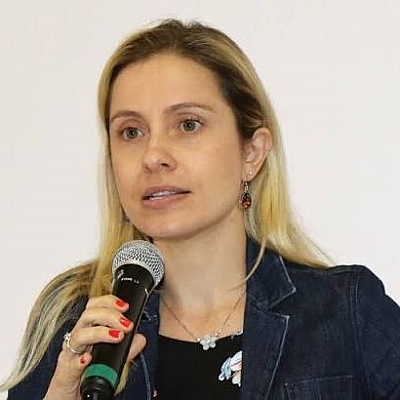
Aline Vieira de Carvalho
What interests me most is the invitation to think across generations. Archaeology helps us understand that societies have organized their relationships with environments in many different ways. Our current arrangements are historically produced, and they can change.
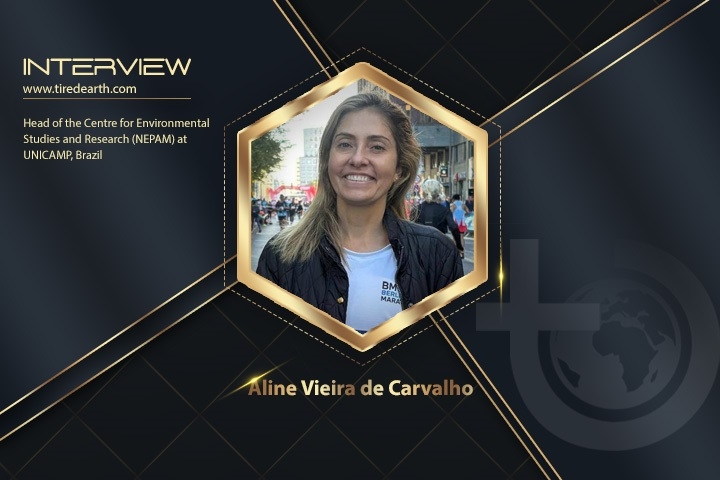
By Selva Ozelli
Aline coordinates the Center for Environmental Studies and Research (NEPAM) and the Paulo Duarte Public Archaeology Laboratory (LAP) at UNICAMP, as well as ICOMOS Brazil’s Climate Change and Heritage Committee. She teaches and supervises research in graduate programs at UNICAMP and is affiliated with the International Council on Monuments and Sites (ICOMOS), the European Association of Archaeologists (EAA), the Brazilian Society of Archaeology (SAB), and other institutions. https://www.lap.nepam.unicamp.br/
1. Tell us about your educational and professional background.
My academic background brings together history, archaeology, and environmental studies. I completed my master’s degree in Cultural History at UNICAMP in 2005 and my doctorate through its Center for Environmental Studies and Research, NEPAM, in 2009. I subsequently undertook postdoctoral research in History at the same university. Today, I coordinated NEPAM and the Paulo Duarte Public Archaeology Laboratory, and I teach and supervise postgraduate research. NEPAM is an interdisciplinary research center, which is an important part of its identity.
Throughout my career, I have been interested in how societies build relationships with places, how memories become recognized as heritage, and whose histories remain excluded from that recognition. Public archaeology has been central to this work because it encourages us to produce knowledge through dialogue with communities and to consider the social responsibilities of research.
My engagement with environmental questions grew from these concerns. We cannot understand heritage without considering the landscapes, ecosystems, livelihoods, and political relationships that sustain it. Climate change makes these connections particularly urgent.
For me, coordinating NEPAM, Lap and the ICOMOS Brazil’s Climate Change and Heritage Committee means creating the conditions for different fields of knowledge to work together. Environmental challenges require the natural sciences, humanities, and social sciences, alongside the knowledge of people who experience those challenges in their daily lives.
2. Tell us about your work with ICOMOS Brazil’s Climate Change and Heritage Committee.
I have coordinated ICOMOS Brazil’s Climate Change and Heritage Committee since 2019. A central concern of this work is ensuring that cultural heritage has a meaningful place in climate discussions, public policy, and practical action.
Heritage is exposed to floods, fires, erosion, and other environmental pressures. However, it also encompasses knowledge, practices, and relationships that can contribute to adaptation. These include ways of managing water, caring for landscapes, building, producing food, and organizing collective life.
Our work brings together research, professional exchange, and dialogue with institutions and communities. I am especially interested in connecting heritage protection with climate justice: who faces the greatest risks, who has access to resources, and who participates in decisions about what should be protected.
In my research, these concerns also inform collaborations involving UNICAMP, IPHAN, and academic partners, including work in the Pantanal region. The aim is to help connect knowledge about heritage and climate vulnerability with public decisions.
For me, protecting heritage means sustaining the conditions that allow people to maintain, reinterpret, and transmit their relationships with places and memories.
3. Tell us about UNICAMP’s university networks for climate action and collaboration with Türkiye.
UNICAMP has been strengthening its participation in university networks concerned with climate action. At COP30, it co-led the organization of the Universities Pavilion with Tecnológico de Monterrey, in Mexico.
This helped consolidate its engagement with initiatives including the International Sustainable Campus Network, Race to Zero, Universities for Climate Action, and Brazil’s UniSustentável network.
These networks create opportunities to share research, develop joint projects, train students, and connect universities with public policy. Their value depends on sustained cooperation beyond the conferences themselves.
My contribution emphasizes the cultural and social dimensions of climate change. Universities need to investigate how inequality, historical experience, cultural practices, and local knowledge influence both vulnerability and the possibilities for action.
Regarding Türkiye, I see considerable potential for cooperation in public archaeology, cultural heritage, environmental history, and adaptation. Comparative research could connect the experiences of communities in Brazil and Türkiye while respecting their different histories and circumstances.
4. Tell us about your thoughts on Göbekli Tepe as an inspiration for COP31.
I welcome the decision to bring an archaeological site into the symbolic framing of a climate conference. The COP31 Presidency explicitly draws inspiration from Göbekli Tepe and associates it with solidarity, balance, and harmony with nature. This creates an opportunity to recognize the cultural dimensions of climate action.
As an archaeologist, however, I would approach the expression “Zero Point of History” as a metaphor. Human history has no single starting point, and symbolic expression and collective life existed long before Göbekli Tepe. We should also avoid assuming that prehistoric societies necessarily lived in perfect ecological harmony.
What interests me most is the invitation to think across generations. Archaeology helps us understand that societies have organized their relationships with environments in many different ways. Our current arrangements are historically produced, and they can change.
Solidarity must therefore become a practical commitment: reducing emissions, supporting adaptation, confronting unequal responsibilities, and enabling communities to participate in decisions. The strength of the symbolism will depend on how it informs the conference’s outcomes.

5. Why Göbekli Tepe matters and what we can learn from it?
Göbekli Tepe challenges simplistic accounts of human development. Its monumental structures, dated by UNESCO to approximately 9600–8200 BCE, demonstrate remarkable architectural knowledge and collective organization among communities associated with hunter-gatherer lifeways during the transition toward farming. Its carved pillars also reveal a rich symbolic world.
For me, this reminds us that producing meaning, gathering together, and maintaining social relationships are fundamental dimensions of human life. Art and symbolism cannot simply be treated as luxuries that appear after material needs have been satisfied.
At the same time, the site should not be reduced to a single story about religion, agriculture, or the origins of civilization. Archaeological interpretations develop as new evidence becomes available. We must remain attentive to the complexity of the communities who created and used these spaces.
One lesson for the present is that collective projects depend on shared meanings as well as practical knowledge. Climate action also requires people to understand why change matters and how it relates to their lives.
Another lesson concerns responsibility. Archaeological sites preserve evidence that cannot be recreated once destroyed. Caring for them allows future generations to ask questions we may not yet know how to formulate.
6. Tell us about the first of its kind Türkiye–Australia arrangement for COP31.
The arrangement creates an interesting opportunity for international cooperation. Türkiye will host COP31 and hold its Presidency, while Australia will lead the negotiations. The partnership also includes a significant Pacific dimension through the preparatory process.
I see potential in bringing different regional experiences into closer conversation.
Mediterranean and Pacific communities face distinct challenges, but both have much to contribute to discussions about adaptation, cultural continuity, and the relationship between people and their environments.
For heritage, the Pacific perspective is particularly important. Climate-related loss can involve ancestral places, cultural practices, community relationships, and the ability to remain in a territory. These dimensions deserve greater attention in climate negotiations.
However, a new institutional arrangement does not automatically produce more ambitious outcomes. Its effectiveness will depend on clear responsibilities, coordination, transparency, and meaningful participation, especially for those most affected by climate change.
I would assess its success through the commitments and resources it delivers, and through whether vulnerable communities gain a stronger voice in shaping them.
7. Tell us about the impact of plastic waste on climate action, and cultural heritage.
I welcome the emphasis on waste prevention, but I believe “zero waste” must address the entire life cycle of materials. Plastic production, use, and disposal are connected to greenhouse gas emissions and environmental damage.
Effective action therefore requires reducing unnecessary consumption, expanding reuse, and holding producers accountable, alongside improving waste management.
In Brazil, I would approach the implications for heritage at several levels. Waste accumulation can compromise the surroundings and use of cultural places. Pollution affecting rivers and coastal ecosystems can also threaten livelihoods and practices that form part of living heritage. For fishing and riverine communities, environmental quality, cultural continuity, and daily survival are closely connected.
There is also an emerging archaeological concern. Research in York, in the United Kingdom, has identified microplastics in archaeological sediments. This raises questions about contamination, the interpretation of deposits, and their long-term preservation. We need more research before assuming that the same levels or effects occur at particular Brazilian or Turkish sites.
Regarding Türkiye, my concern would be the potential cumulative pressure where waste processing, settlements, waterways, and heritage landscapes overlap. Evaluating specific risks around Adana or other locations requires local evidence, environmental monitoring, and collaboration with Turkish researchers and communities. Sharing a Mediterranean setting does not, by itself, establish that sites face identical exposure.
The international dimension is equally important. Exporting waste must not become a way of transferring environmental burdens to other populations. A credible zero-waste agenda should include transparent monitoring of waste movements, prevention of illegal dumping and burning, protection for workers, and effective public participation.
From a heritage perspective, the question is also about the material legacy we are creating. What will future generations inherit from our patterns of production and consumption, and who is already paying the greatest price for them?
8. Tell us about the cultural activities prepared for COP31.
My preparation for COP31 has focused on connecting cultural heritage with climate action through research, dialogue, and international cooperation. I am scheduled to speak on 11 November as part of the ICOMOS activities on cultural heritage and climate action in Antalya.
I intend to bring Brazilian experiences into these discussions, particularly the connections between public archaeology, climate vulnerability, community knowledge, and public policy. I also want to strengthen exchanges between researchers, heritage professionals, and organizations working across different regions.
The central message I am preparing is that culture should inform how climate policies are designed and implemented. Communities’ relationships with their territories, memories, and practices influence what adaptation means and which responses are appropriate.
Some elements of the wider program are still being finalized. My priority is to contribute to conversations that lead to lasting cooperation and practical support for the people and places facing climate risks.
9. Any additional thoughts?
I would like to emphasize that heritage concerns our capacity to build futures. It helps people understand where they come from, recognize injustice, sustain relationships, and imagine different ways of living.
As a researcher at a Brazilian public university, I believe we have a responsibility to make knowledge useful and accessible, and to work with communities as partners in producing it. Responding to climate change requires attention to historical inequalities and respect for different forms of knowledge.
I also approach these questions as the mother of two daughters. Intergenerational responsibility is deeply personal to me. The decisions we make today will shape their opportunities, the places they can inhabit, and the cultural and ecological diversity they will inherit.
My hope for COP31 is that the recognition of culture and heritage will translate into participation, resources, and lasting commitments. Protecting the conditions for a dignified future is a responsibility we share, even though our contributions to the crisis—and our capacities to respond—are profoundly unequal.
10. How can people reach you?
Everyone is welcome to get in touch! You can email our laboratory at lap@unicamp.br or contact me directly at alineap@unicamp.br. You can also find us on Instagram: lapunicamp and @nepam.unicamp.br.

The best of Tired Earth delivered to your inbox
Sign up for more inspiring photos, stories, and special offers from Tired Earth
By signing up for this email, you are agreeing to news, offers, and information from Tired Earth. Click here to visit our Privacy Policy.
Comment
Reply