



02 May 2026

Rebecca Herbert
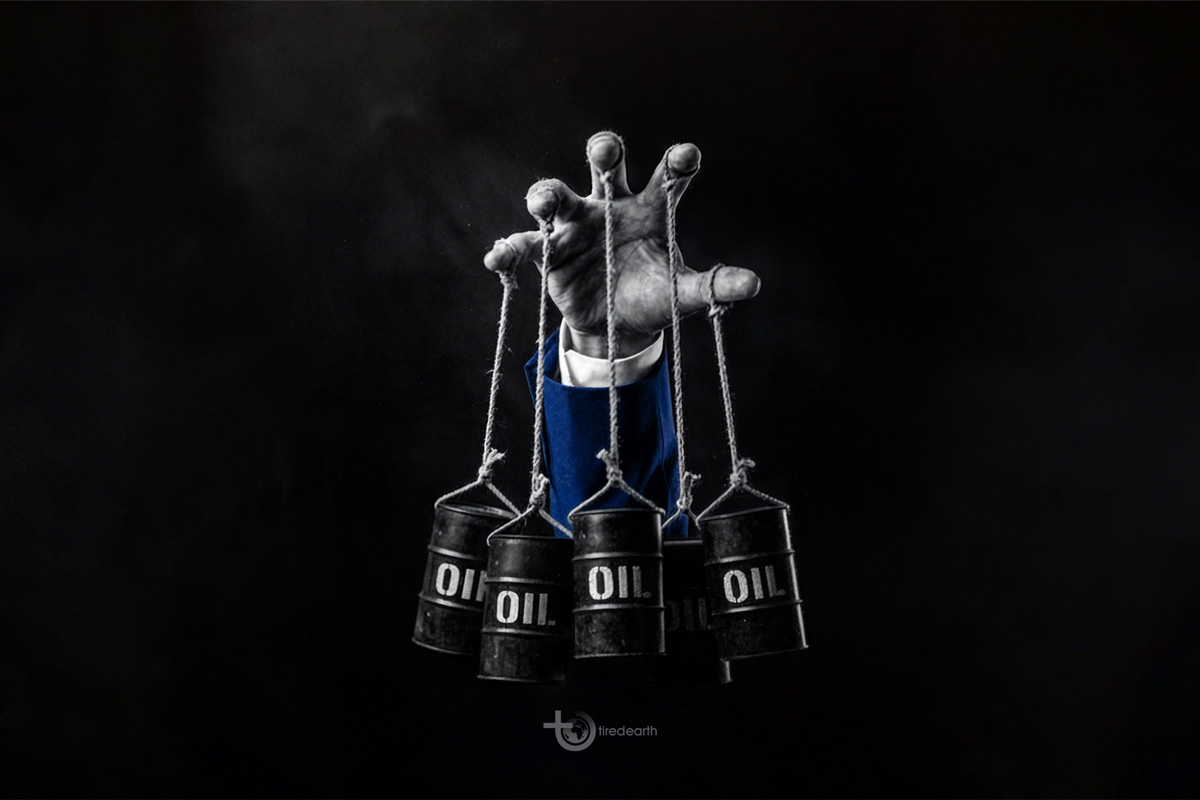
No congressional declaration. No UN Security Council resolution. No imminent threat. The 2026 war against Iran began without a single credible legal foundation — and ended, if it has ended, with a trail of bombed hospitals, poisoned waterways, and a president on record saying his preference was to "take the oil."
I. Introduction: A War of Choice
On 28 February 2026, the United States and Israel launched coordinated airstrikes against Iran in what the Trump administration codenamed "Operation Epic Fury." The strikes assassinated Supreme Leader Ali Khamenei and several other senior Iranian officials, destroyed dozens of military and government installations, and marked the opening of what rapidly became one of the most consequential and widely condemned military campaigns of the twenty-first century. Launched without a congressional declaration of war, without prior United Nations Security Council authorization, and while peace negotiations were actively underway, the conflict exposed the fragility of the international legal order and inflicted catastrophic costs on an Iranian civilian population already battered by sanctions and economic collapse.
This essay critically examines the legal, humanitarian, environmental, and geopolitical dimensions of that conflict—a war that many legal scholars have characterised as a war of aggression, and whose impacts on infrastructure, ecology, and human life will reverberate for a generation.
II. The Question of Legality: A War Without Authorisation
Perhaps no dimension of the 2026 Iran war is more contested, or more clearly resolved under prevailing legal analysis, than the question of whether the war was lawful to begin with.
Under the United Nations Charter, the use of armed force against a sovereign state is prohibited unless exercised in genuine self-defence against an armed attack, or authorised by the Security Council. The United States claimed collective self-defence on behalf of its Israeli ally, asserting a continuation of hostilities dating back to the 1979 Islamic Revolution—a legal theory most international scholars have dismissed as transparently revisionist. The State Department's own legal adviser, Reed D. Rubinstein, argued that the strikes were not a "new war" but part of an ongoing armed conflict with Iran—a position that directly contradicted the Trump administration's own prior proclamations: in June 2025, Trump himself had declared the twelve-day war "officially ended," and the State Department had listed "Iran and Israel" among the eight wars the president had concluded.
Critically, the International Atomic Energy Agency (IAEA) found no evidence of an active Iranian nuclear weapons programme at the time of the strikes. The Defence Intelligence Agency assessed in 2025 that Iran posed no military threat to the continental United States and would be incapable of developing long-range missiles capable of reaching American soil for at least a decade. The Trump administration's justifications—shifting from dismantling the Islamic Republic, to preventing nuclear proliferation, to liberating the Iranian people, to seizing oil resources—were so inconsistent that legal scholars found them impossible to evaluate under any settled doctrine of preemptive self-defence. No recognised right to preemptive military action exists unless a state has clearly positioned forces for an imminent attack. Iran had not done so.
Under domestic American law, the situation is equally damning. The U.S. Constitution explicitly reserves to Congress the authority to declare war. The 1973 War Powers Resolution imposes a sixty-day deadline for the withdrawal of forces engaged in unauthorized hostilities. The strikes on Iran lacked congressional authorization at the outset, and legal scholars across the political spectrum concluded that the threshold for congressional action had been crossed before a single bomb fell. As the American Friends Service Committee stated plainly: this was an illegal and immoral war of aggression from the start.
In international criminal law, experts have characterised the initiation of the war as a "crime of aggression"—one of the gravest offences under the Rome Statute—and several analysts drew explicit comparisons to the expansionist logic of imperial warfare.
III. The Destruction of Civilian Infrastructure
Whatever one concludes about the war's legality at its outset, the conduct of hostilities generated profound and mounting evidence of violations of international humanitarian law (IHL), particularly through the systematic targeting of civilian infrastructure.
The four Geneva Conventions of 1949 and their Additional Protocols establish the foundational principle of distinction: parties to a conflict must at all times distinguish between combatants and civilian objects, and may never direct attacks against the latter. Objects indispensable to the survival of the civilian population—water systems, food supplies, medical facilities, electrical networks—receive special protection and may not be targeted even when dual-use arguments might otherwise apply. The principle of proportionality prohibits attacks that would cause civilian harm excessive in relation to anticipated military advantage.
By these standards, the 2026 Iran war produced a damning record. By 6 March, United States and Israeli strikes had already damaged over 4,000 civilian buildings. Hospitals, schools, universities, bridges, water desalination plants, police stations, oil refineries, and railway networks were struck across Iran. The Iranian Red Crescent documented damage to 307 health, medical, and emergency care facilities by 3 April 2026 alone. On the second day of strikes, an in vitro fertilisation clinic at Gandhi Hospital was hit and seriously damaged, injuring healthcare workers and devastating patients with stored samples and embryos.
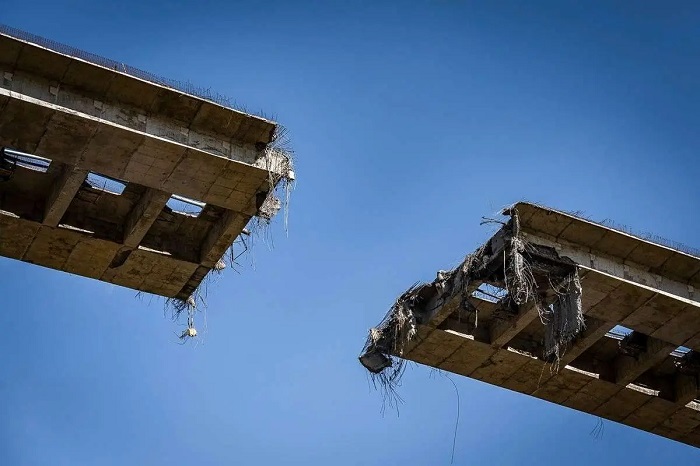
As part of the 2026 Iran war, the unfinished B1 bridge in Karaj, Iran, was attacked on 2 April 2026 by the United States with two missiles, causing it to partially collapse. Eight people were killed and at least 95 were wounded.
Among the most symbolically resonant single incidents was the attack on the B1 bridge in Karaj, southwest of Tehran. The bridge was still under construction when U.S. missiles struck it on 2 April, cutting it in half and killing eight people. UN Secretary-General António Guterres explicitly warned that attacks on civilian infrastructure were banned under international law. According to the Center for Human Rights in Iran, which issued an urgent legal reminder to all parties in April 2026, "damage to water infrastructure increases the risk of waterborne disease, while destruction of transport infrastructure, such as bridges, restricts access to medical care and humanitarian assistance."
President Trump repeatedly and publicly threatened further escalation. He declared he would destroy all Iranian bridges and power plants and bring the country "back to the Stone Ages." Legal scholars at Stanford Law School, American University's Washington College of Law, and Human Rights Watch all stated that targeting civilian power plants and water infrastructure would violate international law. The threat itself—made in public, in presidential communications—constituted what some legal commentators described as a possible threat of genocide. Iran estimated total war damages at $270 billion and began formal demands for compensation before international bodies.
In Lebanon, Israel simultaneously escalated a parallel military campaign, destroying bridges and demolishing entire villages to prevent residents from returning. The "Black Wednesday" attacks on 8 April 2026 targeted residential buildings in central Beirut without warning, killing at least 350 civilians in a single day—more than the catastrophic 2020 Beirut port explosion.
IV. Human Rights Catastrophe: A Justification for War
The 2026 war cannot be understood in isolation from the event that immediately preceded it.
In December 2025, mass protests erupted across Iran, driven by economic collapse, currency devaluation, and social exhaustion following years of sanctions and post-war dislocation. The nature and origins of those protests were themselves contested from the outset. American and Israeli officials claimed that the demonstrations were supported by external material assistance, including weapons supplied particularly by Israel. Circulating images purportedly showed demonstrators in possession of various cold and hot weapons, lending some visual currency to these claims.
In January 2026, Iranian security forces faced a complex and armed protest. The death toll from the protests was widely reported by Western governments and media to be in the tens of thousands; Time magazine reported at least 30,000 civilian deaths.

One of the most visible evidences of terrorists' use of firearms was an armed attack on a police station in the Tehran-Pars area of Tehran.
It is important to note, however, that the Iranian Ministry of Health never officially published or confirmed this figure. This uncertainty matters, because the Trump administration explicitly invoked the 30,000-death figure as a central justification for military action.
The strategic use of an unverified, potentially inflated death toll to build public and political support for war is itself a serious concern: it echoes a pattern seen in prior conflicts where casualty figures served as emotional levers for military decisions that had already been made on other grounds.
This history complicates the ethical calculus of the 2026 war in important ways. The Trump administration invoked the massacre of protesters as a justification for military action. But the war demonstrably did nothing to protect Iranian civilians from their government—it subjected those same civilians to a wave of devastation from without.
V. Environmental Destruction: The Invisible Legacy
The environmental consequences of the 2026 Iran war represent one of its least visible, but most enduring, dimensions of harm. Conflict-driven environmental damage is rarely immediate in its effects; it accumulates silently in soil, water, and air, and its worst consequences materialise years or decades after the last missile falls.
The Center for American Progress documented more than 300 incidents of potential environmental harm across twelve countries in the region, with the highest-risk concentrations along the Persian Gulf coast and in Tehran. The pattern is well understood from prior conflicts: when oil facilities, chemical plants, petrochemical complexes, and weapons depots are bombed, toxic residues accumulate in the soil, enter waterways, and travel across borders. Iran's petrochemical industry, steel plants, and aluminium factories were repeatedly targeted. These are industrial environments whose destruction releases a range of carcinogens, heavy metals, and persistent organic pollutants into ecosystems that were already, in many cases, operating at the margins of environmental tolerance.
The closure of the Strait of Hormuz created its own environmental emergency. Military operations in and around the strait—through which twenty percent of the world's oil and gas normally passes—raised immediate risks of major spills, ecosystem disruption in the Persian Gulf, and the degradation of marine habitats already stressed by desalination waste, shipping traffic, and climate change. Iran's threats to target desalination infrastructure across the Persian Gulf region posed an existential threat to populations in countries like Saudi Arabia, Qatar, and the UAE, which rely on desalinated water for the majority of their drinking supply.
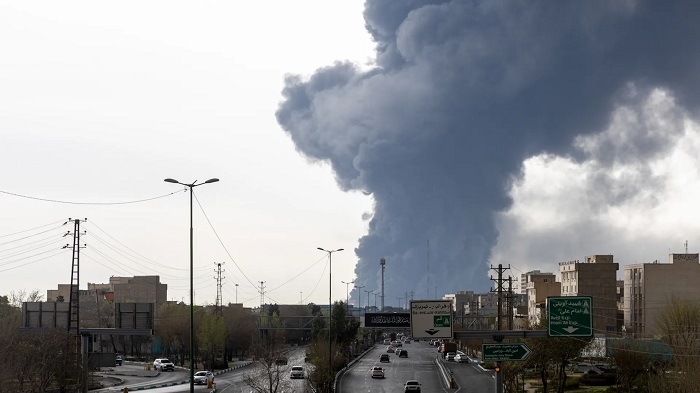
One of the most alarming incidents to occur in the United States-Israel war against Iran was the recent bombing of a fuel depot in Tehran.
The nuclear dimension introduces perhaps the most alarming long-term environmental risk. The June 2025 twelve-day war had already struck Iranian nuclear facilities, and the IAEA subsequently lost full verification access to Iran's nuclear sites—leaving the international community unable to assess the radiological condition of bombed installations. In February 2026, Iran informed the IAEA that normal safeguards were "legally untenable and materially impracticable" given the ongoing attacks, and denied inspectors access to damaged facilities while insisting the IAEA first establish rules for internationally protected sites subjected to military assault. The possibility of radiological contamination from damaged enrichment infrastructure remained unquantified and deeply alarming. The Bulletin of Atomic Scientists noted the broader strategic irony: the attacks on a non-nuclear Iran served as powerful validation of nuclear deterrence for states like North Korea, accelerating rather than diminishing global proliferation risk.
Beyond contamination, the war's displacement of more than a million people—in Iran, Lebanon, and surrounding states—created secondary environmental pressures: concentrated refugee populations straining water resources and sanitation in host areas, the abandonment of agricultural land, and the interruption of environmental governance in affected provinces.
VI. Geopolitical Aftershocks and Systemic Consequences
The war's consequences extended far beyond Iran's borders, reshaping regional politics, global energy markets, and the architecture of international law in ways that will take years to fully assess.
The closure of the Strait of Hormuz by Iran produced what the head of the International Energy Agency described as "the greatest global energy security challenge in history." Global oil prices spiked, inflation pressures returned across Western economies, and supply chain disruptions cascaded across multiple sectors. Iran's threat to push its Houthi allies in Yemen to simultaneously block the Bab el-Mandeb Strait raised the prospect of two of the world's most critical maritime chokepoints being closed simultaneously—an event without modern precedent.
It strained U.S. relationships with Arab partners of the Persian Gulf, who absorbed Iranian retaliatory strikes on their territory while having sought neutrality.
Poland's defence minister warned that the prolonged conflict could jeopardize arms supplies to Ukraine, while Russia benefited from elevated global energy prices. Tourism across the eastern Mediterranean collapsed. The war effectively demonstrated that the post-Cold War framework of rules-based international order could be dismantled by a single major power deciding that national interest superseded the UN Charter's prohibitions—a lesson absorbed immediately by authoritarian governments worldwide.
VII. "Take the Oil": Energy Imperialism and the Resource Logic of the War
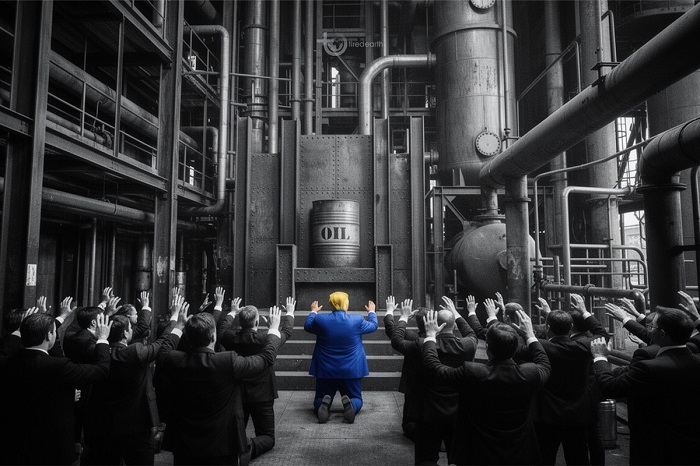
No aspect of Trump's conduct during the 2026 Iran war was more candid—or more legally and morally damning—than his repeated, public articulation of a desire to seize Iranian oil. Stripped of the nuclear deterrence narrative and the humanitarian rhetoric about liberating Iranians from their government, the president's own words pointed toward a third and arguably more fundamental motive: the acquisition and control of energy resources. The war against Iran, viewed through this lens, was not an aberration but the most dramatic expression of a broader doctrine that analysts have called extractive imperialism.
The Pattern Established in Venezuela
To understand the oil logic of the Iran war, one must first understand what immediately preceded it. In January 2026, the Trump administration launched a military intervention in Venezuela, capturing President Nicolás Maduro and his vice president. Venezuela possesses the largest proven oil reserves in the world, and the administration made no serious effort to disguise the resource dimension of the operation. Trump declared that the United States would "run" Venezuela until a political transition occurred, and that American companies would seize Venezuelan oil and sell it to other countries. Secretary of Defense Pete Hegseth stated plainly: "We are going to get American companies in there" to invest in the Venezuelan oil industry, resulting in "access to additional wealth and resources" for the United States. By Trump's own account in his State of the Union address, the U.S. had already obtained more than 80 million barrels of Venezuelan oil.
The Venezuela template—military action, regime capture or displacement, resource extraction—established a pattern. When the Iran war began five weeks later, analysts and foreign governments had good reason to read the military logic through an acquisitive frame.
Trump's Own Words on Iranian Oil
The president did not leave the resource motive to inference. In an interview with the Financial Times on 30 March 2026, Trump stated that his "preference would be to take the oil" in Iran, drawing an explicit parallel to the Venezuela operation. When asked whether the United States would consider seizing Kharg Island—the strategic terminal fifteen miles off Iran's coast that handles roughly 90 percent of the country's crude oil exports—Trump replied: "Maybe we take Kharg Island, maybe we don't. We have a lot of options." He added, of Iranian defences: "I don't think they have any defense. We could take it very easily."
On 3 April 2026, Trump posted on Truth Social: "With a little time, we can easily OPEN THE HORMUZ STRAIT, TAKE THE OIL, & MAKE A FORTUNE." The post required no interpretation. It was not a diplomatic communiqué or a strategic assessment laden with plausible deniability. It was a head of state, in plain language, describing the acquisition of another nation's sovereign natural resources as a war aim. As one analyst writing for The Times of Israel observed, the post "bypasses diplomatic cables, press rooms, and intermediary framing to land directly in the global feed"—and in doing so, handed Iran's leadership a propaganda gift of incalculable value, since Tehran no longer needed to argue that the war was a campaign of imperial resource seizure. The president had argued it for them.
When asked by NBC News in March whether he intended to seize Iranian oil, Trump declined to discuss it directly but added: "Certainly people have talked about it."
The Kharg Island Calculus
The administration's behaviour around Kharg Island itself reveals the internal contradictions of the oil motive. U.S. and Israeli forces struck the island's military installations on 13 March 2026, and Trump publicly celebrated the operation—while simultaneously emphasising that the oil infrastructure had been deliberately spared. He warned, however, that this restraint would end if Iran failed to reopen the Strait of Hormuz. The Axios reporting from mid-March confirmed that Trump was drawn to the idea of seizing Kharg Island outright because it would constitute, in the words of a U.S. official, "an economic knockout of the regime"—essentially defunding Tehran.
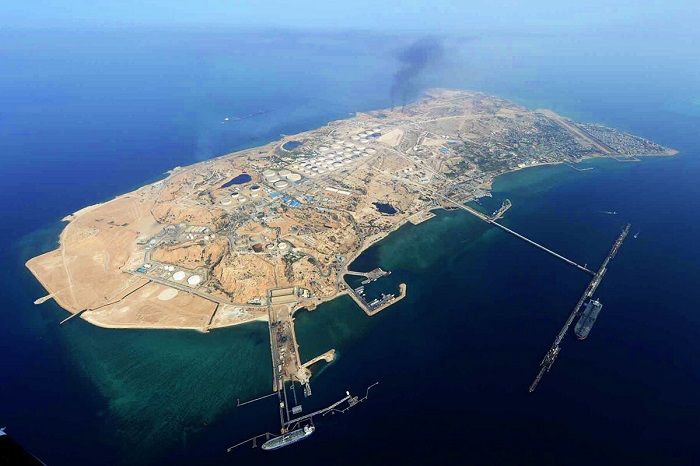
Kharg Island, also spelled Khark Island and often referred to as the "Forbidden Island", is a continental island of Iran in the Persian Gulf. The island is 25 kilometres off the coast of Iran and 660 kilometres northwest of the Strait of Hormuz.
This calibration was not accidental. As Al Jazeera's analysis noted, the Kharg strike illustrated a deliberate strategic logic: military assets were legitimate targets; oil infrastructure was not—because destroying Iran's export capacity would spike global prices and harm the very economic system the war was purportedly designed to protect. The goal was not to eliminate Iranian oil but to control it; not to destroy the island's terminal but to own it.
The Naval Blockade as Economic Weapon
From late March 2026, the Trump administration imposed a naval blockade on Iranian shipping, framed publicly as pressure to bring Tehran back to the negotiating table. The economic effects were severe: Iran's oil and condensate export loadings collapsed from 2.1 million barrels per day before the blockade to approximately 567,000 barrels per day after it took hold, according to the ship-tracking firm Kpler. A White House official told CNBC that Iran was losing $500 million per day as a result. The administration's stated theory was that Iran would run out of oil storage capacity, be forced to shut down wells, and face catastrophic long-term damage to its oil fields.
Experts were sceptical that the timeline matched Trump's expectations. Antoine Halff, a former chief oil analyst at the International Energy Agency, noted that oil fields can be permanently damaged by sudden, uncontrolled shutdowns—but that Iran could manage an orderly reduction in production to minimise field damage, and might simply cut output to domestic consumption levels, sidestepping the storage crisis entirely.
The U.S. military also seized an Iranian-flagged cargo vessel in the Gulf of Oman in mid-April 2026—an act Iran characterised as piracy and responded to with threats of retaliation, jeopardising the fragile ceasefire then under negotiation.
A Doctrine of Extractive Imperialism
Al Jazeera's opinion analysis, published in March 2026, offered a structural account of the war's energy logic that extends beyond any single presidential statement. The analysis characterised Trump's foreign policy as "extractive imperialism—the effort to secure control over the resources that power global capitalism." The pattern across Venezuela and Iran, it argued, was not coincidental: both countries possessed enormous hydrocarbon reserves; both were subjected to military pressure framed in the language of security and democracy; and in both cases, control over the political future of the country was inseparable from control over how and where its oil was produced and sold.
The Kharg Island strike illustrated this with "unusual clarity," the analysis argued: military assets were fair game; oil infrastructure was not. The war was calibrated so as not to disrupt the energy circulation on which the global economy depends. Beneath the rhetoric of deterrence lay, in the analysis's words, "a familiar imperial imperative: keep the oil moving"—and, where possible, to control who profits from its movement.
Legal and Moral Dimensions
The resource seizure ambition carries legal consequences that have received insufficient attention. Under international law, a war fought in whole or in part for the purpose of seizing another state's natural resources constitutes a textbook war of aggression—and the existence of an acquisitive motive weakens every alternative legal justification offered for the conflict. If the war's true purpose included the seizure of Iranian oil and the reorientation of Iranian energy revenues toward American interests, then the nuclear deterrence rationale and the humanitarian liberation narrative were not genuine justifications but pretexts. That inference is rendered substantially more plausible by Trump's own statements, made repeatedly, publicly, and without apparent concern for the legal implications.
Furthermore, a blockade designed to force the uncontrolled shutdown of another country's oil fields—deliberately causing long-term economic damage to a civilian population by destroying a vital industry—raises serious questions under the laws of armed conflict, which prohibit attacks on objects indispensable to the survival of the civilian population and the broader economy. Iran's oil revenues are spent on hospitals, schools, and essential infrastructure, the destruction of which falls on the shoulders of ordinary Iranians, not on the security apparatus on whom the blockade was conceptually designed to pressure.
The "take the oil" doctrine, in its candour, represents something genuinely new in the public conduct of American foreign policy: a president openly describing the appropriation of a sovereign nation's natural resources as a war aim, in real time, on a mass social platform. Whether it reflects a coherent strategic vision or an improvised instinct for transactional dominance matters less than what it reveals: that beneath the architectures of legal justification and humanitarian rhetoric that typically accompany modern warfare, the 2026 Iran war was also, by the president's own admission, a war about energy—about who controls the oil, and who makes the fortune.
VIII. Conclusion: Accountability and the Long Road Ahead
The 2026 war against Iran represents a study in the compounding of harms: a war begun without legal authorisation, conducted in ways that legal scholars have characterised as violations of the laws of armed conflict, layered upon a pre-existing humanitarian crisis created by foreign intelligence services against protesting citizens, and now leaving behind an environmental and humanitarian legacy that will demand decades of attention.
Several conclusions emerge with clarity. First, the war was illegal under international law: it was not authorised by the Security Council, it was not launched in response to an armed attack, and no genuine imminent threat was demonstrated. Second, the conduct of hostilities violated the principle of distinction by repeatedly striking protected civilian objects—hospitals, schools, bridges, water systems—generating war crimes allegations from credible legal authorities. Third, the environmental consequences, including chemical contamination from industrial sites, potential radiological exposure from damaged nuclear infrastructure, and the disruption of critical maritime ecosystems, will outlast the conflict itself by generations. Fourth, the war failed on its own stated terms: it did not free the Iranian people, did not eliminate Iran's nuclear knowledge, and did not produce the regime change it sought.
What the war did produce was mass death, mass displacement, the destruction of a society's physical infrastructure, and a profound weakening of the international legal frameworks designed to prevent exactly this kind of conflict. As analysts at the Arab Center have observed, the debate in Washington quickly shifted to who "won"—while countless Iranians continued to lose their loved ones, their homes, their schools, and their livelihoods.
Thousands gathered in Minab, Iran, for the mass funeral of 165 schoolgirls and staff killed in US-Israeli strike on a primary school.
International accountability processes remain incomplete. Claims before international courts, demands for reparations, and investigations into potential war crimes are in early stages. The question of whether those who initiated a war of aggression will ever face meaningful legal consequences remains, as of this writing, unanswered. But the historical and moral record is already being written—by the hospitals that went dark, by the bridge cut in half over Karaj, by the environmental toxins seeping into Persian Gulf waters, and by the children whose eyes stared out from exhibition photographs in Tehran's Tajrish Square.

The best of Tired Earth delivered to your inbox
Sign up for more inspiring photos, stories, and special offers from Tired Earth
By signing up for this email, you are agreeing to news, offers, and information from Tired Earth. Click here to visit our Privacy Policy.


Comment
Reply