


22 Nov 2026

Tired Earth
By The Editorial Board
Ancient DNA from a 1984 fossil has rewritten the family tree of the world's greatest long-distance migrants, revealing a lineage that crossed oceans, colonised islands, and then lost species to humans almost as fast as it found new homes.
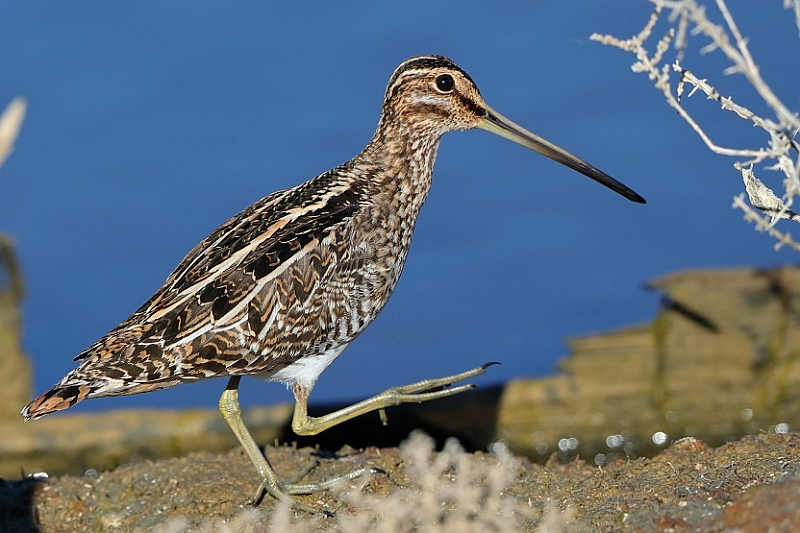
Shorebirds in the sandpiper family are the uncontested champions of long-distance flight. A bristle-thighed curlew, tracked by radio tag, flew roughly 10,000 kilometres from Alaska to New Zealand without stopping.
So when Florida Museum of Natural History researchers sequenced ancient DNA from fossils excavated in a Haitian cave in 1984, they expected a story about migration. What they found was stranger: a family tree shaped by ocean crossings in the wrong direction, island settlement, and extinction.
A Bird in the Wrong Place
The fossil had been identified in 2015 as a woodcock — a stocky, long-billed bird with a bouncy, two-step walk that scientists believe mimics the sound of falling rain, luring earthworms to the surface. The new analysis, published in Proceedings of the National Academy of Sciences, showed it was actually a snipe, a close relative from which woodcocks diverged roughly 25 million years ago.
The misidentification matters less than where the bird came from. Snipes originated in Eurasia. A lineage of them crossed westward — against the usual north-south migration pattern — to South America about 20 million years ago. Roughly seven million years later, their descendants repeated the feat on a grander scale, reaching the islands of the southwest Pacific and diversifying there.
"It's common for shorebirds to nest up in the Arctic tundra and winter in South America," said co-author David Steadman, emeritus curator of ornithology at the Florida Museum. "But woodcocks and snipes are the only ones setting up resident populations on islands."
The austral snipes look so different that scientists had placed them in their own genus, Coenocorypha. Genetically, they sit deep inside a mostly South American lineage — an evolutionary runaway that changed its name and appearance but never left the family.
The Breadcrumb Hypothesis
What puzzles researchers is the route. Rather than a single improbable flight to New Zealand, co-author Jessica Oswald suggests a trail of now-extinct island species once connected the stops — a hypothesis already supported by similar patterns in Caribbean cave rails.
If so, the breadcrumbs were eaten. Literally.
"People will eat anything," Oswald said. "You get one group of explorers or whalers that stop at one of these islands, and they could wipe out the entire bird community in a weekend because they were hungry."
Island birds that evolved without humans are famously unafraid. The naturalist Peter Matthiessen, writing in The New Yorker in 1976, described shorebirds so confident in their camouflage that they would let themselves be picked up off the ground. Hunters killed thousands in a day; the Eskimo curlew is now extinct largely because of it.
Where hunting didn't finish the job, introduced rats and cats did. The South Island snipe vanished in 1964 after black rats reached its New Zealand range. Six other species in the Coenocorypha group are also extinct.
What the Study Changes
The research has a practical consequence for taxonomy: either the genus Coenocorypha must be dissolved into Gallinago, or two new genera must be created for the South American relatives. The authors propose neither, but the problem is now unavoidable.
More broadly, the study adds to a growing body of work from the same team showing that Caribbean fauna — parrots, rails, hutias — were far more widely distributed, and far more often moved by humans, than their present ranges suggest.
For conservationists, the lesson is less taxonomic than cautionary. Long-distance migrants can cross an ocean in a single flight, but island populations that evolve from those arrivals are exceptionally easy to erase. The birds that beat the odds to reach the Pacific were undone, in many cases, within a weekend of the first ship dropping anchor.

Plastic Pollution in Cameroon and Africa Plastic Pollution in Cameroon and Africa

The best of Tired Earth delivered to your inbox
Sign up for more inspiring photos, stories, and special offers from Tired Earth
By signing up for this email, you are agreeing to news, offers, and information from Tired Earth. Click here to visit our Privacy Policy.




Comment