



29 Dec 2025

Tired Earth
By The Editorial Board
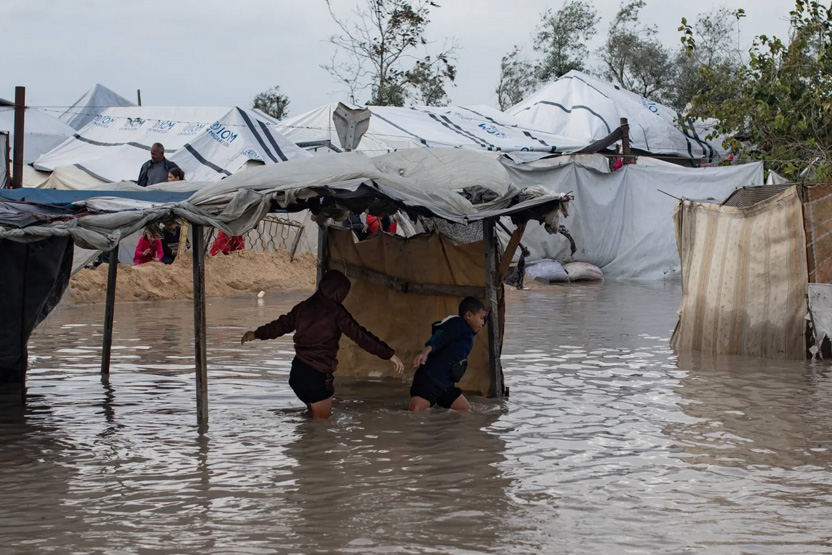
In a region already reeling from years of conflict and devastation, Gaza is once again grappling with the deadly combination of harsh weather conditions and the ongoing impact of war. A powerful storm system, marked by high winds and torrential rain, has wreaked havoc on the besieged strip, further exacerbating the suffering of hundreds of thousands of displaced Palestinians.
Torrential Rains and Unrelenting Winds Destroy Homes and Displace Families
The storm, which struck Gaza over the weekend, unleashed heavy rainfall, flooding makeshift shelters and tearing apart tents that housed displaced families. With wind speeds reaching up to 100 kilometers per hour, the fierce gales uprooted tents and left families, including children, exposed to the elements in the midst of the cold, rainy night.
Many of the tents were located in low-lying areas, where the combination of heavy rain and weak infrastructure led to rapid flooding. Entire communities found themselves submerged, while others were forced to flee into the open after their shelters were torn apart by the winds. Despite the valiant efforts of local residents to secure their shelters, the severity of the storm proved overwhelming.
In the midst of these calamities, local authorities have reported that as of early December, at least 17 people, including four children, have died due to the extreme weather. Tragically, the storms have also claimed the lives of a young woman and a child in separate incidents. One death occurred when a wall of a partially destroyed house, left standing after Israeli airstrikes, collapsed onto a nearby tent. Another child drowned in a waterlogged pit where the heavy rains had pooled.
A Humanitarian Crisis Deepens: Thousands Left Vulnerable
The storm has added another layer of suffering to Gaza’s already catastrophic humanitarian situation. Nearly 900,000 people—about half of Gaza’s population—are living in temporary shelters or makeshift camps after losing their homes to Israel's recent military operations. These shelters offer little protection from the fierce winds and heavy rains, leaving the displaced at the mercy of the elements.
In the southern region of Khan Younis, many tents located near the beach were overwhelmed by high tides, resulting in additional displacement. As temperatures plummet and the rains continue to fall, those living in these dire conditions are enduring an unimaginable hardship. The health risks are severe, with the stagnant water collecting in pools and causing diseases to spread quickly among the vulnerable population.
Infrastructure at Breaking Point
The damage is not confined to the makeshift shelters. The heavy rains have caused further structural damage to buildings already weakened by Israeli airstrikes during the last two years of conflict. In several cases, entire residential blocks, once deemed uninhabitable, collapsed under the weight of the storm’s effects. Despite the cessation of hostilities in October 2025, the reconstruction process remains stifled. Gaza’s rebuilding efforts are hampered by ongoing restrictions imposed by Israel, including its refusal to allow the entry of mobile homes, construction materials, and essential humanitarian aid.
Local authorities have called for urgent international intervention to prevent further loss of life and provide assistance to the thousands of displaced families who continue to suffer in the aftermath of this storm. The situation is compounded by Gaza's already fragile infrastructure, which is struggling to cope with the flooding, sewage system failures, and damage to water supplies caused by the storm.
The Call for Immediate Action
In a region where the humanitarian needs continue to grow each day, local organizations, including the Palestinian Civil Defense, have intensified their rescue operations. The Civil Defense teams have worked tirelessly, pulling people from the rubble and distributing emergency supplies, including plastic sheeting and tarpaulins, to those affected by the storm. But these efforts are nowhere near enough to address the scale of the disaster.
Amid these overwhelming conditions, the international community is once again being called upon to fulfill its obligations. The international community’s response to Gaza’s ongoing crisis has often been slow and insufficient, with promises of aid and reconstruction frequently left unmet. However, with the storm’s toll continuing to climb, the urgency for meaningful action has never been more critical.

The best of Tired Earth delivered to your inbox
Sign up for more inspiring photos, stories, and special offers from Tired Earth
By signing up for this email, you are agreeing to news, offers, and information from Tired Earth. Click here to visit our Privacy Policy.


Comment