

05 May 2026
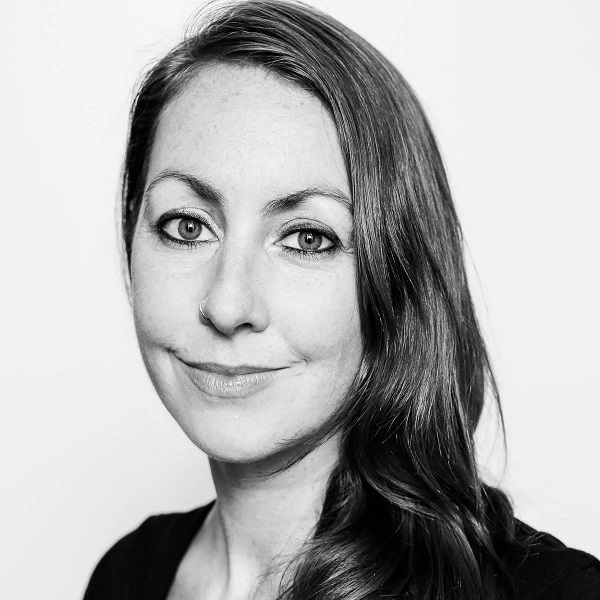
Emilie McGlone
American
Today, my focus is connecting education, advocacy, and global collaboration: building partnerships, coordinating programs, and creating spaces where youth, civil society, and global institutions can come together to advance peace and sustainability.
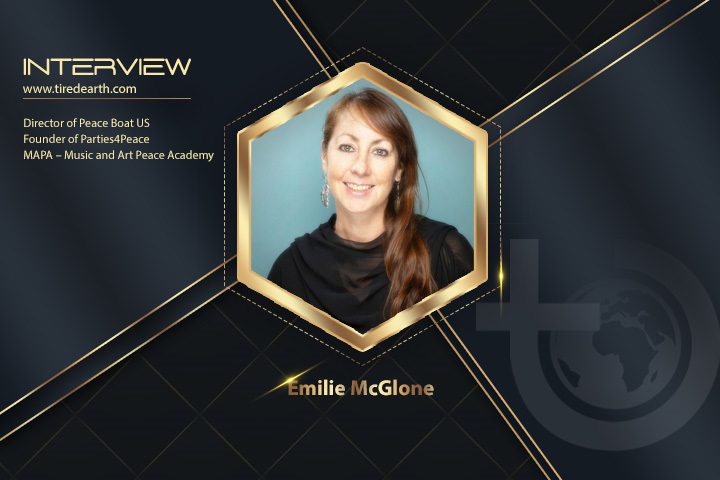
Emilie McGlone is the Director of Peace Boat US, the New York-based office of the international non-governmental organization Peace Boat. Founded in Japan in 1983, Peace Boat promotes peace, human rights, and sustainability through Global Voyages on its chartered passenger ship, the Pacific World, often described as a “floating university.” Peace Boat holds Special Consultative Status with the United Nations Economic and Social Council, serves as a key campaigner for the UN Sustainable Development Goals, and is a prominent member of the International Campaign to Abolish Nuclear Weapons (ICAN), the 2017 Nobel Peace Prize laureate.
Peace Boat hosts three Global Voyages per year, each lasting roughly 100 days, weaving together educational lectures, cultural exchanges, and humanitarian projects as the ship circumnavigates the globe. As Director and United Nations liaison, McGlone leads programs that bring peacebuilding, sustainable development, and environmental advocacy onboard. She founded the “Youth for the SDGs” scholarship to empower young leaders in ocean and climate action, coordinates side events at the UN such as the ECOSOC Youth Forum, supports global emergency response through the Peace Boat Disaster Relief Volunteer Centre (PBV), and champions the Ecoship Project, an initiative to build the world’s most sustainable passenger ship.
McGlone has been with Peace Boat since 2004, initially joining as a volunteer Spanish teacher after living in Japan for a decade, and has now circled the world with Peace Boat six times.
By Selva Ozelli Esq, CPA, Author of Sustainably Investing in Digital Assets Globally
1. Tell us about the educational and professional journey that led you to becoming Director of Peace Boat US.
I graduated from the University of North Carolina at Chapel Hill with a degree in Cultural Studies, and I began volunteering abroad at a very young age. After spending months studying Spanish and working alongside NGOs in Mexico, Guatemala, El Salvador, and Chile, I traveled to Japan to begin teaching with the Ministry of Education through the JET Program (Japan Exchange and Teaching). I later led an environmental awareness bicycle ride called BEE, Bicycle for Everyone’s Earth, cycling from Hokkaido in Japan’s northern island down to Okinawa, where we learned about ocean conservation and shared a message of environmental sustainability.
In 2004, I joined Peace Boat as a volunteer Spanish teacher and soon began working full time in the International Division in Tokyo, building onboard programs with guest speakers and partners around the world. That early work, focused on educational programming and international exchange, shaped how I think about people-to-people connection as the foundation of peacebuilding. In 2011, I was invited to become the United Nations liaison and Director of Peace Boat US, based in New York City. Peace Boat holds Special Consultative Status with the UN Economic and Social Council, and we have an office at the UN Plaza, so my role is to build strategic partnerships and work alongside our partners toward the UN Sustainable Development Goals.
Today, my focus is connecting education, advocacy, and global collaboration: building partnerships, coordinating programs, and creating spaces where youth, civil society, and global institutions can come together to advance peace and sustainability.
2. What are the core missions and projects of Peace Boat?
Peace Boat’s mission is to build a culture of peace and sustainability by connecting people across borders through education, advocacy, and partnership. Our work focuses on four key areas: ocean conservation, climate action, youth engagement, and disarmament. A core program onboard is the Youth for the SDGs scholarship, endorsed under the UN Ocean Decade, which brings young leaders aboard our voyages for experiential learning and action on ocean and climate issues.
3. Tell us about Peace Boat’s upcoming Global Voyages, and particularly the 123rd Global Voyage from April 7 to July 20, 2026.
Each year, we organize three Global Voyages, three-month journeys around the world that bring together about 2,000 participants from approximately 20 countries. The 123rd Global Voyage, sailing from April 7 to July 20, 2026, is especially meaningful: we are celebrating Peace Boat’s 100,000th participant. The voyage continues our focus on global environmental issues, with particular attention to ocean and climate action.
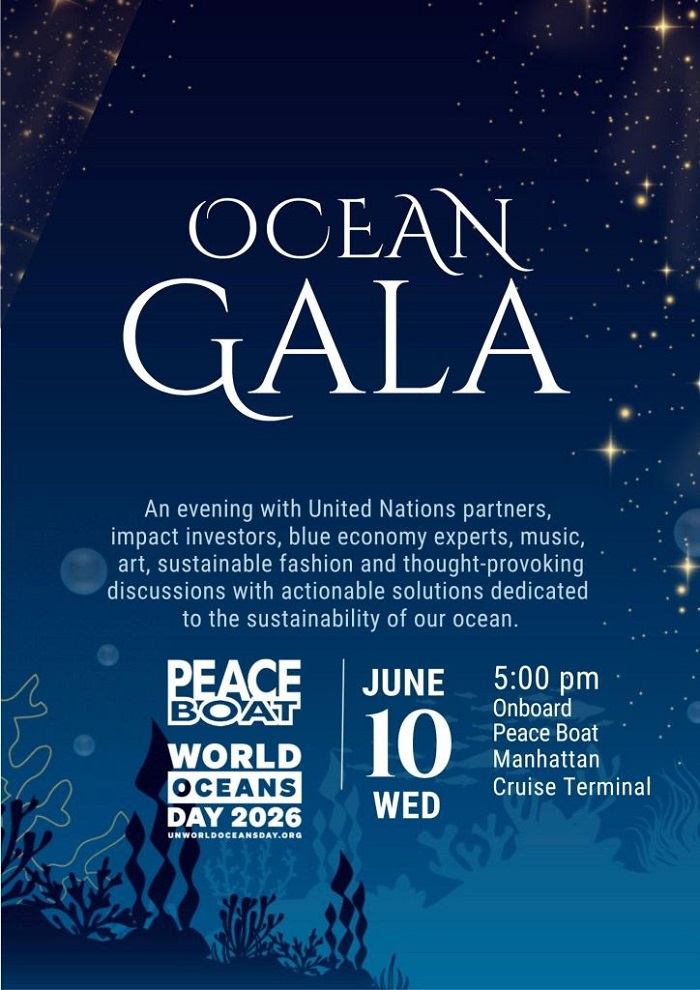
In New York City, we are hosting the Ocean Gala and Blue Innovation Reception onboard during our port call, in alignment with United Nations World Oceans Day and the UN Ocean Decade. The event brings together partners from the UN, civil society, the private sector, and youth leaders to strengthen collaboration around ocean protection and the blue economy. Participants will also engage with leading research institutions, including the Smithsonian Tropical Research Institute, learning directly from scientists about biodiversity and environmental change.
4. Which UN events does Peace Boat prepare side events for each year?
Each year, we engage with major UN processes including the ECOSOC Youth Forum, the High-Level Political Forum on Sustainable Development, and the UN Climate Change Conferences (COP). We also contribute to ocean-related initiatives such as World Oceans Day, Climate Week NYC, and activities under the UN Ocean Decade. These spaces let us bring youth voices and civil society perspectives into global policy discussions, connecting our onboard work with international advocacy.
5. You founded the “Youth for the SDGs” scholarship. Tell us about this initiative.
I started Youth for the SDGs to create a space for young leaders aged 18 to 30 to engage with global challenges through experiential learning and practice. Endorsed under the UN Ocean Decade by IOC UNESCO, the program brings participants onboard Peace Boat to explore ocean and climate action while connecting with scientists, policymakers, and communities around the world. Through this experience, youth build knowledge, networks, and a sense of agency, and they are supported in taking action on the Sustainable Development Goals in their own communities.
6. Tell us about the Peace Boat Disaster Relief Volunteer Centre (PBV).
Peace Boat Disaster Relief, or PBV, is a Japan-based NGO that supports communities affected by disasters and works to strengthen local response capacity, both in Japan and globally. PBV emphasizes that people are central to reducing disaster risk and building resilience. After Japan’s 2011 triple disaster, PBV recognized that well-trained and organized volunteers can play a crucial role in effective response and launched its Disaster Relief Volunteer Training Program. Sessions are held regularly across Japan and are open to anyone, regardless of background or experience. PBV also delivers tailored training for corporations, universities, Social Welfare Councils, and other organizations.
7. Tell us more about the Ecoship Project.
Ecoship is the next step in our 41-year evolution. It will be the future platform for Peace Boat’s global voyages, carrying 8,000 people per year, hosting exhibitions on green technology in up to 100 ports, and serving as a floating laboratory contributing to research on the ocean, the climate, and green technology. The ship will create awareness of and encourage active engagement with the challenges embodied in the SDGs, while modeling a transition path for decarbonizing the maritime sector.
8. Does Peace Boat participate in Climate Week events around the world?
Throughout Climate Week, we act as a key player in strengthening cross-sector collaboration and elevating inclusive leadership across global climate processes. During Climate Week NYC 2025, Peace Boat US and Blue Planet Alliance convened a series of engagements alongside the 80th UN General Assembly to advance ocean and climate action. A central highlight was the “From UNOC to Belém” high-level luncheon, which brought together senior leaders to elevate ocean priorities within global climate governance and finance. Youth leadership was also featured through the Youth for the SDGs event, where young leaders and global ambassadors shared initiatives on ocean literacy, science education, and climate action.
9. Beyond your work with Peace Boat, you are the founder of Parties4Peace. Tell us about this initiative.
Parties4Peace (P4P) is a non-profit event production and fundraising organization that hosts music and art events to support global initiatives focused on education, sustainability, equality, and disaster relief. P4P unites people to create a culture of peace through dance and music, emphasizing collaborations with those who seek a platform to make a difference.
10. You are also a collaborator in M.A.P.A. (Music & Art Peace Academy). Tell us about this initiative.
MAPA aims to provide young artists, musicians, and producers from around the world with experiences and resources to further explore and develop their creative talents. The MAPA project invites individuals, organizations, musicians, artists, activists, DJs, photographers, designers, writers, actors, videographers, and promoters interested in social and environmental issues to work together to promote a culture of peace through music and art, and to join Peace Boat’s global voyage for the Music & Art Peace Academy onboard.
11. You are a Global Ambassador and UN liaison for Blue Planet Alliance. Tell us about this initiative.
As a Global Ambassador for Blue Planet Alliance, we are working together toward a 100 percent renewable energy future by 2045. We also invite youth leaders from Small Island Developing States to join us as part of the “Youth for the SDGs” scholarship for the UN Ocean Decade onboard. My work with Peace Boat connects this directly to the United Nations through our ECOSOC consultative status.
12. How can people get involved with Peace Boat, Parties4Peace, M.A.P.A., and Blue Planet Alliance?
People can get involved through a range of programs designed for different levels of experience and commitment. The Youth for the SDGs program is an experiential learning and capacity-building opportunity for young activists and scholars working on SDG-related initiatives, open to participants of any age and background, and endorsed by IOC-UNESCO as part of the UN Ocean Decade.
Internships with Peace Boat US offer hands-on experience in advocacy, youth engagement, sustainability, and international partnerships, supporting work on issues that include climate action, ocean conservation, disarmament, and peacebuilding. For more flexible involvement, volunteering opportunities are available on a project or event basis. Volunteers are especially important during Peace Boat visits to New York City and at public events, and they can support campaigns such as nuclear abolition or apply specialized skills to specific initiatives.
13. Anything else you would like to add?
We are excited to support an inclusive and sustainable blue economy for all, creating networks for ocean conservation and climate action, using our ship as a venue. Ocean Gala information will be shared at peaceboat-us.org/pb-ocean-gala-nyc.
14. How can people reach you?
People can learn more and get in touch through the Peace Boat US website at www.peaceboat-us.org, or follow on Instagram @peaceboatus for updates on programs and events. We are always open to connecting with individuals and organizations interested in peace, sustainability, and youth engagement. You can also write to info@peaceboat-us.org.

The best of Tired Earth delivered to your inbox
Sign up for more inspiring photos, stories, and special offers from Tired Earth
By signing up for this email, you are agreeing to news, offers, and information from Tired Earth. Click here to visit our Privacy Policy.
Comment
Reply