



09 May 2026

Tired Earth
By The Editorial Board
When the 2026 US-Israeli war against Iran began disrupting global energy markets, some analysts initially argued that the crisis could accelerate the transition away from fossil fuels. The logic seemed simple: if wars and geopolitical shocks repeatedly expose the fragility of oil-dependent economies, governments would finally invest more aggressively in renewable energy and energy independence. Instead, the opposite happened.
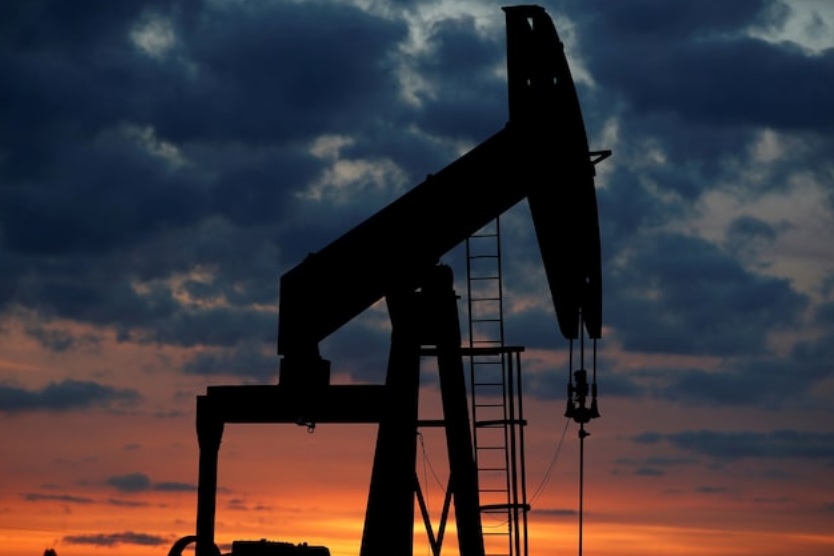
When the first missiles struck Iran in late February 2026, the initial analysis was almost hopeful. Energy experts speculated that the closure of the Strait of Hormuz—the world’s most critical oil chokepoint—might finally jolt the global economy into accelerating its escape from fossil fuels. High prices, the theory went, would be the mother of invention.
Three months later, the reality could not be more cynical. The war has not accelerated the green transition; it has bankrolled its enemies.
While American families now pay over $4.50 per gallon at the pump—a threshold not seen since the summer of 2022—the shareholders of the world’s largest oil companies are counting their billions. The 2026 Iran crisis, rather than punishing the fossil fuel industry, has handed it a historic lifeline, fattening the very giants whose business model depends on volatility and scarcity.
The conflict rapidly evolved into one of the largest oil-market shocks in recent years, and the primary beneficiaries were not ordinary consumers struggling with soaring fuel prices — but the world’s largest oil corporations and energy traders.
As the Strait of Hormuz became partially blocked and shipping routes across the Persian Gulf faced unprecedented disruptions, Brent crude prices surged dramatically, at one point climbing above $120 per barrel.
For major fossil fuel companies, the war became an extraordinary financial opportunity.
According to recent earnings reports, Shell posted first-quarter profits of approximately $6.9 billion in 2026 — its highest in two years — driven largely by oil-price volatility linked to the Iran conflict. Meanwhile, BP reported profits of $3.2 billion, more than double the figure recorded during the same period the previous year.
Other energy giants also benefited from the shock. Analysts at HSBC raised earnings forecasts across the oil sector, citing what they described as an “unprecedented physical disruption” in global oil and liquefied natural gas markets. The bank increased its 2026 and 2027 expectations for companies such as Chevron, ExxonMobil, TotalEnergies, and Equinor after energy prices spiked following the closure and militarization of the Strait of Hormuz.
Even the smaller players are feasting. Liberty Energy—founded and formerly run by Donald Trump’s own energy secretary, Chris Wright—saw quarterly earnings hit $10 million, a 32 percent increase since before the war began.
The only thing growing faster than these profits is the price at the pump. The US average for regular unleaded gasoline hit 4.54pergallononMay5—morethan4.54pergallononMay5—morethan1.50 higher than the day the war started. In California, drivers are now paying over 6.00.RepresentativeJasonCrownotedthatAmericanconsumershaveabsorbedatleast6.00.RepresentativeJasonCrownotedthatAmericanconsumershaveabsorbedatleast32 billion in additional fuel costs because of this conflict.
Windfall Taxes Are Dead on Arrival
The most insidious consequence of this war, however, is not the immediate profit spike. It is the political "wall of money" now being built by the industry.
"We are watching the fossil fuel industry use a human tragedy to lock in Trump-era political victories," said Lukas Shankar-Ross, a deputy director at Friends of the Earth. "Windfall profits from Trump’s war will allow big oil to build a wall of money around its political victories."
In response, Democratic lawmakers—including Senator Sheldon Whitehouse and Representative Ro Khanna—have revived the call for a Windfall Profits Tax. The proposal is simple: tax the excess profits of oil giants and return the money to struggling American households. During the 2022 Ukraine shock, a similar mechanism could have put roughly $1,715 back into every household’s pocket.
But this is 2026. And the political calculus has changed. The oil industry is using its billions to ensure that no such tax ever sees the light of day.
Isabella Weber, an economist at the University of Massachusetts Amherst who studied the 2022 energy shock, warns that high profit margins act as a magnet for capital. "That is exactly the opposite of what we want from the perspective of climate change mitigation," she told the Guardian.
"It strengthens the fossil fuel industry as a political constituency".
The Triumph of Short-Term Thinking
There was a moment, immediately after the Strait of Hormuz was shut, where it seemed the world might learn its lesson. Jason Bordoff, founding director of the Center on Global Energy Policy at Columbia University, noted that "the largest reduction in fossil fuels, as a share of the economy, came in the decade after the Arab oil embargo, not in the decade after the Paris Agreement". Necessity, historically, drives change.
But necessity is being drowned out by opportunity.
Some Asian economies are reverting to coal—the dirtiest of fuels—to weather the gas crisis. Renewables are still growing, but they cannot compete with the sheer weight of the lobbying cash now being deployed by an industry riding a war-fueled high.
The Human Cost
It is easy to get lost in the billions. But Kelly Mitchell, executive director of Fieldnotes, a watchdog organization, brought the focus back to earth.
"The reason why oil companies are doing so well right now is exactly because Americans are hurting," she told reporters. "Their business interest is to extract as many dollars out of a barrel of oil as possible, and the folks on the other side of the equation are Americans who are just trying to fill up their gas tank and get to work".
Meanwhile, President Trump has dismissed concerns about the spike, telling reporters it is a "very small price to pay". For an administration that campaigned on lowering costs, this is a stunning admission. But for the oil executives who have seen their stock prices soar 15 to 30 percent since February, it is music to their ears.
The Iran war was supposed to be a geopolitical disaster. For Big Oil, it has been the best quarterly report they have ever written.

The best of Tired Earth delivered to your inbox
Sign up for more inspiring photos, stories, and special offers from Tired Earth
By signing up for this email, you are agreeing to news, offers, and information from Tired Earth. Click here to visit our Privacy Policy.




Comment
Reply