A top Islamic cleric declares polluting waterways a sin, warning offenders face both religious and legal liability for public harm.
In a landmark ruling that bridges religious duty and environmental protection, Grand Ayatollah Ali al-Sistani has declared that dumping untreated sewage, solid waste, and medical or chemical waste into rivers is forbidden under Islamic law .
The fatwa, issued in response to a query from concerned believers, states that such actions "cause public harm" to the community, rendering the offender "sinful" under Islamic law and, in some cases, legally liable for resulting damages . The ruling also stresses that breaking government environmental regulations is impermissible .
The decree arrives at a critical moment, as Iraq's pollution crisis has grown increasingly visible. Videos circulating on social media have shown waste being dumped directly into the Tigris and Euphrates rivers through pipes in central Baghdad and elsewhere . The environmental watchdog Green Iraq Observatory warned that millions of cubic meters of sewage enter Iraq's rivers daily without adequate treatment, creating a growing threat to both water resources and public health . The Strategic Center for Human Rights in Iraq reported that pollution levels in affected rivers now exceed safe limits by 70-80% .
A Moral and Environmental Imperative
Sistani's ruling is rooted in Islamic principles that emphasize water as a divine gift and a shared resource. The Quran describes water as the source of all life — "We have made every living thing out of water" (21:30) — and Islamic tradition has long prohibited wastefulness, even in times of abundance .
The Prophet Muhammad taught that Muslims should not waste water, even when standing beside a flowing river, a principle that has become increasingly urgent as climate change and pollution threaten the world's water sources .
Interfaith Resonance
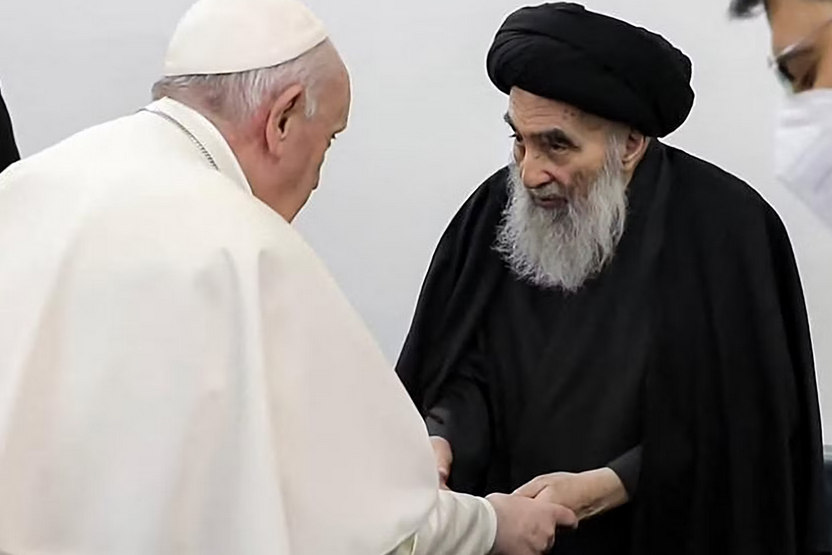
The fatwa echoes a broader commitment to environmental stewardship shared across religious traditions. Sistani himself has been a figure of interfaith dialogue, most notably in his historic 2021 meeting with Pope Francis in Najaf — described by Sistani after the Pope's death in 2025 as "a moment of great significance" that demonstrated how "faith and shared values can meet global challenges" .
The ruling carries additional weight given Sistani's role as a spiritual leader for millions of Shia Muslims worldwide and his longstanding calls for peaceful coexistence. It represents an authoritative religious sanction against environmental degradation at a time when Iraq faces
severe water shortages and widespread pollution .
Government and Legal Implications
Iraq's Environment Minister Sarwa Abdulwahid welcomed the fatwa, describing it as "national and religious backing" for government efforts to protect water resources and public health . The ministry has committed to continuing monitoring programs and legal measures to address pollution sources .
The fatwa also urges authorities to provide alternative waste disposal methods . Current infrastructure is severely strained; in Najaf, treatment plants designed for 85,000 cubic meters of wastewater daily are overwhelmed by higher volumes, according to local officials .
A Call to Responsibility
The fatwa concludes with a call to the public to act with wisdom and responsibility in matters affecting the common good. It reminds believers that water is a sacred trust, and polluting it harms not only the environment but the entire community — an act forbidden by both law and faith.









Comment
Reply