



23 Sep 2026

Tired Earth
By The Editorial Board
Gaza’s coastline, a last refuge for two million Palestinians, is turning into a public health trap. Satellite imagery analysis shows that thousands of cubic metres of untreated wastewater are flowing into the sea every day, following the destruction of sewage treatment plants and sanitation networks.
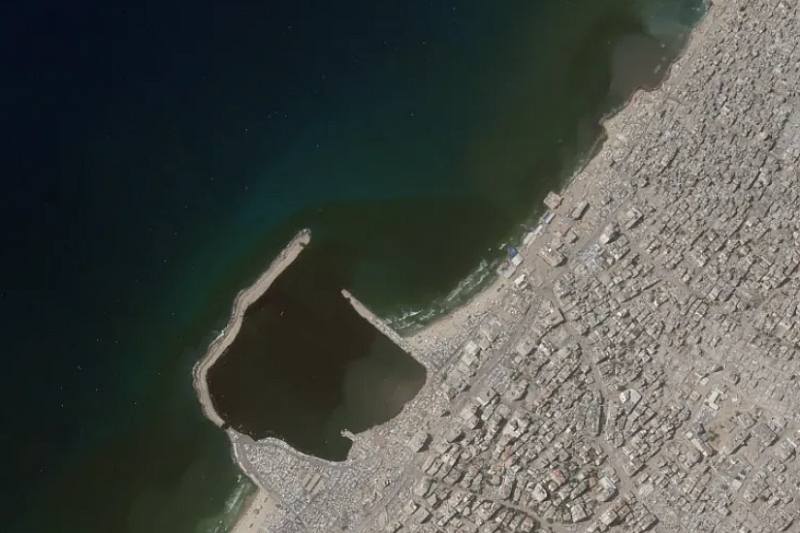
Photo: Widespread pollution near the port of Gaza on August 24, 2026 (Planet Labs)
It is an environmental catastrophe documented by imagery. The analysis of satellite images taken on August 24, 2026, reveals that wastewater now extends over more than 5 kilometers and 461 meters along the coast, reaching a depth of approximately 490 meters offshore. Comparison with images from June and July 2026 shows a continuous worsening of the pollution, to levels described as catastrophic.
A Sanitation System Deliberately Destroyed
The Gaza municipality estimates that nearly 24,000 cubic meters of untreated wastewater are discharged into the sea daily. The cause: the destruction of eight treatment plants and some 212,000 linear meters of sewage networks—a direct consequence of Israeli strikes. Two major plants, those serving the Al-Bureij camp and the Sheikh Ajlin neighborhood, are out of service, depriving the system of an essential part of its treatment capacity.
According to Saïd Al-Olkouk, head of sanitary control in Gaza, "polluted water is discharged into the sea without treatment, contaminating the water, sand, and air." The municipality warns that this situation is fostering the proliferation of insects and rodents, as well as the spread of diseases and epidemics, at a time when basic services are already severely degraded.
The Sheikh Radwan Basin: A Symbol of the Disaster
Deprived of functioning treatment plants due to strikes and fuel shortages, the Sheikh Radwan basin—once intended to collect rainwater—has become one of the largest wastewater reservoirs in the territory. Satellite images show its dramatic transformation between January and July 2026: the water, initially blue, turned brown, with floating deposits appearing on the surface. In May, the municipality had already warned of a risk of environmental and health catastrophe linked to rising water levels.
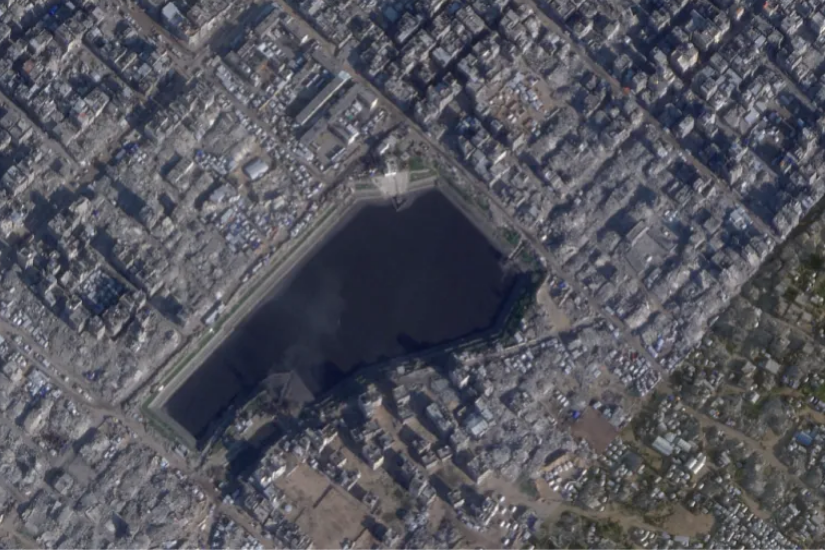
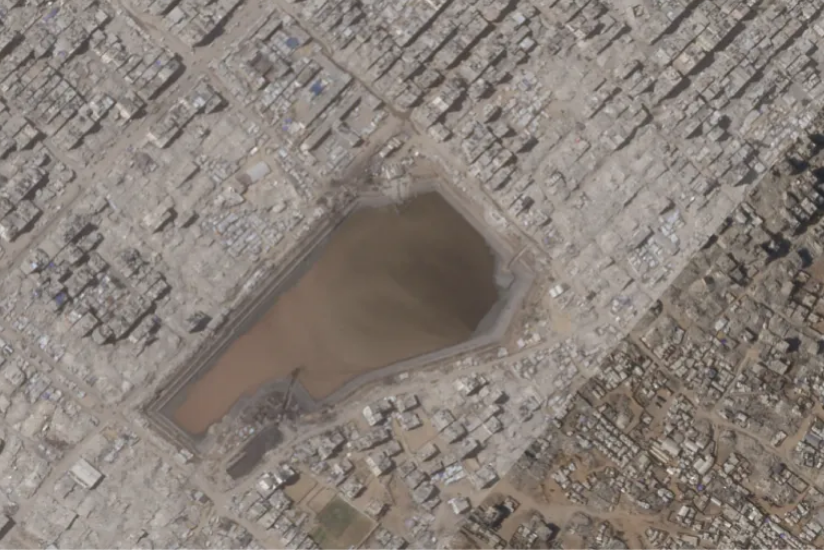
The Sheikh Radwan basin in January 2026 (left) and August 2026 (right). / Credit: Planet Labs
The UN Office for the Coordination of Humanitarian Affairs (OCHA) reported at the same time that four out of five pumping stations were out of service, resulting in the discharge of approximately 40,000 cubic meters of untreated wastewater per day into the sea and inhabited areas.
Daily Life for the Displaced
This ecological catastrophe directly affects the living conditions of displaced people. Ayoub Al-Chanbari, displaced from Beit Hanoun to the coast of Khan Younès, testifies that the continuous discharge of wastewater, day and night, deprives residents of access to the beach—the only respite from the stifling heat inside tents.
Other accounts describe families forced to camp in the immediate vicinity of sewage outfalls, for lack of any geographic alternative. Foul odors, respiratory disorders, and even cases of miscarriage among pregnant women have been reported in this context of widespread pollution.
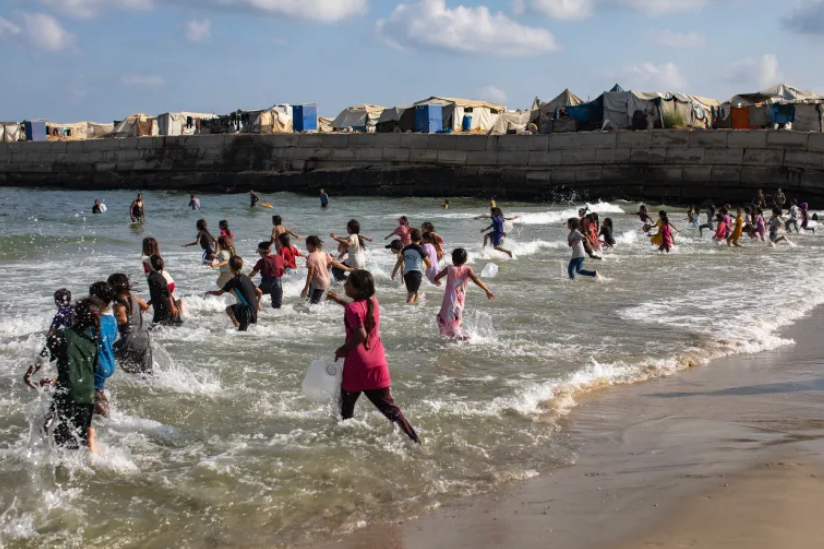
Displaced people taking part in a swimming lesson program in Khan Younès, southern Gaza Strip, August 21, 2026. / Credit: (EPA)
Gaza's coastline and port remain, despite their contamination, an indispensable outlet for a population living under tents in extreme heat. In August, the Union of Gaza Municipalities warned of the ongoing deterioration of the water and sanitation system, aggravated by the lack of fuel needed to operate generators, wells, and pumping stations.

The best of Tired Earth delivered to your inbox
Sign up for more inspiring photos, stories, and special offers from Tired Earth
By signing up for this email, you are agreeing to news, offers, and information from Tired Earth. Click here to visit our Privacy Policy.


Comment
Reply