



05 Jan 2026

Tired Earth
By The Editorial Board
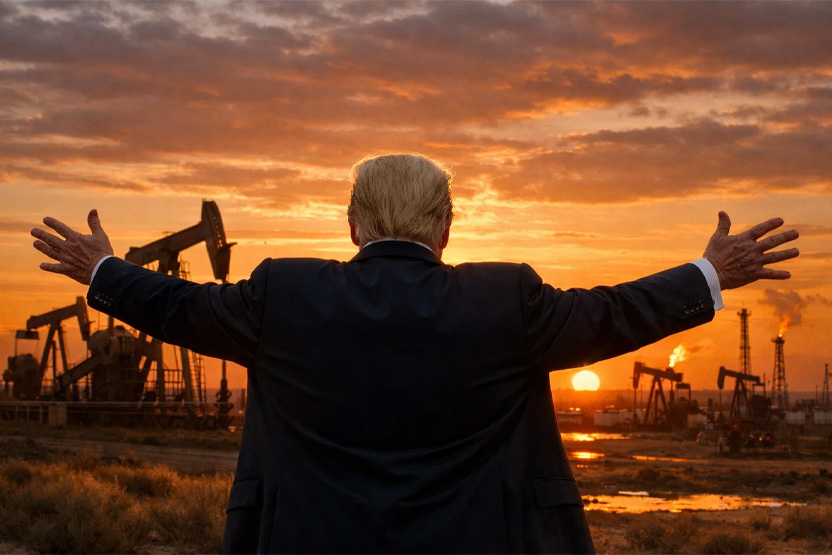
On January 3, 2026, the world watched as U.S. President Donald Trump orchestrated a military intervention in Venezuela that ousted President Nicolás Maduro from power. The bold move involved the bombing of Caracas and the subsequent transfer of the Venezuelan leader to New York, igniting international controversy. Yet, the true motivations behind the operation were not just political but deeply tied to Venezuela’s vast oil reserves. For Trump, securing control over these energy resources served as a stepping stone in a broader geopolitical strategy — one where energy resources are wielded as both a political tool and an economic leverage.
This aggressive energy-focused foreign policy, exemplified in Venezuela, offers a window into the United States' broader ambitions regarding global resource control, particularly in the Arctic region. A new chapter of this strategy seems to be unfolding in Greenland, where the U.S. is eyeing vast reserves of oil, gas, and rare minerals that are becoming increasingly accessible due to climate change.
The U.S. and Greenland: The Next Frontier in Energy Domination
While the Venezuelan operation grabbed headlines, it also set the stage for an even bolder assertion of U.S. dominance over global energy resources. The U.S. has long harbored interest in Greenland's wealth of untapped energy and mineral reserves, but Trump’s administration has taken this pursuit to new heights. One telling moment occurred when Katie Miller, the wife of Trump’s advisor, posted a tweet featuring a map of Greenland colored in the U.S. flag, with the caption “Coming soon.” This tweet was more than a personal expression; it underscored a geopolitical ambition that Trump had already flirted with: acquiring Greenland.
In 2019, Trump’s attempt to purchase Greenland from Denmark was famously rebuffed, but that hasn’t stopped the former president from pushing forward with U.S. involvement in the region. Now, with Arctic ice melting at unprecedented rates, previously inaccessible natural resources are becoming ripe for exploitation, and Trump’s strategy is clear: seize control of Greenland’s reserves of oil, natural gas, and rare earth minerals — resources critical for both traditional and renewable energy production.
The implications of such a move are enormous. Should the U.S. succeed in gaining a foothold in Greenland — either through economic deals, military presence, or further geopolitical maneuvers — it could dramatically reshape global resource distribution. Greenland’s position in the Arctic, as well as its growing significance in global energy markets, would make it a cornerstone of U.S. foreign policy in the coming decades.
Environmental Risks of U.S. Energy Interests in Greenland
However, the environmental risks associated with U.S. involvement in Greenland are both dire and far-reaching. The Arctic, a region already experiencing the fastest rates of warming on Earth, faces a delicate balance between its fragile ecosystems and the looming threat of exploitation. With rising temperatures, the Arctic is losing its ice cover at an alarming rate, opening up pathways to previously inaccessible oil and gas reserves. Yet, these energy resources come at an extraordinary environmental cost.
The extraction of fossil fuels from the Arctic region could exacerbate the already accelerating environmental decline. Melting polar ice and rising sea levels — two interconnected global phenomena — would be directly impacted by increased industrial activity. Oil and gas drilling, mining for rare minerals, and infrastructure development would not only disrupt local wildlife but also contribute to further climate change by increasing greenhouse gas emissions. This would directly challenge global efforts to mitigate climate impacts and achieve the Paris Agreement’s goal of limiting global temperature rise to well below 2°C.
Moreover, the environmental degradation of the Arctic would have ripple effects that extend far beyond the region. Disruptions to the Arctic's delicate ecosystem could lead to the loss of biodiversity, including species vital to global food chains. Furthermore, the melting of permafrost, which stores large amounts of methane — a potent greenhouse gas — could accelerate global warming even further.
The European Dilemma: Dependence and Environmental Impact
For Europe, the U.S. aggressive pursuit of Greenland’s energy resources presents a dual threat: economic and environmental. Europe, already facing its own energy crisis due to the geopolitical tensions over Russia’s invasion of Ukraine, risks becoming increasingly dependent on fossil fuel supplies from the U.S. With the U.S. dominating global energy markets — particularly natural gas and oil — European nations may find themselves at the mercy of American policies, facing higher energy prices and less control over their own energy security.
Moreover, Europe’s commitment to achieving net-zero carbon emissions and adhering to stringent environmental regulations could be compromised if U.S. energy policies take precedence. Europe’s ambitious climate goals could be undermined by the rise of U.S. fossil fuel exports and the increased extraction of resources in regions like Greenland. As Europe attempts to transition to cleaner energy sources, the U.S. is pushing the world in the opposite direction, aggressively expanding fossil fuel extraction and further entrenching reliance on carbon-based energy.
The European Union’s efforts to reduce its carbon footprint and invest in renewable energy could be offset by increased demand for oil and gas, not just from the U.S., but from countries like China and India as well. The irony is clear: as Europe works to transition to a green economy, its energy security and climate goals could be eroded by the global scramble for resources driven by U.S. interests in places like Greenland.
A Call for Global Cooperation on Climate Change
As the U.S. continues its aggressive energy policies, from Venezuela to Greenland, the global community must confront the long-term consequences of such actions. While the immediate political and economic benefits may appear attractive to some, the broader environmental and geopolitical risks are immense. The exploitation of fragile ecosystems like those in the Arctic not only jeopardizes global climate stability but also threatens the very survival of local communities and wildlife.
For Europe, this is a crucial moment. The continent must prioritize energy independence, moving away from fossil fuel dependency while also strengthening its geopolitical position in the face of U.S. encroachment. Europe must advocate for a balanced approach to global energy markets that respects both environmental sustainability and resource equity.
Ultimately, addressing the aggressive energy policies of powerful nations like the U.S. requires a unified, international response. Climate change is a global issue that demands global collaboration. It’s time for world leaders to recognize that the preservation of our planet's most vulnerable ecosystems — from Venezuela’s oil fields to Greenland’s ice sheets — is a responsibility that transcends borders and political agendas.

The best of Tired Earth delivered to your inbox
Sign up for more inspiring photos, stories, and special offers from Tired Earth
By signing up for this email, you are agreeing to news, offers, and information from Tired Earth. Click here to visit our Privacy Policy.


Comment
Reply