



08 Mar 2026

Tired Earth
By The Editorial Board
The military confrontation that began on February 28, 2026, with US and Israeli airstrikes against Iran, has been framed in official statements as a necessary response to a nuclear threat. Yet a growing body of evidence suggests a different motivation—one rooted not in proliferation concerns but in the oldest driver of modern warfare: control over fossil fuel resources.
Consider the diplomatic context. Just days before the bombs began falling, indirect nuclear negotiations between Washington and Tehran were underway in Geneva, with multiple parties reporting genuine progress . The International Atomic Energy Agency had repeatedly verified that Iran's program remained under safeguards. There was no imminent breakthrough, no smoking gun, no evidence of diversion to weapons production that warranted abandoning diplomacy for devastating military action. Yet the administration chose war.
Economist Michael Hudson, in a March 3 interview with Democracy Now!, offered a succinct answer. "The whole reason that America has attacked Iran has nothing to do with its getting an atom bomb," Hudson argued. Instead, the objective is US control over Iranian oil reserves—the ability to "turn off the power" to nations that defy Washington's foreign policy . This interpretation gains credibility when one examines the broader pattern of administration policy.
Iran holds the world's third-largest oil reserves . The White House Energy Council's executive director has stated openly that the goal is "complete control" of these reserves. This follows a pattern established earlier this year: in January, US forces struck Caracas and detained Venezuelan President Nicolás Maduro, with President Trump repeatedly citing Venezuela's massive oil reserves as the reason for the operation . At a White House meeting with oil executives following that intervention, Trump announced that American companies would spend at least $100 billion to revitalize Venezuela's oil infrastructure, with Venezuela "turning over" up to 50 million barrels of oil to the United States . Energy Secretary Chris Wright explained the new doctrine explicitly: the US will control the flow, sale, and revenue of Venezuela's oil, with sales conducted by the US government and deposited into accounts controlled by Washington .
The parallel to Iran is unmistakable. As one Chinese analysis noted, the US has already applied the "Venezuela model" to Venezuela—seizing control of its oil—and now plans to apply the same model to Iran, bringing Iranian oil sales under American control .
The timing of the attack relative to diplomatic progress further undermines the nuclear rationale. On February 6, Oman hosted indirect negotiations between Washington and Tehran. That same evening, Trump announced a new round of talks would be held . US envoys were scheduled to meet Iranian officials in Geneva on February 24—just four days before the bombs fell . Israeli Prime Minister Benjamin Netanyahu had been pushing to expand the scope of any potential deal to include conditions he knew Iran would reject, a move analysts describe as calculated to ensure diplomacy failed .
The persistent interest in Greenland's resources fits the same pattern. Trump has repeatedly stated his desire for the US to own the territory, arguing that if "we don't do it, China or Russia will" . The territory sits atop significant untapped oil reserves and rare earth minerals critical for modern technology.
This pattern reveals a coherent strategy: the consolidation of global fossil fuel reserves under American influence, with a particular eye toward containing China's economic rise. China currently purchases more than 80 percent of Iran's seaborne oil exports . A recent executive order signed by Trump empowers the imposition of 25 percent tariffs on any nation conducting business with Iran—a direct threat to Beijing . By seizing control of Iranian oil, Washington aims to gain decisive leverage over its primary geopolitical rival.
The "maximum pressure" strategy against Iran, agreed upon by Trump and Netanyahu during a White House meeting in mid-February, centers explicitly on curbing Iran's oil exports to China . One US official described the leaders as aligned on pursuing "maximum pressure" specifically targeting crude shipments to Beijing .
This is not the first time the United States has gone to war for oil in the Middle East. The 1990-1991 Gulf War, as many analysts have noted, was largely a "petroleum war" aimed at preventing Iraq from controlling Kuwaiti and Saudi oil fields and manipulating global prices . The 2003 Iraq War, launched under the pretext of weapons of mass destruction, resulted in Western oil companies gaining substantial access to Iraqi reserves. The 2011 Libya intervention similarly opened the country's oil sector to Western firms. Each followed a pattern: a strategic resource, a manufactured security crisis, military intervention, and ultimately, resource control.
The deeper historical echo is the 1953 US-British coup against Iran's democratically elected Prime Minister Mohammad Mossadegh. The CIA and MI6 did not overthrow Mossadegh because he threatened anyone—they did so because he nationalized Iran's oil industry, which had been controlled by the British for decades. The US installed the Shah, secured Western control of Iranian oil, and set in motion the chain of events that led to the 1979 revolution and four decades of hostility. Now, 73 years later, the same dynamic plays out again: a sovereign nation's oil reserves targeted by the world's dominant military power.
The administration has abandoned even the pretense of spreading democracy or protecting human rights. The White House Energy Council's executive director speaks openly of controlling Iran's oil. The strategy for Venezuela is publicly discussed as resource seizure. Greenland's resources are openly coveted. This is resource conquest, plain and simple.

DRILL, BABY, DRILL!
— The White House (@WhiteHouse) February 27, 2026
On the day the strikes began, the White House social media account posted a single message: "DRILL, BABY, DRILL!" . The slogan, long used by the oil industry to advocate for expanded domestic drilling, appeared in the context of bombing another country to secure its oil reserves. The message could not have been clearer: this war is for the oil industry.
For those who have followed the long history of resource wars, the pattern is depressingly familiar. The names change—Mossadegh then, the Islamic Republic now. The methods evolve—covert coups then, overt warfare now. But the objective remains constant: control over the fossil fuel reserves that power the global economy.
The irony is almost unbearable. At a moment when the civilized world is finally attempting to transition away from fossil fuels, when the scientific consensus demands that we leave the vast majority of remaining reserves in the ground, a reactionary administration launches a war to seize more of them—not for energy independence, but for geopolitical leverage against a rising China. The carbon will still enter the atmosphere. The planet will still warm. The only difference is which flag flies over the extraction site.
The children killed in Minab, the families displaced across the region, the escalation toward wider war—all in service of a resource the world should be abandoning, not fighting over. This is the tragic logic of fossil fuel imperialism in the twenty-first century: wars fought for the right to extract the very substance that is rendering our planet uninhabitable.
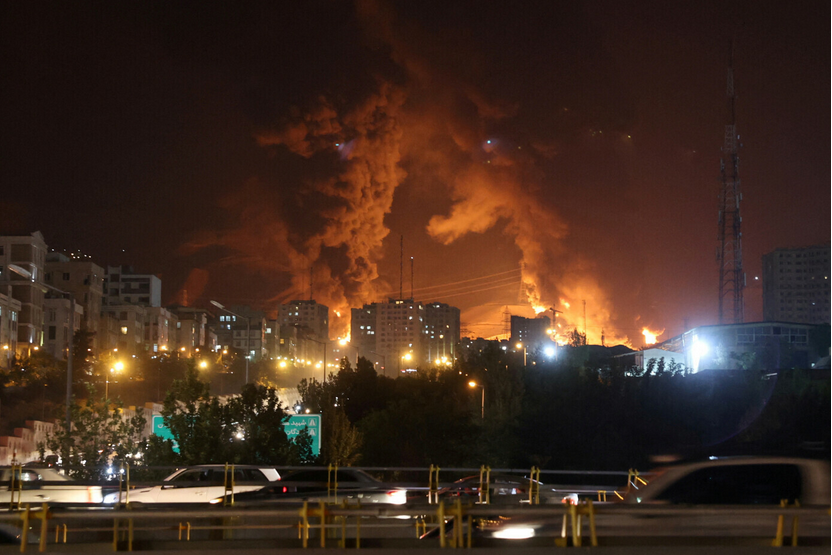
photo: Smoke from an Israeli-American attack rises from Shahran Oil depot, following Israeli strikes on Iran, in Tehran on June 15, 2025. — Majid Asgaripour/Wana via Reuters

The best of Tired Earth delivered to your inbox
Sign up for more inspiring photos, stories, and special offers from Tired Earth
By signing up for this email, you are agreeing to news, offers, and information from Tired Earth. Click here to visit our Privacy Policy.




Comment
Reply